

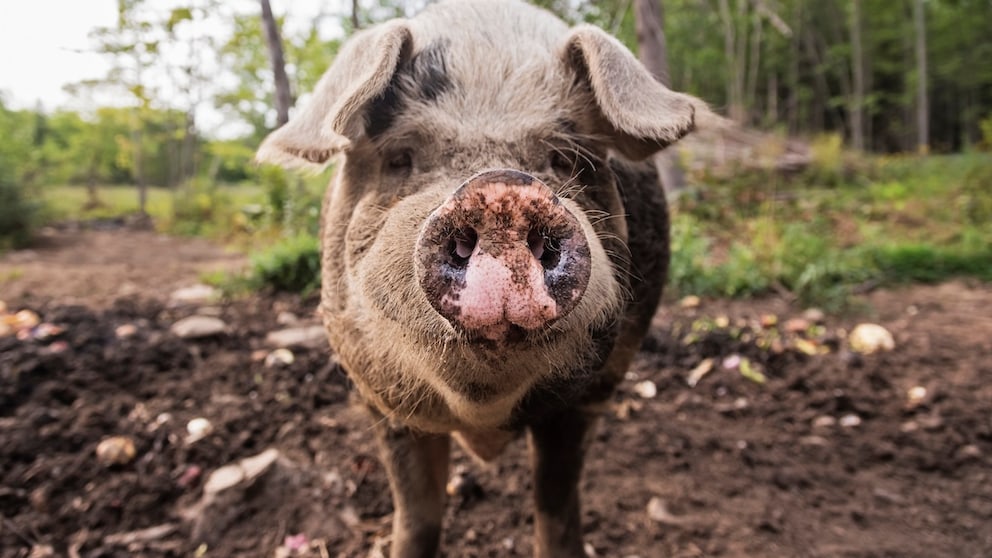
August 24, 2026, 3:14 pm | Read time: 2 minutes
“I’m sweating like a pig!” Most people have probably said this sentence on a hot summer day. The problem: The animal that is used as a benchmark for heavy sweating in this saying can hardly sweat at all. PETBOOK explains why the phrase persists to this day and what pigs do instead when they get too warm.
Pigs Can’t Really Sweat
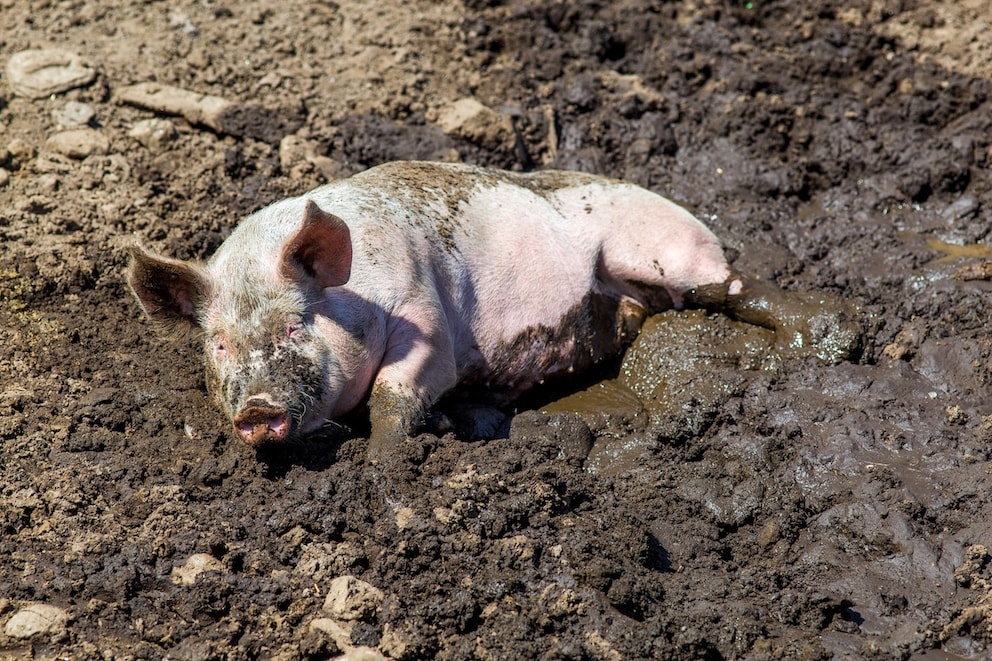
Unlike humans, pigs have very few sweat glands and therefore cannot cool themselves by sweating. When they get too warm, they have to find other ways to regulate their body temperature. They prefer to wallow in mud for this purpose. The mud cools the skin and also protects against sunburn and insects.
In fact, many domestic pigs start seeking cooling measures at temperatures around 64 degrees Fahrenheit. They often avoid close contact with other pigs and prefer to lie down with some distance between each other.1

Can Cats Sweat?

Editor: ‘My best tips for walking dogs in high temperatures’
Where Does the Saying Come from?
The origin of the saying is not clearly established. Linguists suspect, however, that it is related to the once-ubiquitous practice of home slaughtering. In the “Lexicon of Proverbial Sayings,” linguist Lutz Röhrich explains that the phrase “bleed like a pig” was already widespread. During the slaughtering of animals, a lot of blood flowed, making pigs a symbol of particularly intense physical processes.2
There is also a linguistic aspect. In older stages of the language, the word “Schweiß” meant not only sweat but also blood. This meaning has been preserved in hunting language to this day, where “Schweiß” still refers to the blood of an injured wild animal. It is possible that the comparison “bleed like a pig” eventually evolved into “sweat like a pig.”
The Sound Likely Helped Too
Another reason the saying persists could simply be its sound. Linguists suspect that the alliteration of the German words “sweat” and “pig” (“Schweiß” und “Schwein”) made the phrase particularly memorable.
In fact, there are similar sayings like “sweat like an animal,” “sweat like a bull,” or “sweat like a sow.” However, the version with the pig has become the most common in everyday language.3