

April 8, 2025, 3:49 am | Read time: 5 minutes
Does your dog bring balls and toys as soon as you sit comfortably on the couch? Many believe the pet wants to show it wants to play. But that’s not always the case. Dog trainer Torsten Bencke reveals what’s behind this behavior.
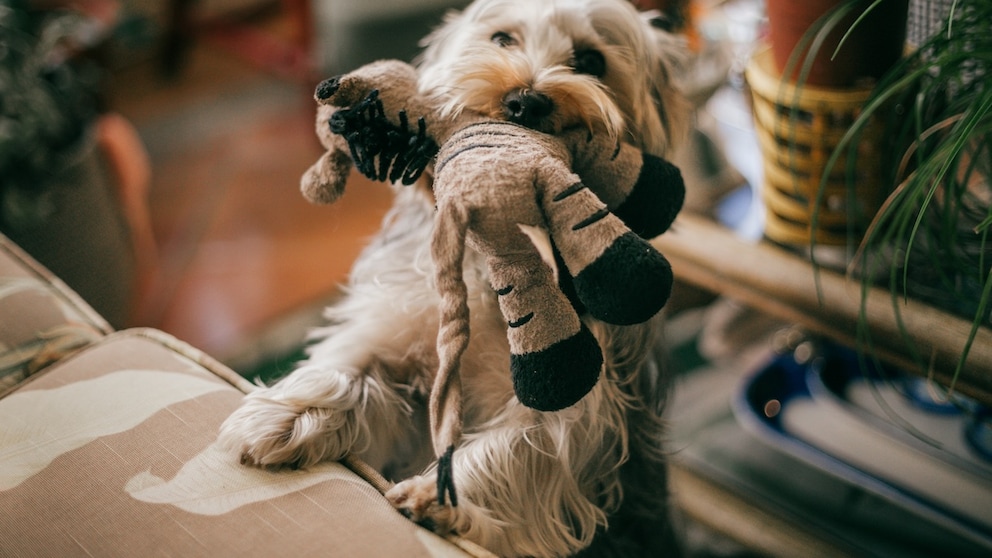
A ball, a stuffed animal, or the favorite bone–as soon as you come home, does your dog bring you a toy? What many owners find delightful might be less sweet and pleasing than thought. At least, according to the London dog trainer “Howl School for Dogs.” In an Instagram video, she explains to owners that dogs bring toys mainly when they are stressed: Fetching serves less as a play instinct and more as emotional self-regulation. Is that really the case?
PETBOOK asked dog trainer Torsten Bencke. The Hamburg-based trainer, who has worked with dogs for over 20 years, cannot confirm this theory. “This is a typical example of someone proposing a theory to gain attention,” he says about the video. “The dog seen here does not appear stressed at all.”
“Sharing is caring”–a sign of affection?
According to Torsten Bencke, bringing objects is often simply an expression of joy and connection: Here, the most valuable things are shared and entrusted to the owner. “That’s exactly what you want to create in a dog,” he explains. Dogs are naturally social creatures designed for cooperation. Many dogs bring their owners things because they have learned it elicits a positive response–whether through attention, praise, or a shared game.
The significance of “fetch loyalty”
“What you see here is a kind of fetch loyalty,” says Torsten Bencke. The so-called fetch loyalty is especially important in hunting dog work, where it refers to a dog’s ability to reliably bring a found object back to its owner. Most of our current breeds descend from hunting dogs bred to retrieve shot game and return it undamaged, recalls Torsten Bencke, who himself keeps hunting dogs. “Dogs like poodles, spaniels, or even Labradors have been selectively bred over centuries to exhibit exactly this behavior,” says the Hamburg dog trainer.
This trait is still deeply embedded in the genes of many dog breeds today–not just classic hunting dogs but also many mixed breeds. A Labrador bringing a ball to its owner is following an innate behavior and simply doing what the dog is supposed to and wants to do.
Hunting dogs follow their instinct when fetching and bringing objects, doing something entirely natural. But what about dogs not specifically bred for fetching? Probably similar, as for dogs, bringing an object is a meaningful activity that provides mental and physical engagement.
Could stress still be behind the behavior?
But what about the theory that dogs use fetching to relieve stress? Indeed, this can be true in some cases–but not always in a negative sense. Stress is not automatically bad, as Bencke explains: “The negativity of stress comes from the meaning we as humans give it. A dog with a task–such as finding and bringing an object–experiences a form of positive stress. It receives a task it wants to fulfill, which challenges it mentally and provides structure.”
We might imagine a dog that seems a bit stressed when bringing its favorite toy like a person who enjoys solving puzzles or playing sports. The short-term activation is beneficial for well-being, as long as it doesn’t turn into permanent, negative stress. That might not sound dramatic enough for an Instagram video hoping to go viral.
Also interesting: Why does my cat constantly bring me toys even though it doesn’t want to play?
Is the dog stressed when it brings a toy? Here’s how to recognize it
If you still fear that your dog is bringing objects out of insecurity or nervousness, you should look for additional symptoms, including these:
- Panting without physical exertion
- Yawning, even when the dog is not tired
- Excessive licking of its own lips
- Tucked tail or crouched body posture
If you notice such signs in your dog, it might be wise to consult an expert to analyze whether the behavior is indeed stress-related.

Is Playing Fetch Really Bad for Dogs? An Expert Weighs In

5 Things You Shouldn’t Subject Your Dog To
Should you prevent your dog from bringing toys?
Whether you encourage the bringing of objects depends on your personal preference and the individual dog. Generally, the behavior is neither problematic nor needs to be untrained–on the contrary. If your dog brings you a toy with joy, you can reward this with positive attention or a shared game.
However, if your dog excessively brings objects and appears nervous, it might be helpful to offer alternative activities to relieve stress. These options include:
- Nose games: Hide treats or toys for your dog to find.
- Tug games: Some dogs relieve tension through tug and pull games.
- Chew items: Extended chewing can have a calming effect.
- Gentle petting: Some dogs relax through physical contact.
Conclusion
When a dog brings its owner a toy, it is usually a sign of joy and social bonding and rarely an indication of stress. Breeds with a fetching instinct show this behavior instinctively. Even if dogs occasionally take objects in their mouths in stressful situations, it doesn’t mean they are “stressed” in the human sense.