

August 2, 2025, 6:13 am | Read time: 5 minutes
The Schafpudel, also known as “Schapu,” is an ancient but now rare representative of the Old German herding dogs. With its shaggy appearance and pronounced herding instinct, it has impressed enthusiasts for centuries. However, this dog is not a cozy companion for everyone—its character demands expertise, consistency, and above all, a meaningful task. PETBOOK explains why the Schafpudel is more than just a pretty exotic pet and what requirements it places on its owners.
Origin of the Schafpudel
The Schafpudel is a traditional working dog from Germany and is one of the eight types of Old German herding dogs. Its roots go back to the Middle Ages, when it was used in migratory shepherding for herding and protection work with large flocks. Unlike standardized breed dogs, the Schafpudel developed regionally and without a fixed breed standard—its shaggy coat primarily served as protection against wind and weather.
It was particularly valued by migratory shepherds in northern Germany. In Pomerania, it was known as a robust working dog and was described early on. The name “Schafpudel” is probably not a reference to the poodle breed but derives from the Low German word “Pfuhl”–a nod to its shaggy, water-repellent coat.
During industrial modernization and the decline of sheep farming, the Schafpudel lost significance. Although East Germany’s breeding policies temporarily ensured its survival, it faded into the background again after reunification. Today, only a few breeders are committed to its preservation—mostly in Saxony-Anhalt, Thuringia, and Mecklenburg-Vorpommern.
Appearance & Coat
The Schafpudel is a medium to large dog with a rectangular, muscular build. Males reach a height of 50 to 60 cm at the withers, females 45 to 55 cm. The weight is usually between 17 and 25 kg. Despite its robust appearance, the Schafpudel does not look clumsy but functional and agile.
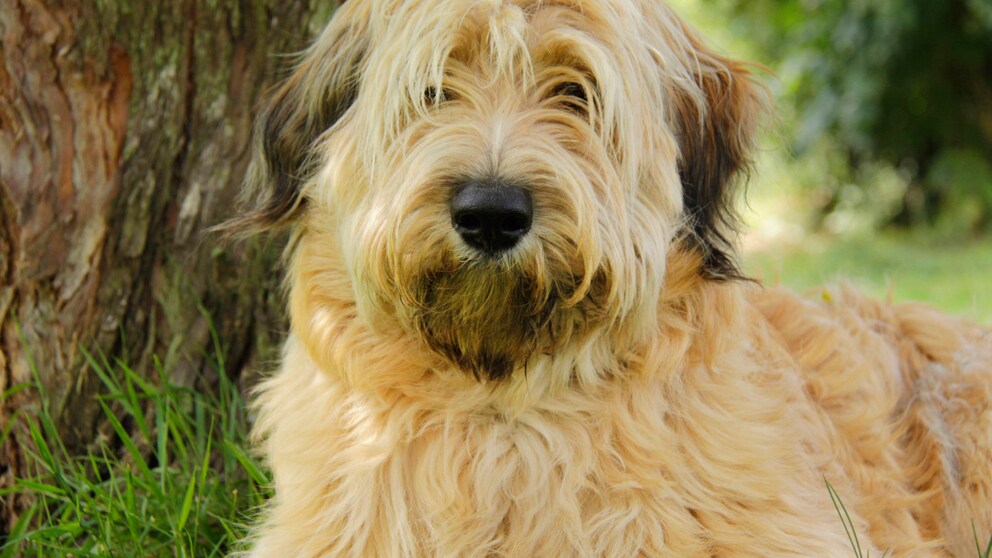
Its most distinctive feature is the dense, shaggy topcoat with fine, soft undercoat. This so-called Zotthaar reliably protects it from moisture, cold, and dirt—ideal for outdoor work. The hair structure is firm and tends to form long strands. Often, the long forehead hair covers the dark, expressive eyes, which show an alert and intelligent gaze.
The Schafpudel is extremely diverse in color: Typical colors are black, white, gray, wheat-colored, and roan (blue-gray); also, spotted or tan variants with a dark mask occur. Its ears are rounded and hang down the sides of the strong head. The tail is long, well-haired, and slightly curved. Dogs with a naturally short tail are called “Stumpers.”
Character & Temperament
The Schafpudel exhibits a distinctly work-oriented nature. It was selected for independence, endurance, and high responsiveness. Its herding instinct is strongly developed, as is its protective instinct towards family, flock, and territory.
Toward people it knows, it is affectionate, friendly, and loyal. Within the family, it is cuddly and attentive, but with strangers, it is initially reserved to suspicious, without being aggressive.
Its high intelligence combined with independence makes it a dog that can make its own decisions—a behavior essential for herding large flocks but requiring clear boundaries and structure in family life.
Children should ideally be teenagers, as the Schafpudel may exhibit herding behavior with small children. It is not suitable as a pure family dog without tasks.
Training a Schafpudel
Training the Schafpudel requires experience, consistency, and clear rules. Since it does not have a pronounced “will to please,” friendly requests are usually not enough. Instead, it needs consistent but fair leadership.
A structured daily routine, early socialization, and attending a dog school are recommended. Its high learning ability makes it generally willing to learn, but it likes to decide for itself when and how to obey. Therefore, this dog is unsuitable for beginners.
Proper Care & Maintenance
The Schafpudel is not a city dog. It needs space, exercise, and tasks to stay balanced. A rural environment with a garden or access to pastureland is ideal.
It loves to be active: Whether herding, playing treibball, long-lining, or engaging in demanding retrieval training—the main thing is that it is mentally and physically challenged. Simple walks are not enough. Sports like dog frisbee or agility can also excite it.
The dense coat requires regular care. At least once a week, the coat should be carefully combed to prevent matting. Especially in the wet season, thorough drying and checking of the undercoat are necessary.
The Schafpudel needs family integration. Kennel keeping is absolutely unsuitable. It wants to be involved and included—being alone is not its nature.
Nutrition
A balanced, protein-rich diet forms the basis for health and performance. Since the Schafpudel is an active working dog, its food should be adjusted to its energy consumption.
High-quality dog food with a high meat content and without artificial additives is ideal. With athletic demands, an increased fat and protein content can be beneficial.
Food portions should be controlled and adjusted to avoid being overweight. Also, maintaining feeding times and a calm environment during meals supports healthy digestion.
What you should bear in mind when keeping and caring for the Komondor
The Westerwald Cattle Dog is Considered the Last of the Old German Herding Dogs
Susceptibility to Certain Diseases
The Schafpudel is generally considered robust and resilient. Due to its use as a working dog, selection focused more on health than appearance.
Hereditary diseases are rare but can occur. These include, in isolated cases, hip dysplasia (HD) and cryptorchidism in males. Regular veterinary check-ups are, therefore, as important as reputable breeding standards.
Additionally, the coat should be regularly checked for skin irritations, parasites, or matting–especially in wet weather.
The Schafpudel at a Glance
- Character: alert, independent, willing to learn, intelligent
- Size: Males 50–60 cm, Females 45–55 cm
- Weight: 17–25 kg
- Coat: long hair with dense undercoat, all colors possible
- Grooming effort: high; regular combing required
- Special features: strong herding instinct, not suitable for beginners
- Exercise needs: very high; needs mental and physical engagement