

January 28, 2026, 11:44 am | Read time: 4 minutes
The Norfolk Terrier is one of the smallest members of the terrier family, but impresses with its self-confident personality and unshakeable courage. Originally bred as a rat hunter and farmyard dog, it is now a popular companion for individuals and families.
The Norfolk Terrier may be small, but its temperament and character are big! This charming dog impresses with its robust, compact build, wiry coat, and energetic, friendly nature. With its lively temperament, it quickly wins the hearts of its owners. Read on to find out more about this unique terrier and its requirements in terms of keeping and care.
Origin
The Norfolk Terrier originates from the English county of Norfolk and has its roots in the breeding of small, robust farm dogs. Its development is closely linked to that of the Norwich Terrier; until 1964, both were considered one breed, with the main difference being the position of the ears: Norfolk Terriers have forward-sloping ears that lie close to the cheeks, while Norwich Terriers have prick ears.
The Norfolk Terrier’s ancestors, such as the Glen of Imaal Terrier and the Cairn Terrier, were originally bred to control rats and other pests. Later, they were also used to hunt foxes and badgers. Even in the Middle Ages, the small terriers in England were known for their versatility. They were used as guard dogs, hunters, and reliable helpers on farms.
In 1954, the Norwich Terrier was officially recognized by the FCI, followed by the separation into two breeds in 1964. Today, the Norfolk Terrier is a popular companion and family dog.
Appearance & Coat
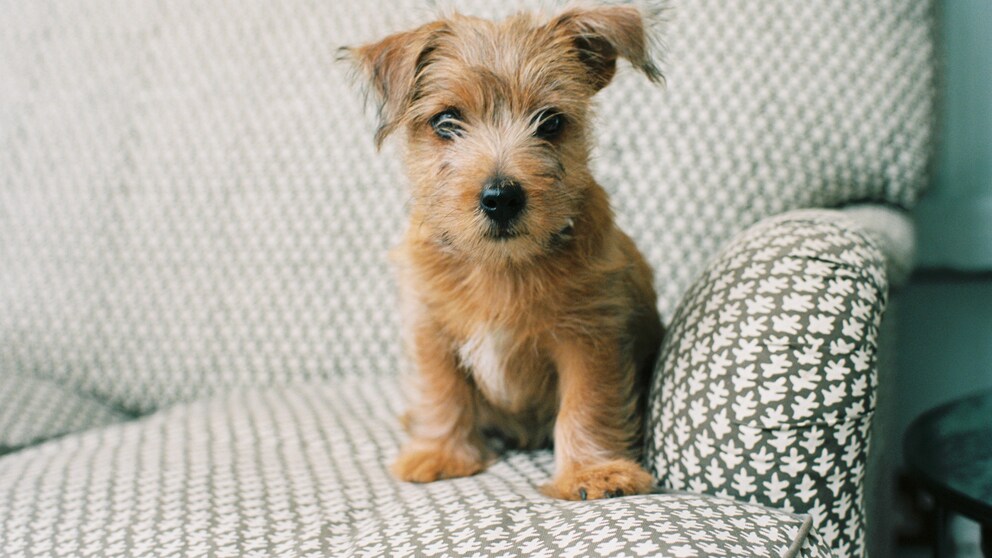
With a shoulder height of about 10 to 10.2 inches and a weight of 11 to 15 pounds, the Norfolk Terrier is one of the smallest dogs of its kind. Despite its small size, it is compact and muscular, with a strong build and deep chest. The head is slightly rounded with a broad skull and dark, lively eyes that always appear alert.
The coat is wiry, weather-resistant, and lies close to the body. Colors range from red and wheaten to black and tan, and grizzle. Particularly striking are the medium-sized, V-shaped, tilted ears, which lie close to the cheeks and give the Norfolk Terrier its characteristic appearance.
A special variety, known as “fluffy,” results from a genetic mutation that gives the coat an unusually soft and shiny texture. However, these dogs require more intensive grooming to prevent matting.
Character & Disposition
The Norfolk Terrier is lively, courageous, and extremely friendly. Its friendly nature makes it an excellent family dog that harmonizes particularly well with children. Despite its small size, it is very self-confident and has a pronounced hunting instinct that requires consistent leadership.
These dogs are intelligent and curious, which makes them enthusiastic companions for numerous activities. At the same time, they are adaptable and fit in well with family life. They are attentive to strangers, but not aggressive. Their temperament is energetic, but never hectic or nervous.
Upbringing
Training a Norfolk Terrier requires patience, consistency, and clear boundaries. Although these dogs are intelligent and willing to learn, they tend to make their own decisions without clear guidance. It is particularly important to control the hunting instinct early on and to socialize the dog well.
A loving but firm upbringing helps to steer the Norfolk Terrier’s natural self-confidence in an orderly direction. Activities such as search games and small tricks promote its mental abilities and ensure a close bond with its owners.
Correct Keeping & Care
The Norfolk Terrier is suitable for keeping in a city apartment as well as in the countryside, as long as it gets enough exercise and mental activity. Regular walks, games, and sporting activities are essential. The sturdy coat needs to be hand-stripped two to three times a year, although weekly brushing is sufficient to prevent matting. The “fluffy” varieties require more intensive grooming.
These four-legged friends love to be close to their owners and should not be left alone for too long. Their urge to move and their curiosity make them ideal companions for active people.
Diet
The Norfolk Terrier does not have unique dietary needs, but thrives on a high-quality, protein-rich diet. Fresh meat, beef bones, and a balanced mix of wet and dry food will keep them healthy and energetic. The amount of food should be adapted to age and activity level to avoid obesity.
The Patterdale Terrier Pushes Even Professionals to Their Limits

The Wire Fox Terrier Needs Challenge or It Takes Charge
Susceptibility to Certain Diseases
The Norfolk Terrier is considered a robust dog breed, but it can be susceptible to certain hereditary diseases. These include Cushing’s syndrome, a metabolic disorder that leads to an overproduction of cortisol. Regular veterinary check-ups and proper care are key to maintaining the dog’s health.
The Norfolk Terrier at a Glance
- Size: 25-26 cm
- Weight: 5-7 kg
- Coat: Wiry, weatherproof
- Character: courageous, friendly, lively
- Special features: great hunting instinct, suitable for active families