

October 1, 2025, 4:41 am | Read time: 5 minutes
The Alaskan Malamute is not a dog for leisurely park strolls—it wants to work, pull, dig, and run. This powerful sled dog breed from the Arctic North is considered extremely robust, intelligent, and independent. However, with its impressive appearance and strong hunting instinct, the Malamute also brings challenges. Anyone considering it as a family dog should be prepared for an intense relationship with many shared activities.
Origin
The Alaskan Malamute is one of the oldest Arctic dog breeds, with roots dating back to the last Ice Age. Even then, he was a loyal companion to the Native Americans—especially the Mahlemiut, an Inuit tribe after which the breed is named. The dogs served as draft animals for heavy loads, assisted in hunting, and kept their people warm on cold nights.
For many centuries, the Malamute remained a working and utility dog in the icy regions of Alaska. It wasn’t until the 19th century that it gained greater recognition through the emerging sled dog races. Unfortunately, the increased crossbreeding with other breeds to enhance performance almost led to the loss of the original line. In the 1920s, enthusiasts worked to restore the original type by visiting isolated Inuit tribes that still kept purebred Malamutes.
In 1935, the “Alaskan Malamute Club of America” was founded, and the breed was recognized by the American Kennel Club. The FCI followed in 1963. Despite its sporting popularity, the Alaskan Malamute is still primarily known for its original strength and endurance.
Appearance & Coat
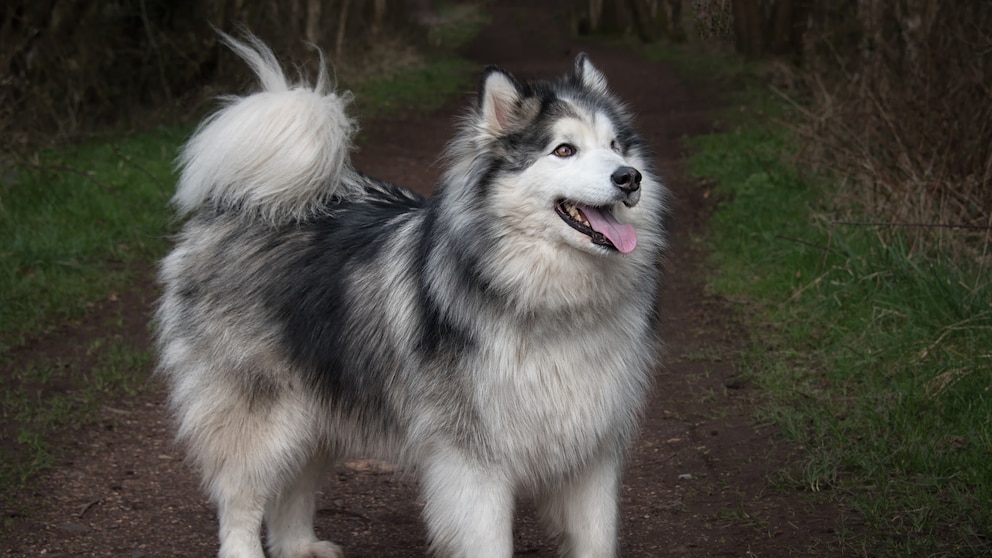
The Alaskan Malamute is one of the largest sled dog breeds and is physically built for pulling heavy loads. Males reach a shoulder height of about 63 cm, females around 58 cm. The weight typically ranges between 34 and 38 kg. The body is compact and strong, with a deep chest, muscular back, and pronounced shoulders.
Characteristic is the broad head with small, erect, triangular ears and almond-shaped brown eyes—blue eyes are excluded by the standard. The tail is heavily furred, carried over the back, and slightly curled.
The coat consists of two layers: a dense, oily undercoat and a rough, standing outer coat, which is somewhat longer at the shoulders and neck. The Malamute’s color ranges from light gray to black with white markings, often symmetrically patterned. Typical are a cap or mask marking on the head and a mostly completely white face. Pure white animals are also allowed by the standard.
Character & Temperament
The Alaskan Malamute is a primitive working dog with a confident, independent nature. It is energetic, highly willing to work, and needs daily physical and mental stimulation. At the same time, it is considered friendly, people-oriented, and resilient.
Although it usually remains calm around other dogs, its imposing appearance and assertiveness should not be underestimated. It is loyal to its human but can quickly declare itself the “boss” if not properly led. Its hunting instinct is particularly strong, which can complicate living with other pets. The Malamute is unsuitable as a guard dog—it is usually neutral to open with strangers.
Training
Training an Alaskan Malamute requires experience, consistency, and a keen sense of its sensitive side. Despite its strength and independence, the Malamute is not a dog suited to harsh training methods. Instead, it needs clear but patient guidance that provides it with security.
An early start to training, ideally with the breeder, is crucial. A reliable recall is essential, as the breed is highly responsive to environmental stimuli such as wildlife. Good socialization—also through puppy playgroups and dog schools—promotes its social behavior. Beginners should steer clear of this demanding breed.
Proper Care & Maintenance
The Alaskan Malamute is not an apartment dog. It needs a home with plenty of space, preferably with a secure yard—as Malamutes are true escape artists and passionate diggers. A simple fence is usually not enough, as they like to work their way under obstacles.
As pack animals, they rely on social interaction and are unsuitable for solitary confinement. They thrive in an active family but require regular engagement and long walks. Sports such as sled dog sports, hiking, or agility can be a good complement.
Despite this, the Malamute is easy to care for: weekly brushing is usually sufficient. During the shedding season, more intensive brushing is necessary. It does not tolerate heat well—in summer, cool resting places, plenty of water, and activities in the cooler morning hours are essential.
Nutrition
The diet of the Alaskan Malamute should be tailored to its activity level and muscle mass. High-quality food with a high proportion of animal protein is ideal. Raw feeding (BARF) is also suitable for this breed if done correctly.
The amount of food should be adjusted based on exercise, age, and health status. Several smaller portions throughout the day can help ease digestion and minimize the risk of bloat.
Appearance, Behavior and Keeping of the Greenland Dog
Alaskan Klee Kai: Why This Mini Husky Isn’t for Everyone
Susceptibility to Certain Diseases
Despite its robustness, the Alaskan Malamute, like many large breeds, is prone to certain hereditary diseases. This includes hip dysplasia (HD)—a malformation of the hip joint that can be painful and limit mobility. Reputable breeders test their animals for HD to prevent its inheritance.
Cone degeneration also occurs more frequently. This is an eye disease where the cone cells on the retina degenerate. This can lead to day blindness. Regular eye examinations are recommended to detect early signs and provide therapeutic support if necessary.
The Alaskan Malamute at a Glance
- Character: willing to work, child-friendly, strong-willed
- Size: 58–64 cm
- Weight: 34–38 kg
- Coat: long
- Exercise Needs: very high, requires long and extensive walks
- Average Lifespan: 13–15 years
- Special Features: very athletic and strong, pronounced hunting instinct, not suitable for beginners