

September 29, 2026, 7:13 am | Read time: 6 minutes
When dogs or cats scoot their rear ends across the floor, it often looks amusing to pet owners. However, this so-called “scooting” is usually not a harmless quirk. PETBOOK explains what might be behind this behavior and when action should be taken.
Why Dogs and Cats Scoot Their Rear Ends Across the Floor
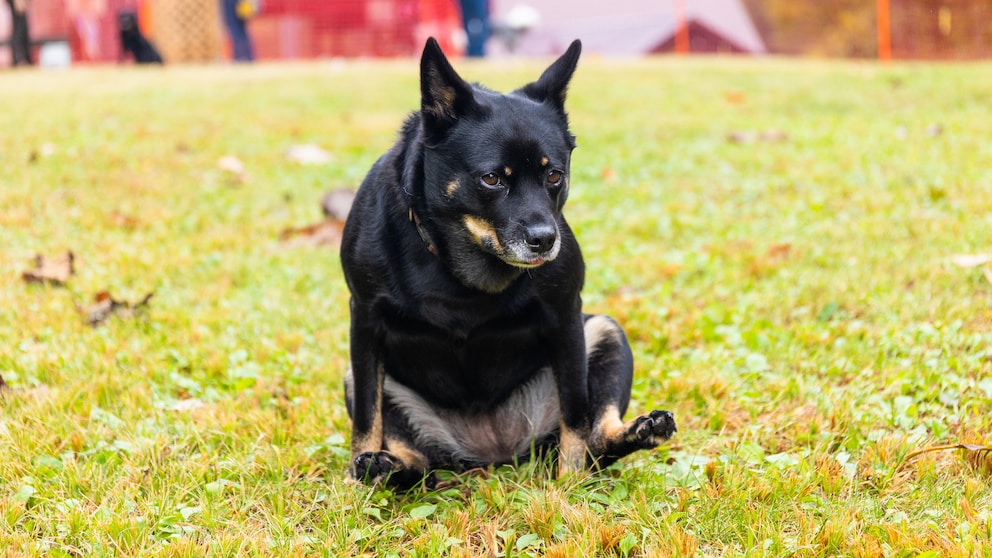
It looks as if dogs—and sometimes cats—are sledding. The animals press their rear ends down and drag them across the floor using their front paws. Even though this may look funny and amusing, there is often something serious behind it. When the animal scoots across the floor like this, it often suffers from severe itching or pain in the anal area.
If the animals cannot reach this sensitive area with their mouths, tongues, or teeth, they look for other ways to find relief. Often, the animals also show additional symptoms.
“Scooting” Is Usually Just the Tip of the Iceberg
Cats often run around as if stung by a tarantula and then lick their anal area. Dogs frequently bite their tails. Some animals rub against furniture or suddenly stop using the litter box because they associate it with pain. Symptoms and causes can be varied, and usually only a veterinarian can provide complete certainty. These are the most common symptoms and behaviors:
- The animals “scoot”—drag their rear ends across the floor
- Frequent licking and nibbling in the anal area
- Redness and swelling near the anus
- Biting their tails
- Spinning in circles
- Pressing their rear ends against upholstered furniture
- Having difficulty and pain during bowel movements
- Diarrhea
- Constipation
- Terrible odor when the anal gland bursts
- White spots in the anal area or in the stool (indicating a worm infestation)
- Poor appetite in dogs and cats
- Fever
Also of interest: Parvovirus in Dogs – Symptoms and Treatment
What Causes Itching in the Rear End of Dogs and Cats?
Among the most common reasons for dogs are blocked or inflamed anal glands and worm infestations. Unlike dogs, cats rarely suffer from blocked anal glands. They also often scoot across the floor after having a bowel movement, especially if they suffer from diarrhea or constipation.
Possible causes include:
- Worms
- Allergies
- Injuries and fistulas
- Tumors
- Inflamed or blocked anal glands
We will describe the possible causes in more detail below.
Worms
Both cats and dogs can suffer from worm infestations. For example, if cucumber tapeworms migrate from the intestine to the anal area and dry there, it can cause severe itching. If white spots appear, a worm test should be obtained. If the test is positive, a deworming treatment should be administered—but only then! Giving deworming treatments prophylactically and too frequently can damage the animal’s healthy gut flora.
Allergies
Our four-legged friends can also spontaneously develop allergies. These can be food intolerances or allergies to certain substances and chemicals, such as in dog shampoo or laundry detergent. If the animal suddenly becomes allergic to a food, the ingredients should be closely examined, and an elimination diet should be conducted. This is very labor-intensive, but if you’re lucky, the digestive problems will disappear.
Fistulas or Swallowed Objects
Another possibility is that the dog or cat has swallowed something indigestible. If it cannot be expelled naturally, only surgical removal will help. Anal fistulas, which can develop from an anal abscess, can also cause itching and pain. These must be treated with antibiotics and ointment.
Tumors
A rare cause in dogs and cats can be an anal sac carcinoma. Breeds such as English Cocker Spaniel, German Shepherd, Alaskan Malamute, and Dachshund are particularly susceptible. The tumor usually needs to be surgically removed. Often, chemotherapy follows to prevent metastasis.
Most Common Cause: Blocked or Inflamed Anal Glands
The anal glands can also become inflamed, which is relatively common in dogs and very painful for the animals. The anal glands are located in the anal sac to the left and right of the anus. They produce a strong-smelling secretion with which dogs, and also cats, mark their territory. If the glands are blocked, for example, because they are no longer emptied due to too soft stool, the gland secretion cannot drain. Fur matted with feces can also hinder the emptying of the anal glands.
Small dogs, in particular, often suffer from blocked anal glands due to their small ducts. The problem can worsen if bacteria come into play and the anal glands become inflamed. If the animal is not treated, further complications, such as an anal gland abscess, can occur. This leads to pus accumulations that can cause the anal gland to burst. To prevent further infections of the open wound, an antibiotic is usually given.
Since emptying the anal glands in cats is very painful, the veterinarian will mostly sedate them during the procedure. You should not express the cat’s anal glands yourself. Because there are cases in dogs where the anal glands need to be emptied every two weeks, it is advisable for owners to have the procedure demonstrated by a veterinarian or dog groomer. Regular visits to the vet could otherwise become quite expensive over time.

Can You Express a Dog’s Sebaceous Cyst Yourself?

Why dogs like to smell our crotch
Guide to Treating Blocked Anal Glands
For expressing the anal glands in dogs, disposable gloves can be used. You should also have paper towels or a kitchen roll on hand. Wet wipes and petroleum jelly for aftercare are also useful. Treatment on the carpet is not recommended, as the secretion can squirt quite far. It’s best to go to a place that is easy to clean. A tiled surface is easiest to clean, or you can go outside.
Special caution is advised if the anal sac is already festering or if blood is visible in the secretion. In such cases, a veterinarian should definitely be consulted. Fever can also indicate an advanced infection.

Note: If the anal sac is already festering or if blood is in the secretion, a veterinarian should definitely be consulted. Fever can also indicate an advanced infection.
Conclusion: When dogs and cats scoot their rear ends across the floor, it is usually due to a physical ailment. In addition to the most common causes like blocked anal glands and worm infestations, the animal should also be checked for grass mites, flea, and tick infestations.
Sources
- Erste-Hilfe-beim-Hund.de, “Expressing Anal Sacs” (accessed on 9/23/2025)
- Haustierratgeber.de, “Dog Scoots Its Rear End Across the Floor: What to Do?” (accessed on 9/23/2025)
- Petdoctors.at, “When the Cat Scoots: 10 Symptoms and 3 Causes of Anal Gland Inflammation” (accessed on 9/23/2025)
- Tiermedizinportal.de, “Anal Gland Inflammation in Cats – What to Do?” (accessed on 9/23/2025)
- Immune-therapy.vet, “Anal Gland Tumor in Dogs” (accessed on 9/23/2025)