

January 15, 2023, 2:38 pm | Read time: 4 minutes
Our four-legged friends have questionable hobbies. Many dogs love to eat disgusting things, such as excrement, and roll in carrion. The good news? This fecal indulgence is avoidable.
For some dog owners, this sight is stomach-turning: With visible enthusiasm, dogs not only eat discarded food they find while walking but also engage in other gross activities, like rolling in excrement of any origin and even vomit. This behavior likely dates back to the domestication process when dogs had to survive on human waste and excrement. “This made them useful because it improved hygiene around the home,” says behavioral biologist Stefanie Riemer. What is disgusting to us is simply pleasant for dogs–even today.
“Animals are not concerned with checking expiration dates or whether packaging is damaged,” says veterinarian and animal behavior therapist Ronald Lindner from Leipzig. “They just consume and see if it tastes good or not.” This could be soft horse droppings or frozen rabbit feces they discover when they pick up a scent: “This is part of their exploratory behavior and is consumed by them like we would eat a saltine cracker,” Lindner explains.
When Dogs’ Gross Habits Become Dangerous
It only becomes dangerous when dogs can’t stop and it leads to stomach overload. This is similar to human excrement or vomit with alcohol or even drug residues. In serious cases, severe health issues are possible. “The consumption of cat feces and human feces is generally normal,” confirms Riemer. It is more concerning if dogs constantly eat the feces of their peers or plastic parts. “Healthy dogs shouldn’t do that.” This often indicates an undiscovered medical problem.
Behaviors like “pica” (eating non-edible items) are often contributed to by a gastrointestinal disease. This is often not recognized without detailed diagnostics. However, it is also conceivable that eating dog feces serves merely as “entertainment.” Dogs raised in kennels sometimes exhibit this behavior. The desire for attention can also be behind this bad habit. According to Ronald Lindner, “almost 100 percent” of the time, malnutrition is not the cause. Dog food today is exceptionally good, strictly controlled, and generally provides all necessary nutrients.
Also interesting: Should You Brush Your Dog’s Teeth

Tips for getting rid of stubborn dog odors
Why Dogs Eat Grass–and When Owners Should Be Cautious
How to Break Dogs of Gross Habits
To prevent dogs from eating unwanted or even dangerous things, the veterinarian recommends anti-poison bait training. Even “eating machines” like Labradors can learn not to immediately swallow things they find on the ground but to indicate them instead. The secret is not to punish the wrong behavior but to positively reinforce the correct alternative behavior. “It takes less than ten minutes to teach them the basics,” says Ronald Lindner. “But you have to practice it thousands of times until the behavior is generalized.”
The idea behind this method is that the dog no longer sees the unwanted “treats” as the ultimate prize and greedily devours them but instead chooses to indicate them–for example, by sitting in front of them. In return, they receive the absolute best treat ever, which is even tastier: liverwurst or cheese, for instance. Which favorite treat it is for each dog must be individually tested beforehand.
In the initial training steps, even just looking at the owner when the dog discovers the object of desire–but doesn’t eat it–is rewarded with the super treat.
Rolling in Carrion or Feces–Unfortunately Also Normal
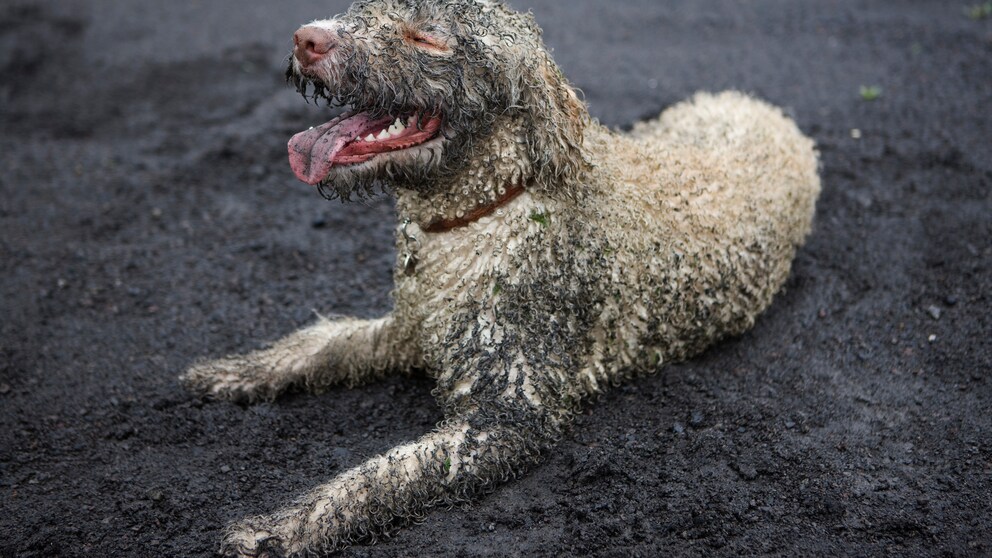
Many dogs are not only happy when they can devour disgusting things: Somehow, owners agree, they always come running back particularly joyfully after discovering an old carcass or fresh feces of a wild animal on which they could roll with delight. “The more gruesome it smells, the better it is,” says dog behavior trainer Alexandra Wischall-Wagner. Fox feces rank at the top.
Dog researchers suspect that this rolling preference goes back to the hunting behavior of wolves: They want to mask their own scent, feel a sense of belonging to the group, and not stand out in the pack. However, Ronald Lindner sees it more as “a clear comfort behavior.” His dog once managed to roll in a stinking, dead swan. “He felt very happy and comfortable!” The behavior therapist suspects that this rolling is a way to cope with stress–both negative and positive. “A great vacation can overwhelm even the strongest dog,” says Lindner. “Then they don’t know what to do with all their feelings–and if they find a swan, it’s a great way to relieve stress.”
With material from dpa