


March 19, 2026, 8:50 am | Read time: 3 minutes
Many dogs carry oversized sticks during walks. Dog trainer Katharina Marioth explains why carrying is so fascinating for dogs, when it becomes a risk, and what safe alternatives owners can offer.
An Object in the Mouth Gives Dogs Security
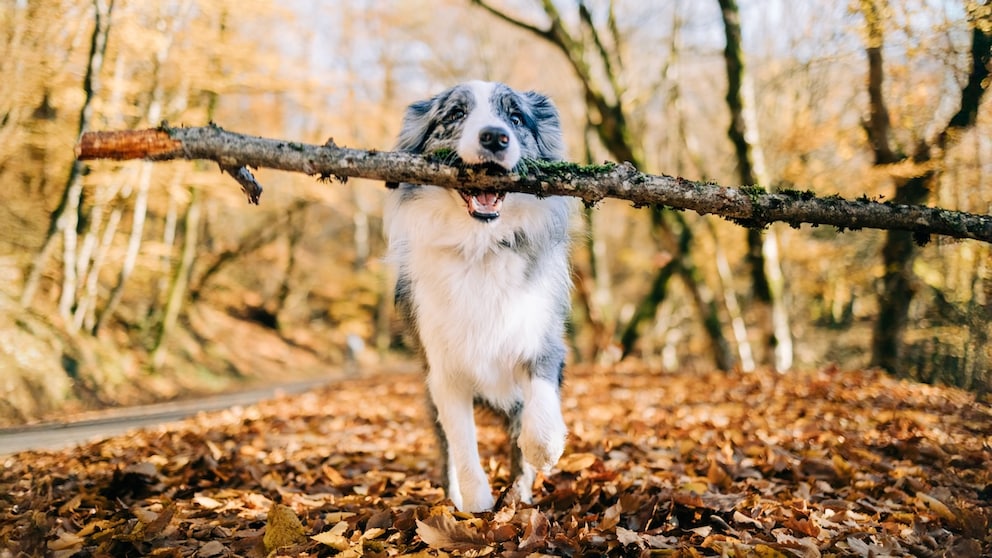
Many dogs—especially large or very eager retrievers—carry huge branches during walks. Some even choose sticks they can barely lift or ones that constantly get caught. But what fascinates dogs about this? According to dog trainer Katharina Marioth, several factors come into play: “For one, carrying is simply calming,” she explains. Some dogs even walk around with a stuffed animal, while others prefer a stick.
This behavior can also help owners in training—for example, to distract dogs with a strong prey drive from joggers, cyclists, or other dogs. “An object in the mouth gives them security and helps with focusing.”
These Dogs Especially Like to Carry Large Branches
Moreover, carrying branches is rooted in classic play and prey behavior. Even puppies are constantly looking for something to put in their mouths. “Finding, carrying, and presenting prey is simply fun,” says Marioth. When adult dogs choose large branches, it is often a display behavior. Marioth describes: “The chest goes out, the tail up, the neck tenses.” Many dogs show off with oversized branches, trying to impress their peers.
There isn’t a clear breed list, but Marioth observes that retrievers, shepherds, Lagotti, and energetic small hunting dogs like Jack Russell terriers are often seen with oversized branches. The key is not the size of the dog, but whether it generally enjoys picking up and carrying prey.

Help, My Dog Barks at People! Dog Trainer Offers Advice

Your Dog Doesn’t Come When Called? Here’s What You Might Be Doing Wrong
Underestimated Risk: Why Large Branches Are Dangerous for Dogs
As cute as the behavior seems, the danger is significant. “Stick injuries are massively underestimated,” warns Marioth. Throwing sticks, in particular, can have severe consequences. Palate injuries are common when a dog grabs a stick at the wrong angle. Chest injuries also occur when a dog jumps into a rotating stick. Additionally, many dogs shred sticks and swallow large amounts of splinters.
“One tip is to feed two to three forks of sauerkraut. It coats the splinters and eases their passage through the intestines.” Injuries to the gums or splinter remnants in the mouth are also common. Therefore, she advises: “After every walk, lift the lips and check the mouth area.”
Search Games Instead of Stick Shredding
If you know your dog likes to carry, you should offer alternatives that are less risky. Especially for young dogs that tend to carry to impress during puberty, it is wise to discourage sticks early on. Marioth recommends: “You can use dummies made of hard plastic, softer models for dogs with more delicate mouths, or even stuffed animals.
It’s important to reinforce the substitute just as emotionally as many owners unknowingly reinforce the stick.” Search games are also suitable, such as hiding the dummy during a walk or placing a sturdy object the day before for the dog to find later.
In general, carrying large objects is not problematic—as long as they are not dangerous sticks. With suitable alternatives, a dog’s need can be safely fulfilled.