

April 8, 2026, 6:44 am | Read time: 6 minutes
Animal welfare sounds like love and responsibility. But when a rescue dog causes problems after adoption, some organizations withdraw and leave the helpers on their own. PETBOOK author Nina Ponath experienced such a case in her circle of friends and spoke with experts about it.
A Case Straight Out of the Textbook
My friend Tine, who is usually very cheerful and not easily rattled, was on the verge of burnout last year. The reason wasn’t too much stress at work, but an unusual burden at home. A burden with four legs and thick fur.
A few months earlier, she had decided to once again provide a temporary home for a dog as a foster. Being a foster means taking in a rescue dog, often just for weeks or months, until a permanent family is found. This was nothing new for Tine—she had done it several times before, and the dogs were usually quickly rehomed, and often, it worked out well.
“Good-Natured, Well-Socialized”—Descriptions Are Often Misleading
This time, everything sounded straightforward. The organization’s description was promising: “Milly, female, likely a Labrador mix, well-socialized.” Shortly after, Milly was adopted. But just a few days later, Tine’s phone rang. The adopters had returned the dog. Could Tine take Milly back? She agreed and soon realized that the description had little to do with reality.
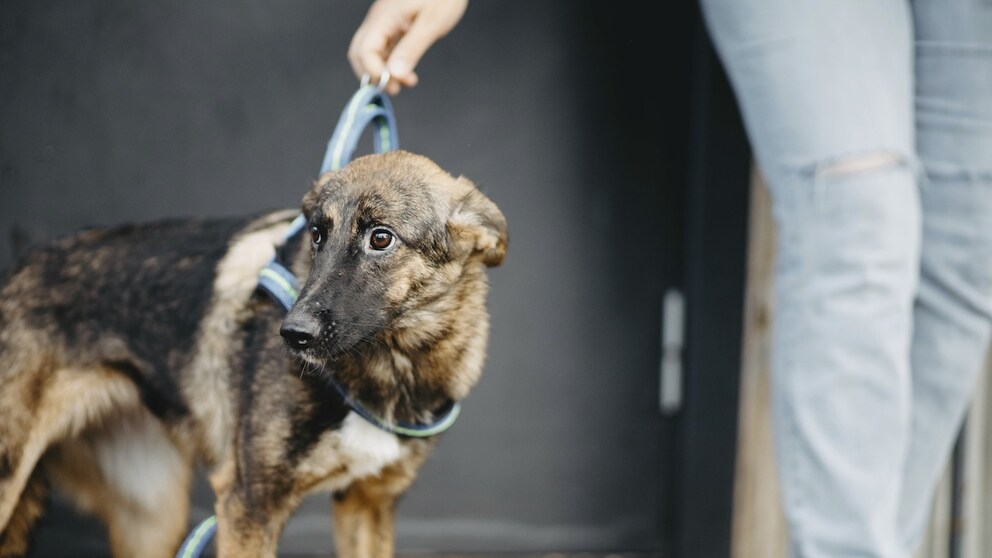
Milly was a fearful, sometimes almost panicked dog who seemed to have had little experience in her life so far. She reacted to most things in her environment with excited barking and snapped forward if someone got too close.
When Problems Arise, Few Organizations Are Reliably Reachable
Unfortunately, Milly is not an isolated case. “It’s not uncommon for dogs to be adopted under false pretenses,” says dog trainer Torsten Bencke. “The ads often say: ‘good-natured, well-socialized.’ In reality, some dogs have spent their lives in kennels or even basements, so it’s hard to assess, let alone know, how they will behave.”
Bencke is all too familiar with the problems. Overwhelmed owners frequently turn to him, unable to cope with a rescue dog some time after adoption and feeling abandoned by the responsible organization. “In my experience, it’s almost always the same: Initially, the organizations are very strict with pre-adoption checks and contracts. But when problems arise, few are reliably reachable.” Recently, a family contacted him whose dog—allegedly a “friendly family dog”—had bitten their child. The organization could not or would not help.
When Breed Information Is Sugarcoated
Additionally, breed information is not always accurate. “Often, it’s said that the dog has Labrador in it, but it’s not mentioned that herding and guard breeds are also involved, which have a strong herding instinct,” Bencke explains. “You have to be able to handle that—otherwise, it becomes a real problem.”
An extreme example: A few years ago, a Kangal, weighing 172 pounds, ended up with him, having been adopted as a supposed Labrador. A Caucasian Shepherd had also been passed off under a false label. “These dogs are genetically programmed to defend their territory. You can’t just train that away. If such a dog is placed in a small apartment with no task, frustration is inevitable.”
Also interesting “Rescue Dogs? Not an Option for Me!”
Shelters Are Full of “Wrongly” Adopted Dogs
Tine had to experience this as well. She repeatedly stepped in when Milly couldn’t stay with the adopters. A task that the organization should have taken on. “Many animal welfare organizations no longer feel obligated to take dogs back or rehome them—even in cases of biting incidents,” says Bencke. This is one reason why shelters are overcrowded. “There are so many guard dogs in shelters—and not without reason.”
This is confirmed by Kerstin van Kan, press officer of the German Animal Welfare Federation: “Many animals in shelters come from dubious origins, such as illegal puppy trades or disreputable foreign organizations.” They are often surrendered due to owners being overwhelmed, as they had not sufficiently informed themselves beforehand.
“Many buyers are not aware that the animals have received little or no socialization and what it truly means to care for an animal according to its needs,” says Kerstin van Kan.
Better to Adopt from a Shelter
An evaluation by the German Animal Welfare Federation in 2021 among member organizations showed that, on average, 29.1 percent of dogs in German shelters exhibited problematic behavior. Of these behaviorally problematic dogs, 67 percent were between four and seven years old and were predominantly large dogs.
Of the dogs classified as behaviorally problematic, it was known that 21 percent came from abroad. For another 25 percent, the origin was unknown, suggesting a higher number of unreported cases.
“The German Animal Welfare Federation therefore advocates adopting a shelter animal if you want to take in a dog,” says Kerstin van Kan. Shelter staff have an eye for which animal suits someone and know the animals living with them. “This is a criterion we also apply to reputable foreign animal welfare organizations: support beyond adoption,” says Kerstin van Kan. “This also includes ensuring that foreign animal welfare organizations have the capacity to take back ‘returns.’”

How sustainable is it to bring in animals from abroad?

A Dog From International Animal Rescue? What You Should Know Beforehand
Owners Must Receive Support When Problems Arise
So what to do? “We have long called for proof of theoretical expertise before acquiring a dog,” says Kerstin van Kan. Ideally, owners should be able to demonstrate basic knowledge of proper rearing, socialization, humane handling, care, and training of the dog. Additionally, foster homes and final owners should receive more reliable support when problems occur.
“Animal welfare is important—but it should not come at the expense of those who want to help,” says Torsten Bencke. “Otherwise, dogs end up being passed from family to family and never truly settle.”
A Final Appeal
Tine’s story with Milly shows: The idea of giving a rescue dog a new life is wonderful—but for both dog and owner to be happy, it requires honesty from the organizations, realistic assessments of behavior and breeds, and above all, the assurance of not being left alone in an emergency. Only then can adoptions truly succeed—for the people and for the dogs.