

September 29, 2025, 4:24 am | Read time: 3 minutes
Few dog owners would primarily think of danger during a fall walk. Yet, among colorful leaves and rustling branches lie inconspicuous beechnuts, which can quickly become a serious problem for dogs. Find out more at PETBOOK.
Prickly Danger While Walking
Beechnuts are an underestimated danger, especially for small dogs and puppies. When they fall from the tree in October, caution is advised. The small brown nuts contain toxins that are dangerous for dogs and humans alike. If your dog eats beechnuts, symptoms such as gastrointestinal issues, vomiting, diarrhea, and cramps may occur. Even more dangerous than the toxins are the shells of the beechnuts.
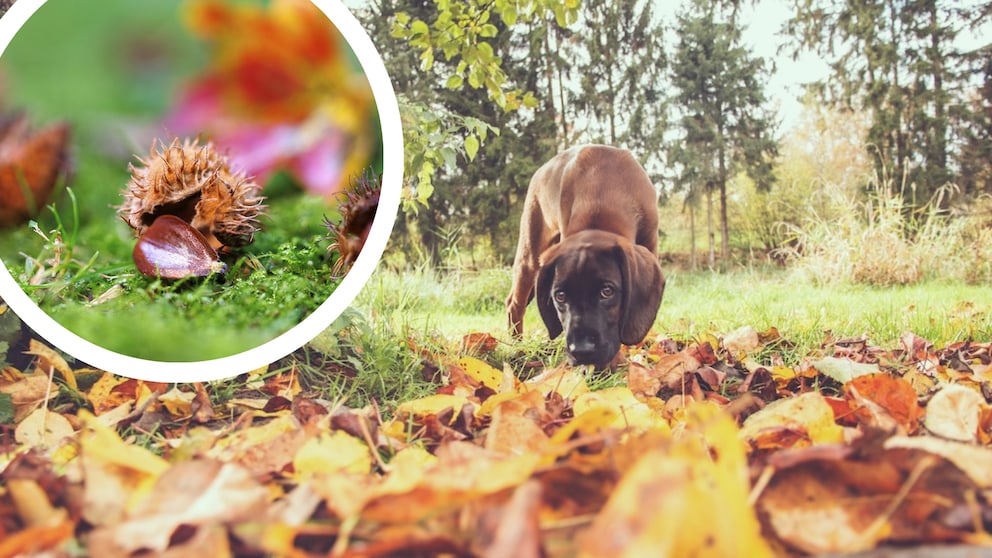
The angular nuts contain a substance called fagin, and they also have oxalic acid and alkaloids that can lead to severe poisoning. You can recognize beechnuts by their triangular shape and hard brown shell. Inside, the nuts are protected by a very thin layer that looks like thin paper.
Few dog owners know that the sharp, woody shells of beechnuts can pose an even greater problem than the toxin itself. The hard shells are a significant danger, especially for small dog breeds. If not chewed properly, they can injure the mucous membranes in the mouth, throat, and entire gastrointestinal tract, or in the worst case, even cause an intestinal blockage. Immediate surgery is then necessary to save your dog’s life. 1
React Correctly and Best to Prevent
If you notice your dog eating beechnuts, you should react quickly. Keep a close eye on his behavior. Does he show the symptoms mentioned above? Also, watch for subtler signs of stomach pain or loss of appetite, which could indicate possible poisoning. At the first signs of nausea, persistent vomiting, or stomach pain, do not hesitate to act and seek a veterinarian immediately.
Also interesting: Expert Reveals How Dogs Can Better Get Through the Fall
Tip: Especially small dogs and puppies should ideally not consume any beechnuts to prevent injuries or even choking symptoms in the mouth and gastrointestinal tract. But even large dogs should only consume a very small number of beechnuts to avoid poisoning. Considering that the nuts can quickly become toxic even for elderly people and children, utmost caution is advised for dogs.
Therefore, prevention is key: especially in October, when the beech tree sheds its fruit, you should keep a close watch on your dog. Consider whether it might generally be better to keep him on a leash if he is not reliably recallable, or if you are still training the recall. This way, you can ensure he doesn’t randomly pick up everything while exploring.