

December 25, 2025, 7:08 am | Read time: 5 minutes
Many dog owners fear nail trimming more than their four-legged friends do. Others underestimate how quickly things can go wrong. Nails that are too long can cause pain, and nails cut too short can lead to bleeding, fright, and future mistrust of nail trimming. However, the process can be managed well if you know what to watch out for. PETBOOK consulted veterinarian Dr. Hölter to find out which methods are effective, what common mistakes occur, and when it’s better to let a professional handle it.
Overview
- Why Nail Trimming Is Important
- When Are Dog Nails Too Long?
- How to Trim Dog Nails Correctly
- Danger Zone “Quick” – What You Must Know
- Step-by-Step Guide: How to Safely Trim Your Dog’s Nails
- If Your Dog Is Afraid – Better Not Trim Yourself
- Common Mistakes – and How to Avoid Them
- How Often Should Dog Nails Be Trimmed?
- Conclusion: Nail Trimming Is Important – But Not Always a Task for Home
Why Nail Trimming Is Important
In nature, animals rarely have overly long nails. Dog nails primarily wear down on hard surfaces. Asphalt, gravel, or rocky terrain provides a natural “pedicure.” However, many family dogs live on carpet or hardwood floors, walk mostly on soft forest ground, or move less than their “wolfish” ancestors.
Long nails are a result of these changed living conditions and are not only bothersome for the dog owner. They can also lead to painful changes for the dog, such as:
- Improper weight distribution on the paws
- Altered gait
- Overextension of the toes
- Ingrown dewclaw
- Increased risk of injury during play
- The longer the nails, the more the pressure shifts backward when walking, which in turn stresses joints and tendons.
When Are Dog Nails Too Long?
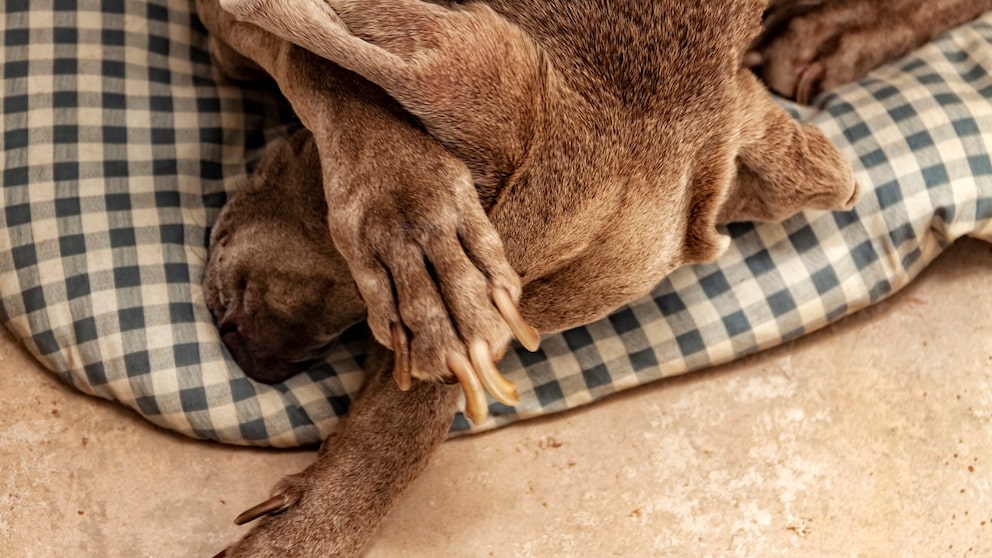
A simple rule of thumb is: Nails are too long if they touch the ground when standing. They should not make clicking or other noises when walking. Curved or sideways-growing nails also need regular trimming.
Not all dogs’ nails grow at the same rate. Dogs whose nails tend to grow quickly include:
- Older dogs
- Small breeds (Chihuahua, Maltese, etc.)
- Dogs that walk a lot on carpet
- Dogs with misalignments
How to Trim Dog Nails Correctly
There are three common methods for trimming:
- Nail clippers/scissors
- Nail trimmers/guillotine clippers
- Nail grinders (Dremel principle)
The suitable method depends on the dog, the nail condition, and your own routine.
Danger Zone “Quick” – What You Must Know
Inside the dog’s nail runs a blood vessel—the so-called “quick.” Cutting too far causes significant bleeding, which is very unpleasant for your dog. With white or light nails, the quick is easily visible, reducing the risk of injuring your pet. With black nails, however, you must proceed very cautiously and work millimeter by millimeter.
Veterinarian Dr. Hölter explains: “A grinder offers more control, removes only small amounts, and is often better suited for sensitive or brittle nails.”
Step-by-Step Guide: How to Safely Trim Your Dog’s Nails
- Calm your dog and create a positive atmosphere. A calm voice and treats work wonders. Proceed without force or haste; nail trimming should not become threatening.
- To stabilize the paw, hold the paw with one hand around the pad, keeping your thumb on top and the other fingers below.
Important: Apply light pressure to make the nail protrude slightly. - Always cut from bottom to top and slightly angled to the growth direction, not across. This feels more comfortable for your dog and prevents splitting.
- Trim less, but more often: Especially with dark nails, this is the golden rule, as otherwise, you might injure your dog.
- When using a grinder, ensure not to hold the device in one spot for too long: Maximum 1–2 seconds per spot, or it will generate uncomfortable heat.
- Don’t forget the dewclaw: The claw sitting higher on the side wears down very little—in particular, it easily grows too long.
If Your Dog Is Afraid – Better Not Trim Yourself
Nail trimming can be an uncomfortable situation for your pet. Many dogs fear the clippers because they dislike the pressure, have had bad experiences, or find the noises unpleasant.
Dr. Hölter clearly advises caution: “If the dog is afraid of nail trimming, I would rather let a veterinarian do it. It puts less strain on the relationship with the owner.”
Your dog should not associate you with pain or fear. Additionally, there’s another advantage: In a veterinary practice, the procedure is performed routinely, quickly, and with less stress. Professionals trim or grind routinely, quickly, and without emotional charge—which many dogs find much easier.
Common Mistakes – and How to Avoid Them
Mistake 1: Trimming Too Infrequently
A nail that has grown too long pushes the quick forward. The longer you wait, the more difficult the next trim becomes.
Mistake 2: Removing Too Much at Once
The risk of cutting into the quick increases significantly.
Mistake 3: Using the Wrong Clippers
Cheap or dull scissors tend to crush the nail rather than cut it cleanly. Invest in good clippers.
Mistake 4: Restraining the Dog
Avoid holding your dog tightly. It increases panic and resistance.
Mistake 5: Punishing the Dog
Many scold their pet when it squirms. This makes every subsequent attempt more difficult.

Should you cut your cat’s claws?

How to correctly cut a rabbit’s claws
How Often Should Dog Nails Be Trimmed?
The frequency varies greatly depending on the environment and habits: Dogs active on asphalt wear down their nails sufficiently on their own, so trimming may only be needed every three to four months. For small dogs in apartments, you may need to trim every three to four weeks. Pay attention to signs of long nails: Do your dog’s paws make noise when walking?
Conclusion: Nail Trimming Is Important – But Not Always a Task for Home
Nail trimming prevents painful encounters with your dog and prevents pain, misalignments, and injuries. With the right technique, good tools, and a lot of calm, many owners can groom their dogs themselves.
As soon as your dog shows signs of fear and insecurity, or if brittle nails are involved, it’s clear: Let the veterinarian handle it—for the sake of the dog and the relationship.