

September 4, 2026, 10:03 am | Read time: 3 minutes
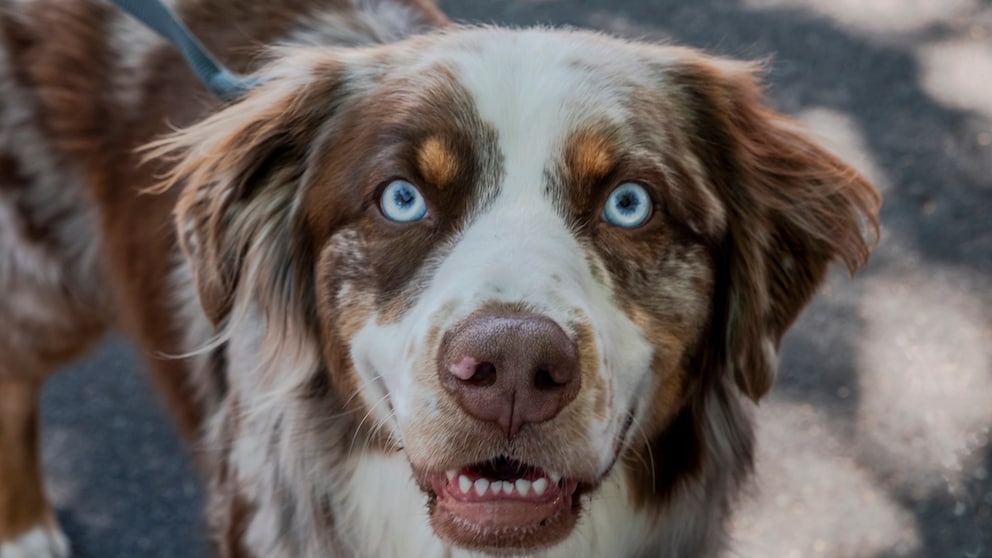
When you look deeply into your dog’s eyes, you often get the feeling of being closely observed. A new study now suggests that dogs even pay attention to something as subtle as our blinking. They seem to be particularly attentive when it comes to their familiar humans.
Why Researchers Studied Blinking
Blinking primarily protects the eye and prevents it from drying out. For humans, blinking can also have social significance. It is often associated with attention, interpersonal connection, and shared rhythm.
Previous research has already suggested that blinking can convey a social message for animals as well. For instance, cats respond to slow blinking from humans, which means: “I can close my eyes slowly without you attacking me.”
It has been observed that dogs blink more frequently when they see other dogs blinking. An Italian research team wanted to find out if dogs also respond to human blinking and whether it matters who is in front of them.
How Did the Researchers Proceed?
For the study, 38 dogs aged between one and twelve years were tested. The animals watched short video clips of three people:
- their own owner
- an unfamiliar woman
- an unfamiliar man
In one version, the people blinked every three seconds. In the control recording, they looked at the camera with an unmoving, neutral expression. The researchers recorded, among other things, how often the dogs themselves blinked.
Dogs Blinked More Often with Their Own Owner
The dogs blinked more frequently when they observed people blinking. However, this effect was only seen with their own owners, not with strangers. When the dogs saw their blinking human, they blinked more often than when faced with a fixed gaze.
This suggests that not only does the blinking itself play an important role in the dog’s reaction. Apparently, the relationship between dog and human also influences blinking behavior.
Did Dogs React More Strongly to Women?
In fact, the dogs blinked particularly often when they saw their female owner blink. However, the difference between female and male owners was not really clear.
Therefore, the researchers cautiously evaluate this result. After all, the study was not originally intended to examine the influence of gender. Additionally, other factors such as shared time, daily life, or the bond between dog and human could have influenced the results.

Cats Use Right Nostril to Identify Humans by Sweat Scent

“If You Blink, I’ll Blink Back!” How Dogs React to Other Dogs
What Does Blinking Mean for Dogs?
The study suggests that dogs perceive even very small facial movements of their caregivers. However, it cannot yet be concluded that blinking is a conscious message or a sign of affection.
According to the researchers, different mechanisms could be at play. Possible explanations include increased attention, automatic imitation, or more general social processes. Further studies are needed to determine which explanation is correct.
What Dog Owners Can Take Away from This
The study does not show that dog owners can “speak” to their pets through blinking. However, it provides another indication of how attentively dogs observe the faces of familiar humans.
Whether blinking actually has communicative significance, is related to relaxation, or merely reflects increased attention is still open. What is certain, though, is that when their own humans blink, dogs apparently pay closer attention than with strangers.