


May 19, 2026, 10:31 am | Read time: 5 minutes
Anyone who walks their dog through the woods, meadows, or tall grass knows the subsequent tick check all too well. These bloodsuckers can transmit diseases such as Lyme disease or TBE and should therefore be detected as early as possible. A new smartphone hack is currently going viral: Using the magnifying function and an inverted color filter, ticks are supposed to be much easier to find in fur. PETBOOK editor Jasmin Reddmann tried it on her Labrador, Hector. Does the tick trick really work as well as everyone says?
How the Tick Trick Is Supposed to Work
Ticks are not only annoying but can also transmit dangerous diseases–such as Lyme disease or TBE. In rare cases, these diseases can cause severe complications and even be fatal.
Accordingly, the idea behind the viral tick trick is not only simple but effective. You activate the magnifying function on your smartphone. There, you can set the filter to “Inverted.” This makes dark colors appear light and vice versa. Ticks are supposed to become more visible in fur or on skin. Especially the tiny nymphs, which are easy to overlook, are said to stand out more.
Online, the whole thing sounds almost revolutionary. Ticks would suddenly “glow,” it is sometimes said. Especially with dark fur, the tip actually seems quite sensible.
Also interesting: Tick protection for dogs–amber necklaces and garlic don’t help
The Theory Makes Perfect Sense
My dog Hector is a brown Labrador. Small ticks quickly disappear visually in his fur. This simple trick with my own phone would save me a lot of time painstakingly searching for the bloodsucking parasites after every walk in the woods.
Just one day after I became aware of the trick, I was able to quickly grab my phone with the magnifying app. And to be fair: The trick isn’t entirely wrong. In my photos, you can indeed see that the tick stands out more from the fur with the inverted filter. But here’s my big caveat: It only worked well if the tick was still visibly crawling on the surface.
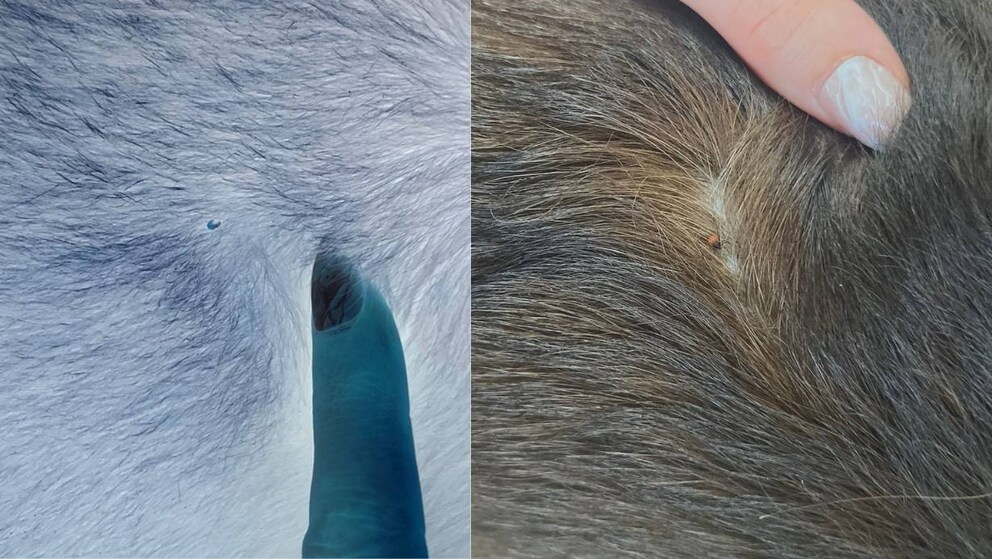
In Practice, It Was Much More Tedious Than Expected
As soon as the tick sits a bit deeper in the fur or is completely hidden between the hairs, the filter hardly helps. To even recognize the bloodsuckers with the phone’s magnifier, you still have to carefully search the fur, ideally strand by strand. And if I’m already checking each hair section individually, I personally don’t need to hold a smartphone in the other hand as well.
It became particularly complicated for me around the head area. Holding the fur apart with one hand, guiding the phone with the other, and simultaneously trying not to lose sight of the tick–honestly, it’s quite fiddly. Especially if the dog moves.

Expert explains why you should freeze dog ticks after removing them

Cats Can Also Get Lyme Disease–Here Are the Symptoms
Even Relaxed Dogs Find It Annoying Eventually
Hector is very tolerant and usually sits quietly during the search. Still, I quickly noticed: Especially around the head, he finds the fiddling with the phone right in front of his face quite unpleasant.
As soon as he slightly turns his head or moves, you lose sight of the tiny tick in the fur. This is particularly frustrating if it has already latched on. Then you have to put the phone down to get a tick remover or card–and the search starts all over again.
My Conclusion on the Viral Tick Trick
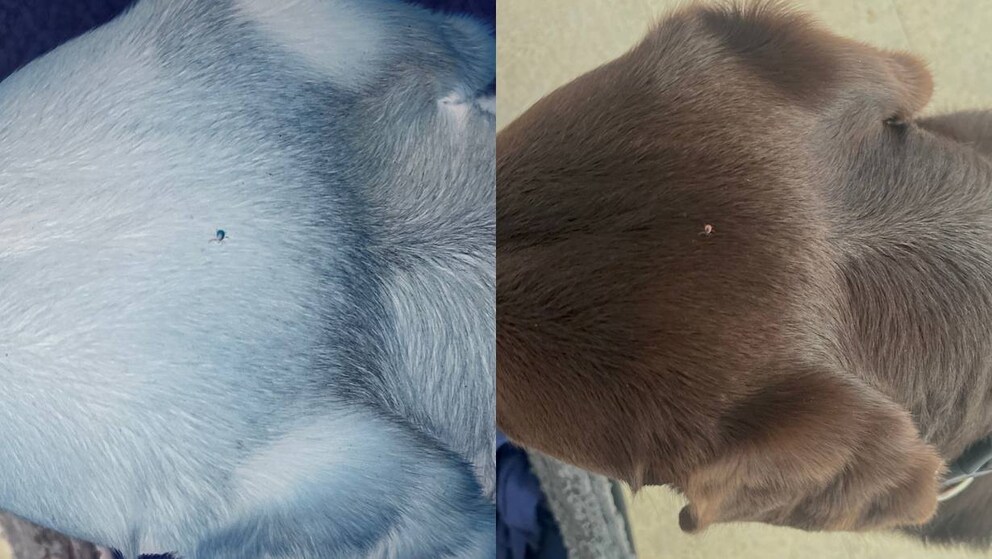
I understand why the smartphone hack is getting so many clicks right now. The idea sounds clever and straightforward. Plus, it’s very modern. After all, most people always have their phone handy. And yes, the effect behind the magnifying hack is visible in my photos.
In everyday life, however, it didn’t convince me personally. The ticks I found on Hector, I honestly would have discovered faster without a phone, just with my eyes or by feeling through the fur. For me, searching with a smartphone was ultimately more tedious than without. When I check my dog after a walk, I prefer to focus directly on the fur rather than also fiddling with a camera, filter, and magnifier.
The function seems helpful when the tick is still crawling openly on the fur surface. This could indeed be useful for dogs with black fur to spot black ticks. In my case, the small bloodsucker with a reddish tint was also easily visible on Hector’s brown fur without a phone.
For those who manage with it or who search more thoroughly because of it, the trick can certainly help. Because the most important thing in the end is to detect ticks as early as possible, whether with a phone or without.