


October 16, 2025, 1:42 pm | Read time: 5 minutes
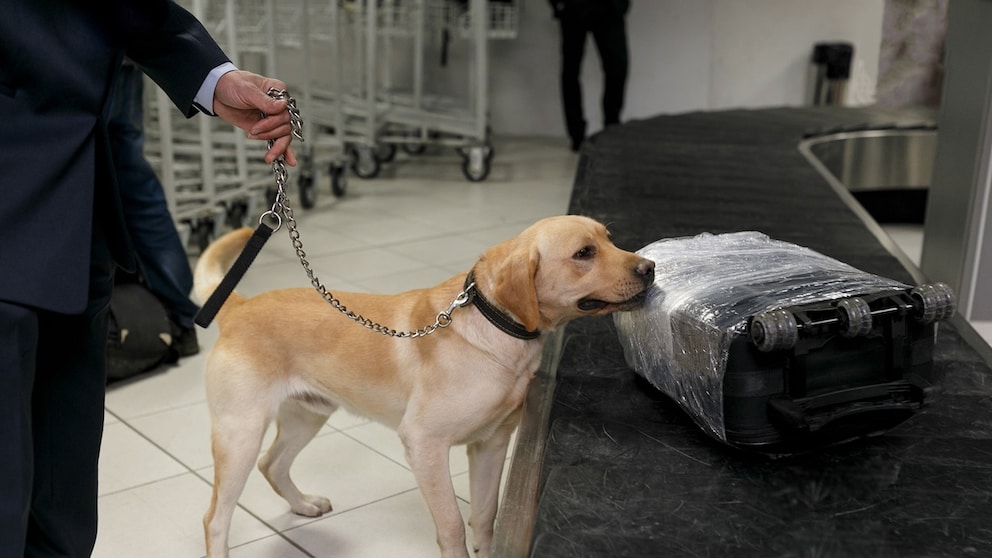
Bomb-sniffing dogs are considered true lifesavers—they detect hidden explosives before any human could. But how reliable are they really? A new nationwide U.S. study put 56 professional detection dog teams to the test—with surprising results: Not a single team met the new, stricter certification requirements.
Although we now have other advanced analytical tools for detecting explosives, bomb-sniffing dogs are still considered the most effective method for so-called field detection of explosive threats. Training is conducted both within agencies like the police, customs, or border protection and in external institutions. In Germany, for example, through the “Spürhundeschule” or the Fraunhofer Institute for Chemical Technology ICT.
Training usually leverages the dogs’ play drive, which is why highly play-motivated breeds like the Belgian Shepherd are preferred. The effectiveness of this training has already been proven in studies. However, the extent to which bomb-sniffing dogs can reliably find all explosive sources has not yet been scientifically validated.
Why a New Standard Was Needed
As early as 2009, the U.S. National Research Council called for greater standardization of forensic methods—including the work of detection dogs. Until now, much has relied on experience and intuition rather than scientifically tested procedures.
The U.S. organization OSAC (Organization of Scientific Area Committees for Forensic Science) has been working since 2014 to change that. It developed the ANSI/ASB 092 standard, which specifies how bomb-sniffing dogs in the U.S. should be trained and tested. It aims to ensure that teams are evaluated by the same standards everywhere, making their performance measurable and comparable.
However, whether it is truly practical was unclear until now—this is precisely what researchers aimed to find out with their current study.
Stricter Tests, Higher Demands
The study was conducted by researchers from Texas Tech University and Florida International University and published in the journal “Frontiers in Veterinary Science.” The goal was to assess how effective detection dogs are in standardized tests and whether these tests reveal anything about their actual operational capability.
A total of 56 detection dog teams from police, government agencies, and private companies participated in the study, which took place at three geographically different locations in the U.S. The trials spanned two days and included both standardized tests according to OSAC Standard 092 and realistic scenarios that could occur in practice.
Operations Ranged from Offices to Prisons
Six different types of explosives were tested, packaged in so-called Training Aid Delivery Devices (TADDs). To avoid scent contamination, all samples were carefully prepared and stored separately. The tests took place in various environments—from office buildings to university rooms to prison facilities.
Each team underwent individual tests under blind conditions—only the examiners knew where the explosive samples were placed. In addition to hit rates, false alarms were also documented. The study was approved by the animal welfare committees (IACUC) of both universities.
No Team Met the Requirements
The results were sobering: None of the 54 fully participating teams met the requirements for certification under OSAC Standard 092, which demands a hit rate of at least 90 percent with a maximum of 10 percent false alarms. The best teams achieved only an average hit rate of 79 percent (standard) and 86 percent (scenarios). Particularly striking was the wide range of performance: While some teams correctly completed 100 percent of the scenarios, others managed only 25–30 percent. 1
Differences also emerged between the three test locations: Teams in the southeastern U.S. achieved significantly better hit rates than those in the West and Southwest. In the search for certain types of explosives—especially Explosive 6—many teams performed noticeably poorly, apparently because these substances are rarely available in training. Additionally, many teams showed better performance on the second day, indicating training effects or acclimatization to the test process.
Those Strong in Tests Also Excelled in Real Scenarios
The researchers concluded: The new OSAC standard is demanding but sensible. It reliably indicates how well a team performs in real situations. Those who were strong in tests also excelled in real scenarios, while those who performed poorly often had problems in the field.
However, the study also shows that many teams are not sufficiently prepared. Reasons include unequal training conditions, lack of access to certain explosives, and possible stress factors during the tests.

Like Toddlers! Dogs Learn Words Just by Eavesdropping on Us

How Well Do You Understand Your Cat? One in Four Fails
Results Not Transferable to All Bomb-Sniffing Dogs
Like any study, this one has its weaknesses. The standard requires large spaces, a lot of time, and expensive materials, making it difficult for smaller organizations to implement such tests. And since only three regions were examined, it’s unclear if the results apply to all areas.
Moreover, the testing effort is enormous: The standard requires large spaces, a lot of time, and expensive materials. Smaller organizations could hardly implement such tests. And since only three regions were examined, it is unclear whether the results apply to all bomb-sniffing dogs.
Conclusion: Better Reliability and Transparency
Despite all the criticism, the new OSAC standard is an important step toward more reliability and transparency in forensic detection dog work. It provides, for the first time, an objective measure of how well dogs perform in real operations.
However, the study’s results are not necessarily applicable to all bomb-sniffing dogs. The researchers noted that the testing process is demanding, requiring large spaces, significant time, and expensive materials, which smaller organizations may find challenging to implement. Additionally, only three regions were studied, so it’s unclear if the results are generalizable to all bomb-sniffing dogs.