

July 18, 2025, 3:06 pm | Read time: 5 minutes
Majestic like a lion and gentle like a lamb–the Leonberger combines impressive size with a balanced temperament. Despite its enormous stature, it is a loyal companion with a gentle heart for many families. However, this gentle giant also demands a lot of care, space, and time. Why the Leonberger is not a dog for everyone and what makes it special is explained in the following profile.
Origin
The roots of the Leonberger lie in southern Germany’s Leonberg near Stuttgart, where city councilor Heinrich Essig pursued the idea in the mid-19th century of breeding a dog that visually resembles a lion–in line with the local city crest. To this end, he crossed Newfoundlands, Saint Bernards, and Pyrenean Mountain Dogs. Around 1846, the first true Leonberger is said to have been born, with Essig himself reportedly present. The new breed quickly gained international attention and was exported to numerous countries. However, the population suffered massive declines during both World Wars. Providing for such a large dog was hardly feasible in times of hardship, nearly leading to the breed’s extinction. Only through the efforts of a few dedicated enthusiasts was breeding reestablished in the post-war period. Today, the Leonberger is recognized worldwide as a stable breed.
Appearance & Coat
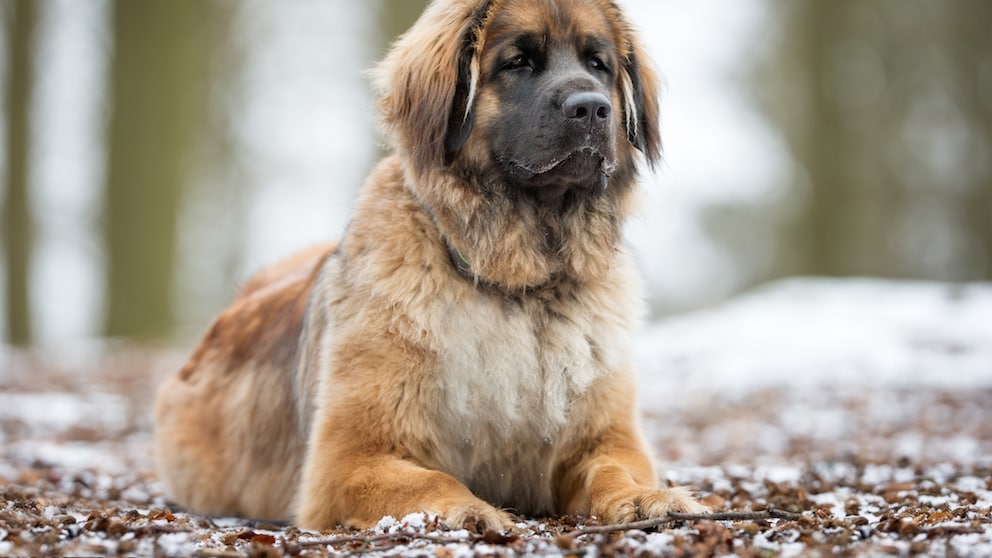
The Leonberger earns its reputation as a “lion dog” not only because of its origin but also due to its appearance. Males reach a shoulder height of up to 80 centimeters and a weight of up to 75 kilograms. Females are slightly smaller, at 65 to 75 centimeters, and weigh up to 60 kilograms. The body is muscular, strong, and harmoniously proportioned. Characteristic is the dense, water-repellent coat with a thick undercoat, appearing in various shades of gold–from sandy to reddish-gold. Particularly striking is the black mask on the face. Males also have a pronounced mane on the neck and chest, further enhancing the lion-like impression. The hair on the front and hind legs is usually more pronounced in males than in females. Overall, the Leonberger presents as an imposing dog with a gentle yet confident expression.
Character & Temperament
The Leonberger is considered friendly, balanced, and affectionate. Its high threshold for stimuli, along with patience and calmness, makes it an excellent family dog. It is loyal and cuddly with its caregivers and is known to be particularly child-friendly. Despite its size, it is often sensitive and requires close contact with its people. Its social behavior is generally exemplary–both towards humans and other animals. This makes it not only a family companion but also a suitable companion dog for various life circumstances–provided its needs are met.
Training
The Leonberger has a high willingness to learn and intelligence, making it easy to train. However, training should begin early and be conducted with consistency, patience, and positive reinforcement. Harshness or excessive pressure is counterproductive, as the Leonberger has a sensitive nature. Good socialization from puppyhood is important so that it grows into a confident and environmentally secure companion. Since it is difficult to correct due to its body mass in adulthood, important basic commands should be established early.
Proper Care & Maintenance
Keeping a Leonberger requires a lot of space, time, and physical commitment. An apartment in the city is not suitable for it–ideally, it lives in a house with a garden that offers enough room to move. Daily, extended walks are essential to satisfy its need for movement and prevent obesity. Regular stair climbing should be avoided, as it puts a long-term strain on the joints–especially in heavy males. Also, being alone for long periods does not suit this people-oriented breed.
Due to its dense coat, grooming is time-consuming: Daily brushing is recommended to prevent matting and skin problems. This takes a certain amount of time–and patience–given the size of the dogs. Therefore, Leonbergers should be accustomed to grooming rituals as puppies.
Nutrition
The Leonberger has a high energy requirement, necessitating a correspondingly high-quality and balanced diet. The amount of food depends on age, activity level, and health status–ideally, the feeding plan should be made in consultation with a veterinarian. Weight control is important, as obesity increases joint strain and health risks. To prevent a life-threatening gastric torsion, an elevated feeding bowl is recommended, as well as avoiding physical exertion immediately after eating.
Landseer: A Family Dog with Remarkable Social Skills
Newfoundland – the Dog with Webbed Feet
Susceptibility to Certain Diseases
Despite its robustness, the Leonberger, like many large dog breeds, is prone to certain diseases. These include primarily hip and elbow dysplasia, which can be partially reduced through selective breeding and appropriate exercise. Also concerning is the above-average occurrence of osteosarcomas–malignant bone tumors–which are common in large dogs and associated with severe pain. Regular veterinary check-ups, targeted prevention, and appropriate care contribute to health prevention.
The Leonberger at a Glance
- Temperament: Calm, friendly, child-loving, loyal
- Size: Males up to 80 cm, females 65–75 cm
- Weight: Males up to 75 kg, females up to 60 kg
- Coat: Dense, water-repellent, with undercoat
- Special Features: Prone to joint diseases and osteosarcoma; requires a lot of space and exercise