

October 23, 2026, 7:40 am | Read time: 6 minutes
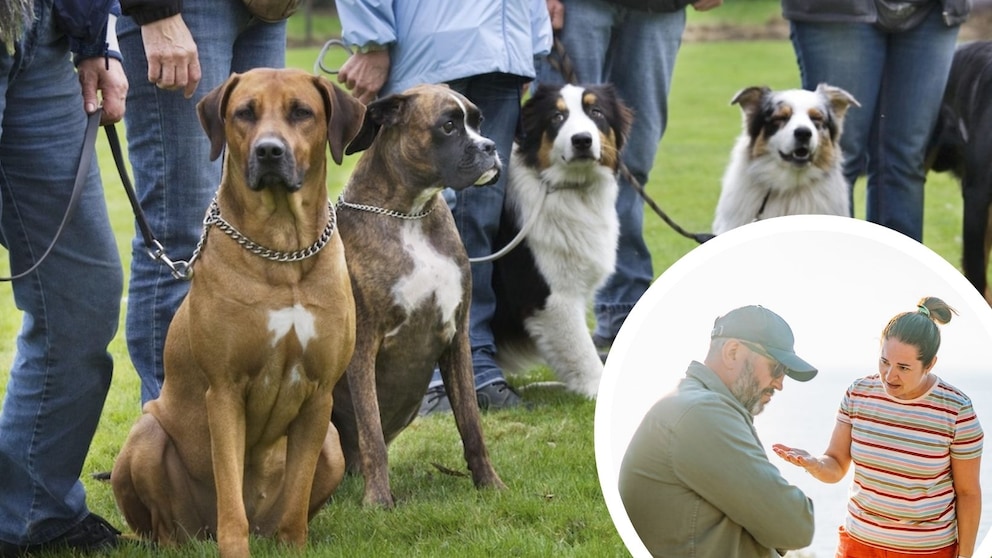
“Where do you go to dog school?” The question came up casually during one of those typical walks where the dogs quickly become friends and their humans cautiously start a conversation. I hesitated briefly because the honest answer is: If dog school were a human school, I wouldn’t have even graduated elementary school there. I haven’t stuck with any for long.
Deaf and Resistant to Advice?
Throughout my life as a dog owner, I’ve checked out several dog schools. Not because I went with a specific problem, but more for peace of mind. “Dog school”—that was always my impression—just seems to be part of it. Perhaps it’s worth mentioning that I’ve been fortunate never to be truly desperate because of my dogs. My dogs—though both are rescues—are a bit rambunctious, deaf to advice in situations that suit them, and resistant to guidance. Overall, though, they’re pretty unproblematic.
Unproblematic to me means: They go to their spot in the house when I ask, they don’t growl at anyone, they don’t bark excitedly when they see other dogs, and at least my female dog can be off-leash without running away. I can more or less rely on both of them, and they bring me more joy than worry. For me, dog school was never a last resort. More of a balance, something I do voluntarily because I want to give my dogs variety and fun—and because I want to learn, too.
Without Any Insight
But what I’ve experienced there often put me off. I’ve encountered dog schools where they stubbornly clung to their own methods, without any apparent reason.
I particularly remember one incident. When I didn’t have a blanket for my dog to “stay” on during the session, I wasn’t gently reminded but rather scolded. Another school encouraged us dog owners to give treats for practically every movement, making me wonder if I should always go for a walk with a backpack full of provisions. For me, that’s absolutely impractical. In such moments, I thought: “No, thanks. Then I just won’t come back. I don’t want to spend my free time like this.” And honestly? It was the right decision.
When Insecurity Meets Authority
For me, it was easy to leave. But for many others, it’s not. I know several people who are completely unsure with their first dog. They then meet someone who stands there with full conviction and says:
- “Your dog must ALWAYS wait until you give a command to release.”
- “Nothing works without a clicker.”
- “The whistle is the be-all and end-all.”
When an authoritative presence is added, many tend to believe: This person knows everything, I know nothing.
But the more dog schools you look at, the more you realize: There isn’t one golden way. On the contrary, the methods differ significantly. Some work with positive reinforcement, others with leash jerks and submission. Some swear by free choices, others by complete control. And you know what? That’s okay. But you can—and should—decide which way suits you and your dog.
Where Does Overstepping Boundaries Begin?
What should you tolerate in a dog school? Clearly: respectful treatment. Period. That doesn’t mean they have to agree with you, but if you feel condescended to, made to feel guilty, or aren’t allowed to ask questions, that’s a clear warning sign.
I would even go so far as to say that dog training where owners don’t feel taken seriously isn’t very effective. Personally, my motivation to implement training content in everyday life decreases if I’m made to feel like I’m doing everything wrong anyway. And that, in turn, has negative effects on my dogs. In short: How you’re spoken to influences how you work with your dog.
Also interesting: How to Find the Right Dog School
What You Can Expect—and What Not
In a dog school, you can expect:
- That they listen to you.
- That your dog is treated individually.
- That methods are explained—not imposed.
- That you can ask questions without having to justify yourself.
- That your dog is not yelled at, physically corrected, or pressured (unless you have explicitly agreed to it—which you don’t have to!).
What you don’t have to accept:
- Condescending, lecturing, or aggressive speech.
- General judgments about you or your dog (“He doesn’t take you seriously!”, “Phew, we have to start from scratch!”).
- A system that can’t be implemented in everyday life—like ten aids you never have with you anyway.
- An atmosphere where you feel small or incompetent.
- Learning to set boundaries—even as a dog owner
Learning to Set Boundaries—Even as a Dog Owner
Many people who have dogs are empathetic, harmony-seeking—and tend to stay quiet when someone talks “down to them.” But this is precisely where healthy boundary-setting is important.
In psychology, this is called “assertive communication,” meaning: setting boundaries clearly and kindly. Those who can do this are more satisfied in the long run—even in relationships with dog trainers.

Social Media Star “Gluexpfoten”: “How My Autism Assistance Dog Changed My Life

Expert on Dog Training on Instagram: “I Am Sometimes Completely Stunned”
An Example of a Clear Boundary Would Be:
“I understand that the blanket is important to you, but I deliberately chose not to bring it today. I would appreciate it if we could discuss this calmly.”
Or:
“That sounds interesting, but unfortunately, it doesn’t fit into my everyday life. I manage better without a whistle.”
You don’t have to justify yourself. You can make your own decisions. After all, your dog lives with you and needs to be manageable for you in everyday life—not just on the training field.
Find People Who Take You Seriously
A dog school is not a mandatory event. It’s an offer, a hobby, and hopefully, if your dog isn’t behaviorally challenged, a form of leisure fun. The world won’t end if you don’t bring the required whistle to training, and yes, it’s okay if you find clickers silly and prefer to praise your dog in your own way. As with any offer, you can freely decide: Does this benefit me? Am I learning something here? Does the tone suit me? And does the training style match my beliefs?
If not: leave. You owe no one your time, money, or insecurity.
I myself have a great trainer. I meet Torsten every three or four weeks, and we practice with my dogs what we and the dogs enjoy. He doesn’t follow rigid rules but always focuses primarily on the dogs and how they feel. To me, that’s what good dog training looks like: a mix of expertise, sensitivity, AND a lot of joy in being together. Because that’s what it’s all about in the relationship between us and our dogs: seeing us as a team—not as a problem case.