

September 22, 2026, 2:21 pm | Read time: 6 minutes
A look that melts our hearts: Dogs know exactly how to wrap us around their paws. But behind those big, sad eyes, it’s not always just a desire for a treat. Sometimes the dog is genuinely suffering, perhaps missing a familiar person or place, feeling heartache, or sensing the loss of a family member. PETBOOK asked dog psychologist Gülay Ücüncü how to distinguish real grief from feigned sadness. She also shares how you can support your dog in tough times and gently distract them.
Overview
Can Dogs Really Be Sad?
Can a dog truly mourn? Or are we perhaps reading too much into the sad dog look? Essentially, dogs have a distinct advantage over us humans: They live in the here and now. This means they don’t have to worry about things in the past, nor can they fret about the future. However, dogs do form bonds and can remember people, animals, and environments that have left an impression on them, just like we do. Consequently, they can miss all these things and people. So if someone in their environment dies or another dog passes away, it’s quite possible that your dog might eat less, not sleep, or seek your contact because they are sad.
Whether this is truly a form of sadness or if the dog is reacting to your mood and adapting to it is not yet conclusively determined. Nevertheless, it seems quite likely that such a social animal as dogs are indeed capable of feeling sadness.
Also interesting: Dogs have a similar social perception to humans but tick differently
How Does a Dog Show It’s Sad?
Just as every dog is different, so are the behaviors with which they show sadness. “Some dogs suddenly stop eating, or they physically show that something is bothering them–ears, tail, and back then hang down. Other dogs eat a lot when they are sad; it’s always individual, just like with us humans,” says dog psychologist Gülay Ücüncü. According to the canine behavior therapist, our four-legged friends show in very different ways that something is weighing on their hearts.
Typical signs include a pronounced disinterest in favorite activities, a sad look, whining or whimpering, and increased sleeping. You should generally trust your instincts. As dog owners, we usually have a pretty good sense when something is not right with our dog.
Why Is My Dog Sad?
If you feel that your dog is sad, you probably also wonder what is making your dog sad. The reasons are usually less complex than with us humans and are quite straightforward. For example, a change in routine, a shorter walk than usual, not enough playtime during the walk, or unfamiliar food can lead to sadness in dogs.
Another painful change can be a new family member: Dogs are often jealous and may feel neglected. In this case, continue to give your dog plenty of attention. Illnesses and pain can also cause your dog to be sad. However, such sadness usually disappears as quickly as it appears. Dogs are not called cheerful creatures for nothing.
Some dogs also show sadness when a close person dies or is no longer around, such as due to a breakup or divorce. Your mood or the worries and sufferings of another close person can also affect your dog’s emotional life. Dogs are very sensitive and receptive to human body language and moods. If someone in your dog’s environment is suffering, this kind of distress can easily rub off on your dog.
Warning: If your dog seems sad for several days, it might not be sadness but another ailment. The behavioral changes could also be symptoms of an illness. For example, the dog might be suffering from physical discomfort or pain. Be sure to have this checked by a veterinarian!
Also interesting: How to recognize if a dog is in pain
Why Does My Dog Look So Sad?
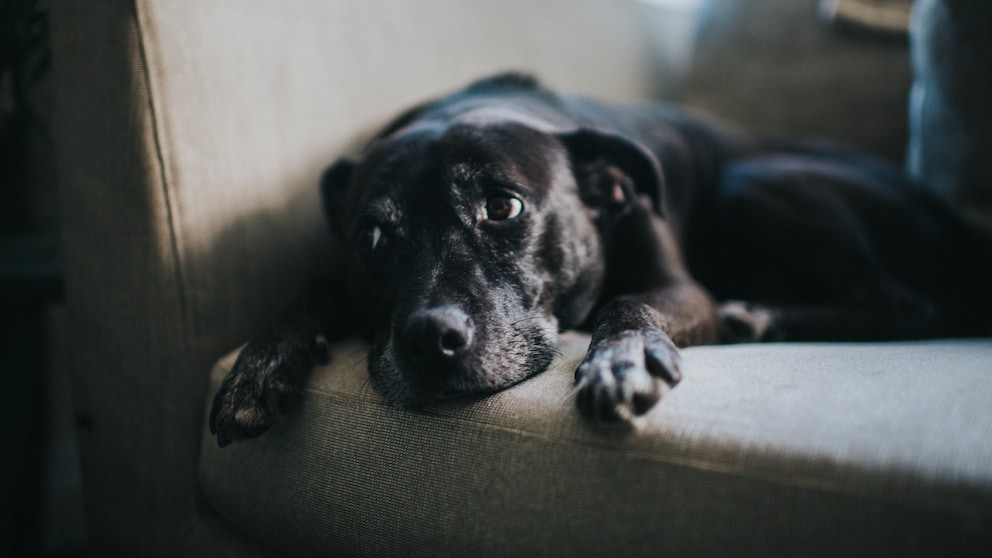
Dogs have very fine facial expressions. Their facial motor skills work excellently, allowing them to consciously use their expressions, including their eyebrows. The position of the ears also emphasizes how your dog is feeling. A sad dog face is characterized by drooping corners of the mouth, lowered eyebrows, and hanging ears. This dog look appears so gloomy that we want to rush to help immediately.
In some dogs, the impression of sadness is also created by breed-specific features, such as prominent eyebrows or a special coat color around the eyes, nose, and mouth, as well as drooping lips and eyelids.
Sadness or Depression? These Are the Differences
A sad dog look doesn’t always mean your dog is actually sad. Sometimes your dog is just slightly upset, or there’s really nothing wrong, and you’re reading too much into the look. However, dogs can sometimes be sad for an extended period and suffer from actual depression.
In the case of depression, your dog appears listless and sad over a longer period. They are hardly persuaded to go for walks, play briefly, or engage in other activities. During a depression, the dog often suffers from persistent loss of appetite. If a veterinarian can rule out physical issues, it might be depression. This is typically treated with prescription psychotropic drugs.

Do Dogs Suffer From Their Owners’ Depression?

Should People With Depression Really Get a Dog?
Tips: What Helps Your Dog Against Sadness
If your dog is sad and you can rule out health reasons for their changed behavior, you should try to cheer them up. Long walks and exercise are the best remedies. Attention and play, as well as a few cuddles, can help distract your four-legged friend. When it comes to grief, dogs are not so different from us.
Conclusion
Dogs can not only look heartbreakingly sad; they very likely can also feel sadness. The reasons may seem trivial to us, but for your dog, the sadness feels very real. If your dog is sad, exercise and distraction help, just like with us humans. Take your dog for a walk and get them thinking about something else. Generally, dog sadness doesn’t last long. If your dog seems sad for an extended period, have it checked to see if there might be a health reason behind it or if your dog might even be suffering from depression.