

November 10, 2022, 4:02 pm | Read time: 6 minutes
During a walk, dogs have plenty to sniff and discover. This can lead to the owner’s voice no longer reaching the dog’s world. To interrupt the distraction, an attention signal is useful. In this episode of PETBOOK Dog School, owners learn how to teach their dogs to pay attention on command.
Communication is the most important foundation for the relationship between dog and owner. This cannot happen if the dog does not pay attention to the owner–and vice versa. Therefore, a reliable attention signal solves many problems for the owner. This signal interrupts the dog’s behavior when it is distracted. This interruption is important because it makes the dog more receptive to further signals.
Overview
- The dog’s name is not a clear attention signal
- Training the attention signal: the groundwork
- Exercise 1: Teaching the dog to establish eye contact with the owner independently
- Exercise 2: Incorporating the attention signal into the exercise
- Training attention on command requires concentration and the right timing
The Dog’s Name Is Not a Clear Attention Signal
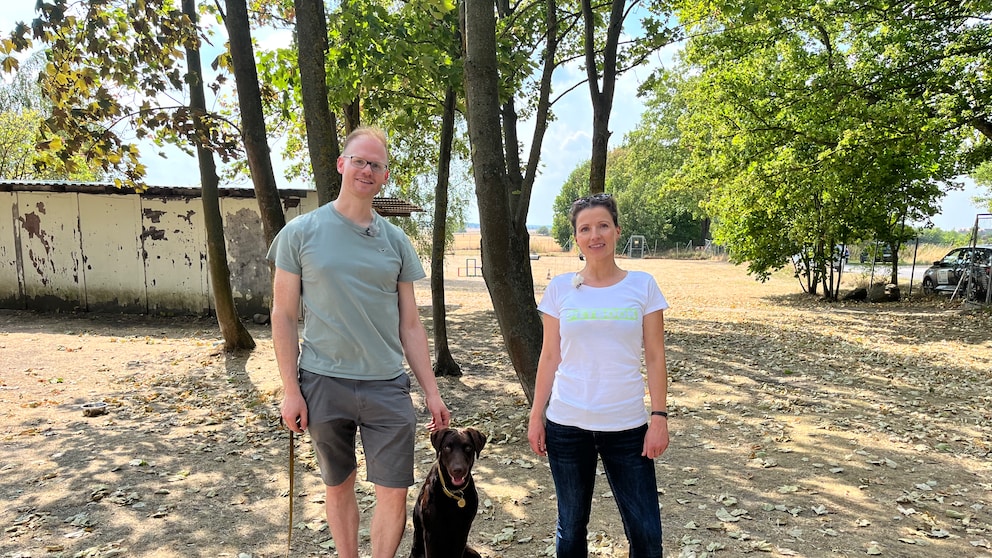
When the dog is near the owner during a walk, it usually responds better to its name being called than at a distance. The farther the dog is from the owner, the more likely it is to be distracted. Dog trainer Verena Backhaus explains that dogs usually do not associate their name with undivided attention but rather as a prompt to briefly look at the owner–in the sense of “can, but doesn’t have to.”
The attention signal word should therefore be clearly different from the dog’s name. It should also not occur frequently in the dog’s daily life or be confused with other signals. This ensures that the signal is truly stored by the dog as an attention signal.
Training the Attention Signal: The Groundwork
Before owners start training attention on command, they should do some groundwork. For the training, they need their dog’s favorite treats, making the reward particularly enticing.
Owners should decide on a praise word familiar to the dog before training. Suitable examples include “Good” or “Great.”
The owner should choose a signal word for training that is clear and unambiguous for the dog and can be associated with the attention signal. Dog trainer Verena Backhaus suggests using “Cuckoo,” “Click,” or simply a tongue click as an attention signal.
Exercise 1: Teaching the Dog to Establish Eye Contact with the Owner Independently
In the first exercise, the dog learns to establish eye contact with the owner. This is essential for training the attention signal. Both dog and owner should be relaxed and start the exercise without pressure.
- Step: The owner holds several treats in each hand.
- Step: The treat-filled hands are held to the dog’s nose.
- Step: Once the dog notices the smell of the treats in the hands, the owner moves their hands apart and stands with arms outstretched to the side in front of the dog.
- Now it’s time to be patient and remain standing with outstretched arms. The dog may jump up to reach the treats. The owner should not be discouraged by this and should wait.
- Step: As soon as the dog seeks the owner’s gaze, it is rewarded with a praise word, such as “Good,” and a treat.
Tip: In this exercise, it is especially important for the owner to quickly respond to the dog’s eye contact. As soon as the gazes meet, the dog receives its reward. This helps the dog learn that eye contact with its owner is something positive.
The exercise should be repeated at least ten times to maximize the dog’s learning success.

How to teach the dog the ‘drop it’ command

How to Help Your Dog Overcome Anxiety
Exercise 2: Incorporating the Attention Signal into the Exercise
In the next exercise, the attention signal is introduced, which the dog should follow. This signal can vary from owner to owner. However, for the dog, the signal should be unmistakably linked to eye contact.
- Step: This exercise also starts with the owner holding several treats in each hand.
- Step: The treats are held to the dog’s nose.
- Step: The owner moves the hands apart and waits.
- Step: As soon as the dog seeks the owner’s eye contact, it is confirmed with a praise word and a treat. Note: In this case, the treat is not handed to the dog’s snout but dropped on the ground. This way, the dog actively turns its head away to eat the treat.
- Step: Now the attention signal is introduced. The signal can be, for example, a tongue click. The owner gives the signal to the dog after it has eaten the treat but before it raises its head again.
- As soon as the owner gives the attention signal, the dog should raise its head.
- As soon as the dog looks at the owner, it is confirmed with a praise word, and another treat is dropped.
- Repeat this step several times, alternating dropping the treat with the right and left hand.
In this exercise, it is important for the dog to turn its gaze away from the owner. Only then can the attention signal actively lead to eye contact, and the dog learns to associate the signal with the behavior. The dog should be able to completely eat the treat before the attention signal is given again.
Also interesting: Why do dogs lick their owners?
Training Attention on Command Requires Concentration and the Right Timing
When training the attention signal, not only the dog’s concentration is required. The owner is also challenged. The dog should clearly associate the praise word with paying attention to the owner and looking into their eyes.
For the training, it is therefore important that the owner adheres to the exact sequence of signal, praise word, and treat without hesitation. Here’s a quick overview:
- The dog eats a treat from the ground.
- The owner gives the attention signal.
- When the dog looks at the owner, it is confirmed with the praise word.
- Another treat is dropped, the dog turns its attention away, and the exercise begins again.
It is important that the praise word is said before the owner drops the treat. Otherwise, the dog may associate the praise word with the treat instead of the attention. The dog should be rewarded for paying attention to the owner.