

March 9, 2026, 8:05 am | Read time: 4 minutes
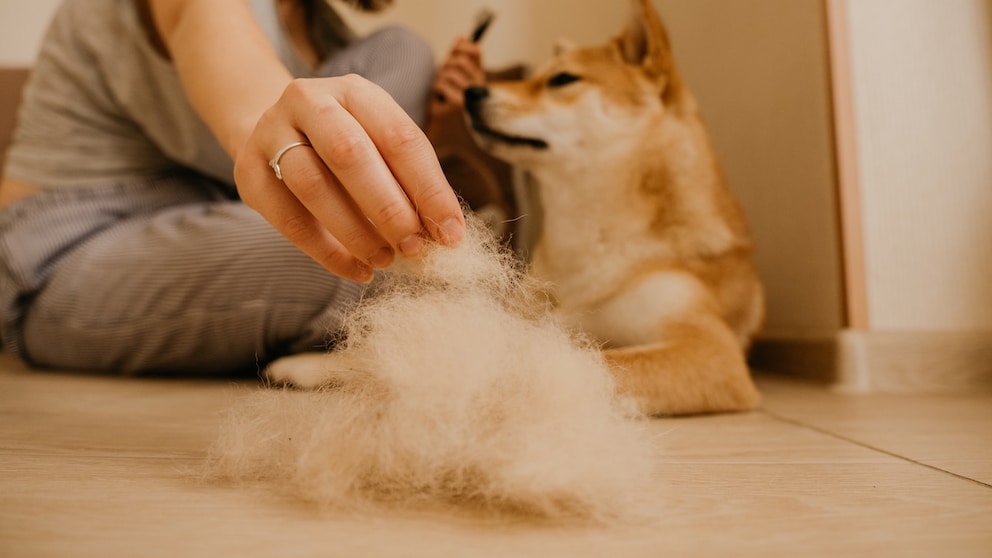
Sometimes, we don’t notice hair loss in our dogs for a long time. We may not realize that the shedding might be more intense than before, the tail suddenly thinner, or the skin flaky. Serious illnesses can be behind hair loss in dogs. PETBOOK explains which symptoms indicate this and which diseases are most commonly involved.
The Coat Change Check
Normally, hair follicles work hard twice a year. Once in spring and once in fall. They shed the old coat to make room for a new one, whose length and density are precisely adjusted to the upcoming season.
Interestingly, it’s not just the thermometer that matters. Our dogs’ bodies primarily respond to the length of daylight. When the days become shorter or longer, it can trigger the coat change. The same applies to significant temperature fluctuations.
However, there are breeds with their own coat change rhythm. For example, the phase is long in poodles, but short in shepherds or retrievers.1
And if My Dog Doesn’t Go Through a Coat Change?
In fact, many dogs are in a constant, mild coat change. The reason? Our cozy living rooms! When dogs spend most of the day in constantly heated air and artificial light, their internal “weather station” gets confused. The brief stimuli during walks often aren’t enough to kick-start the natural rhythm. The result: constant hair loss, which is completely healthy but a bit annoying.
Understanding Hair Loss – How the Hair Cycle Works in Dogs
To understand why our four-legged friends lose hair, we need to look beneath the coat. It all starts in the hair follicles (also called hair bulbs). These are tiny, tube-like depressions in the skin, with the hair root at the bottom.
In this “production site,” the following happens: Deep in the skin, new hair is continuously produced, slowly pushing upward to form the visible coat. Once the hair is fully grown, it often remains firmly anchored in the follicle for many months.
Eventually, the hair loosens and falls out. Immediately, a new growth zone forms at the base of the follicle, and the cycle begins anew. Experts call this constant cycle the hair cycle. Hair cycle disorders, in turn, can be triggered by various factors.
How to Differentiate Normal Coat Change from Diseases in Dogs
You can usually recognize a normal coat change in dogs by the fact that hair loss occurs evenly and without a clearly defined pattern. Despite increased shedding, the coat still appears overall shiny and dense. The skin remains unremarkable, showing no redness, crusts, heavy dandruff, or unpleasant odor. Additionally, the dog’s general well-being is good, and it shows no or only minimal itching.
If hair loss deviates from this typical pattern, there are generally two forms of hair loss: inflammatory and non-inflammatory hair loss. To determine which form is present, the veterinarian will first ask if the dog is experiencing itching. If so, it is usually a skin disease, possibly caused by mites, a fungal infection, or skin inflammation. Allergies are also a possibility.
Non-Inflammatory Hair Loss
In non-inflammatory hair loss, the coat is missing, but the skin itself looks normal. The cause is usually hormonal disorders. In 60 to 80 percent of cases, the reason for non-inflammatory hair loss in dogs is hypothyroidism. In addition to bald spots, symptoms such as weight gain despite the same diet, lethargy, apathy, slowed heartbeat, cold intolerance, infertility, or loss of libido may occur. Hormonal imbalances can also be caused by adrenal gland overactivity and underactivity, as well as sex hormone imbalances.
Chin Acne: Causes and Treatment of Pimples in Cats

Can Dogs and Cats Experience an Allergic Shock?
What Does the Veterinarian Do?
Finding the cause of hair loss in dogs can be challenging. Tip: Make an appointment with a veterinarian who specializes in dermatology. The vet will inquire about feeding, itching, and parasite prevention. Blood tests are usually conducted, along with clinical skin examinations such as skin scrapings or fungal diagnostics.
What Is the Prognosis?
Unfortunately, there is no “miracle cure” or hair growth product for dogs that simply makes hair sprout. Whether the coat grows back depends on the cause of the hair loss. To prevent the hair root from being completely damaged, a visit to the veterinarian should not be delayed.