


May 26, 2025, 3:31 pm | Read time: 4 minutes
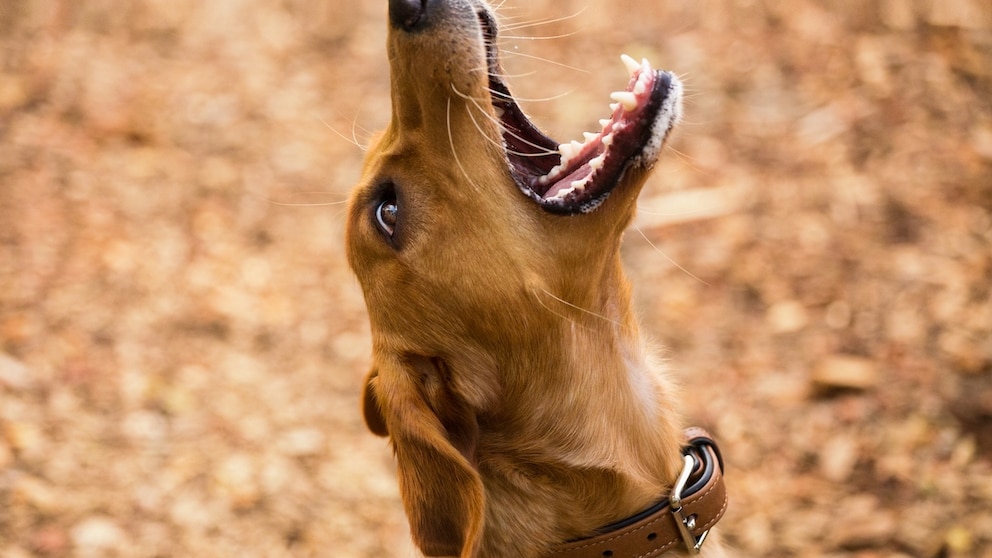
Barking is a natural form of communication for dogs–yet it is often seen as a problem. Some owners resort to so-called anti-bark collars that use water or scents. For dog trainer Katharina Marioth, this is not only pedagogically questionable but also a matter for animal welfare. In an interview, she explains why such devices often do more harm than good–and how to better handle barking dogs.
It is marketed as a gentle, effective, and modern training aid for dogs. An anti-bark collar is supposed to give the “four-legged friend a gentle hint when excessive barking is not okay.” The device works either through vibrations or sprays of liquid–with lemon scent, lavender, or just water. But can it really help? Or does it harm the dog more? Dog trainer Katharina Marioth has a clear opinion: Stay away from anti-bark collars! Why, the expert in dog behavior explains in an interview with PETBOOK.
“For me, this is in no way acceptable”
PETBOOK: Katharina, today we’re discussing the so-called anti-bark collar. How does this device work–and is it even permissible to use?
Katharina Marioth: “This is a very emotional topic for me. I consider such collars absolutely relevant to animal welfare. You put a so-called punishment collar on the dog, which sprays water with every bark–often with unpleasant scents. The dog’s nose is an extremely sensitive organ! And imagine: The dog primarily communicates through barking–and is immediately punished with a stimulus for it. For me, this is in no way acceptable.”
But why are such devices still available? And do they even work?
“Fortunately, they often don’t work reliably. I remember a German Shepherd who even showed joy at the sight of his spray collar. He had figured out that he could move the spray mechanism with his paw so that the water jet missed him–and he could then chase it. For him, it was a toy. The result: He barked even more than before–and only stopped when the tank was empty.
Also interesting: Spraying a dog with water to stop barking? Here’s what dog trainer André Vogt says
“This is not training, this is pure symptom control”
Sounds like the complete opposite of the desired effect happened.
“Exactly. And that also shows why I fundamentally reject such methods. They only interrupt behavior without changing the emotional cause. I don’t even want to call them ‘training tools’–this is not training, this is pure symptom control.”
What would be a sensible alternative to the anti-bark collar for excessive barking?
“It always depends on the individual case. Some people want their dog to bark briefly when the doorbell rings–but then be quiet immediately. From the dog’s perspective, this is naturally illogical. The important thing is: Why is the dog barking at all?
There are many reasons for this:
- Separation anxiety, which is genuine emotional distress.
- Seeking attention, such as when the dog barks because he wants the ball thrown.
- Territorial behavior, such as with strangers at the door.
- Or even frustration because the dog is being ignored.
Each of these causes requires a different approach. With separation anxiety, I need to train slowly and gently–it’s about building trust. With territorial behavior, good management often helps: privacy screens on the fence, introducing other stimuli, training with visitor situations.”
So barking isn’t about a quick fix, but about investigating the causes?
“Exactly. I find it extremely important to always look from the dog’s perspective: Why is he doing this? Only then can I train effectively and make long-term changes. And that has nothing to do with punitive stimuli like spray collars.”
You can watch the entire interview with Katharina Marioth in the video.

About the Expert
Katharina Marioth is the founder of the Stadthundetraining brand and the KEML principle. She is an IHK- and government-certified dog trainer and behavior assessor for dangerous dogs in Berlin. In her daily work, she collaborates closely with veterinarians, scientists, and other specialists on dog-related topics. With her knowledge and skills, she secured the title of Dog Trainer of the Year 2023 in the Sat.1 show “The Dog Trainer Champion.”