

September 16, 2026, 7:28 am | Read time: 3 minutes
Dogs are often separated from their mother and siblings as puppies. Some meet again later at a litter reunion, while others may not see each other for years or ever again. But would they still recognize each other after such a long time? Dog expert Katharina Marioth explains to PETBOOK how dogs can recognize their family and what science knows about their memory.
Do Dogs Recognize Their Mothers Even After Years of Separation?
To answer this question, we must first look at the sense of smell in dogs, which is considered key to recognition. Dogs have between 200 and 300 million scent receptors, while humans have only about five million. This significant difference explains why dogs are theoretically able to store and recognize individual scents over years. 1
“There is a so-called scent memory–this is scientifically proven,” explains dog trainer Katharina Marioth in an interview with PETBOOK. “Dogs recognize animals they knew before, but not necessarily with the emotional depth we humans would expect.”
A 1994 study by Dr. Peter G. Hepper at Queen’s University Belfast examined whether dogs could recognize their mother and siblings two years after separation. The results showed that some dogs could recognize their mother by scent. Sight and sound, however, play little role. While recognizing the mother was easy for many, identifying littermates was less reliable. 2
Also interesting: “Dog Protector” Bruno Jelovic: »This is why I rarely place dogs in Germany

Female Dog Carries Sick Puppy to Veterinary Clinic – Expert Analyzes Viral Video

Why Do Dogs from the Same Household Often Die in Quick Succession?
“Separation Before the Eighth Week Is a Disaster”
Another study found that dogs that lived with their siblings for at least five weeks were more likely to recognize them even years later. However, separating puppies from their mother before the eighth week is highly problematic, warns Marioth.
“Separation before the eighth week is a disaster–it should be avoided at all costs. After that, it’s about stability: a safe sleeping place, regular food, rest, protection, contact with humans–these are the basic needs of a puppy.”
But that’s not all: The time puppies spend with their mother and siblings affects the strength of their olfactory imprinting. Puppies that stay with their mother for at least eight weeks develop a stronger bond and generally a more sustainable scent memory. However, the memory of siblings fades faster, especially if separation occurs early and there is no further contact.
How a Dog Trainer Describes Reunions of Littermates
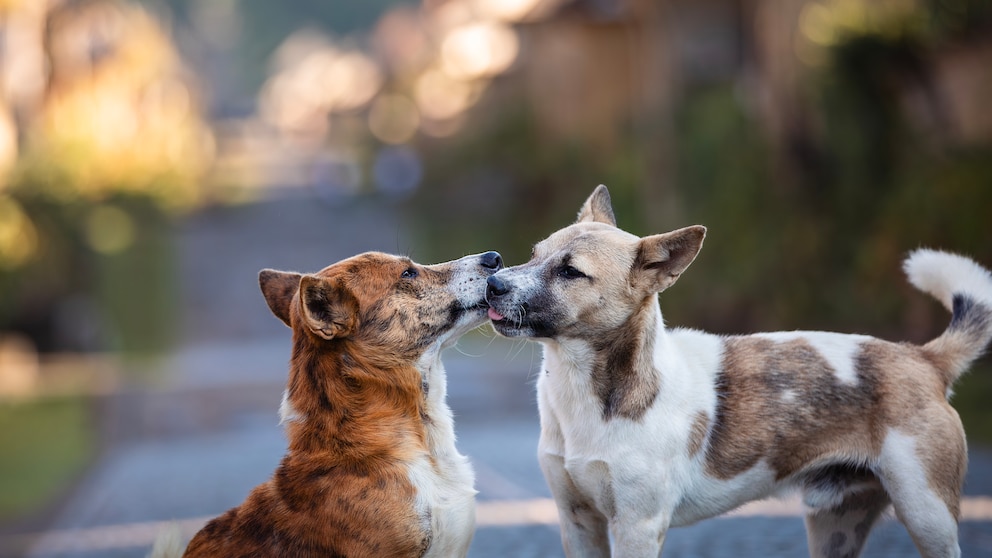
However, observations show that there are indeed indications that some dogs recognize their relatives even years later. During reunions, some dogs exhibit specific behaviors that could indicate recognition, such as intense sniffing, tail wagging, and overall excited behavior. Yet, the initial question of recognition has not been fully answered.
“Most dogs react quite neutrally,” describes dog trainer Katharina Marioth her observations of later encounters between dogs and their mothers and siblings. “A mother is sometimes briefly greeted and appeased. Siblings, on the other hand, are only noticed if there was a special previous bond. Dogs live in the here and now–they are strongly oriented towards us humans, not their fellow dogs.”