


April 15, 2026, 3:54 am | Read time: 5 minutes
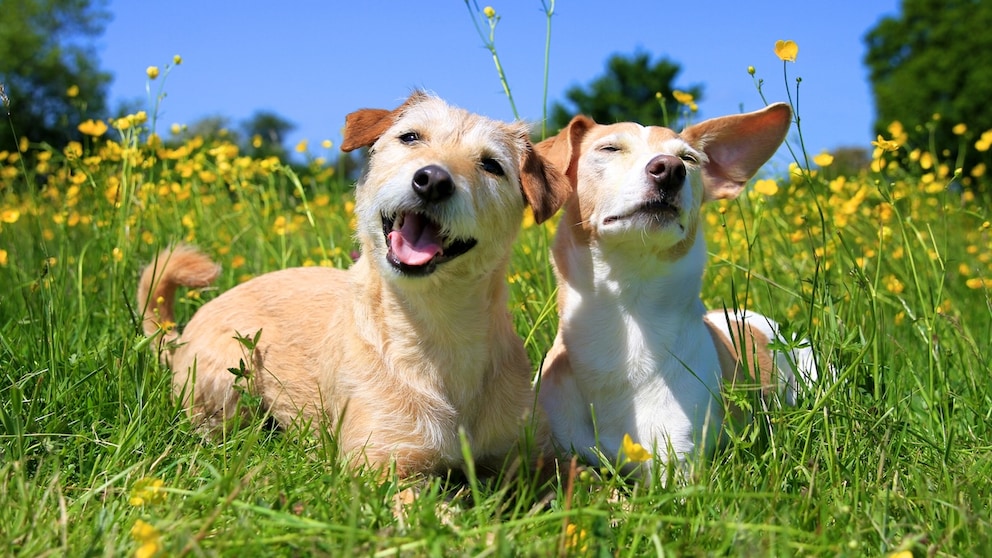
Many dog owners know the pressure from others: “He needs contact!” or “Let them play!” But not every dog needs friends or wants encounters with other dogs—and that’s perfectly fine. It’s not the quantity but the quality of the contacts that matters. Dog trainer Katharina Marioth explains why real dog friendships take time, how to recognize good contact, and why it’s important to respect your dog’s needs.
“Yes, Dogs Need Dog Friendships”
For dog trainer Katharina Marioth, it’s clear: The question concerns almost every dog owner. You often hear phrases like “They need to have contact” or “He just wants to say hello.” While she generally confirms that dogs need social contact with other dogs, she makes a clear distinction: “Yes, dogs need dog friendships—but it’s really about friendships.” And these don’t just happen by chance at the dog park or during brief encounters on a leash.
If you understand friendship as a social bond, it requires time and development. So, it’s not the number of contacts that matters, but their quality. It’s about ensuring encounters go well and build slowly. Marioth also makes it clear: If a dog signals that it doesn’t want contact, you should and must protect it.
How Do I Know If My Dog Needs Friends?
But how can you tell if a dog is interested in other dogs? Marioth recommends first paying attention to what a successful dog contact looks like. Even the approach provides important clues. A positive contact usually begins in a gentle arc, with relaxed body posture and without excessive excitement.
While puppies often react more impulsively, adult dogs typically show calmer behavior. This is followed by a brief mutual greeting, where information is gathered through scent. Then, the dogs “communicate” through their body language about what happens next: whether they part ways, explore the surroundings together, or perhaps start playing.
How “Real” Dog Friendships Develop
As things progress, it’s especially important that the emerging dynamic remains pleasant for both sides. “If you get the impression that there’s really mutual interaction, then that’s a wonderful thing,” says Marioth. This includes, for example, dogs taking turns in play and none being permanently pushed into a role.
Especially for insecure dogs, a confident, calm companion can be a valuable support. Such a dog conveys security and shows that everyday stimuli don’t have to be threatening. In these constellations, real, stable friendships can develop.
Dogs Must Be Allowed to Get to Know Each Other Calmly
It’s obvious to Marioth that these relationships don’t just happen on their own. Rather, they must be allowed to develop. She advises consciously shaping dog encounters instead of leaving them to chance.
If, for example, two dog owners know each other, it can be useful to first walk together on a leash. This way, the dogs have the opportunity to get to know each other in a calm setting and with some distance, without immediately having to make direct contact. Only when the situation remains relaxed, and both animals show interest, can you unleash them and continue to observe whether they want to interact freely.
Don’t Expect Spontaneous Friendship
Ideally, such meetings should occur multiple times. Marioth finds the common scenario of letting dogs run freely in a field and expecting them to spontaneously become friends problematic.
She draws a vivid comparison: It’s like sending a person alone to a club and expecting them to return with several new friends. In many cases, that’s simply too much to ask. Instead, it requires calm, repetition, and the opportunity to gradually engage with each other.

When Dogs “Play”–What Really Lies Behind Wild Running and Chasing

Dog Ignoring You? What That Says About Your Relationship
“Real Bonding Takes Time”
Additionally, many everyday dog encounters are more characterized by stress and high excitement than by genuine social interest. Especially on a leash or in busy parks, dogs often rile each other up. This has little to do with real bonding. “Real bonding takes time,” emphasizes Marioth—similar to the relationship between humans and dogs. As a rough guideline, she suggests a period of at least three months for a stable social relationship to develop.
Not All Dogs Want Friends–You Should Respect That
But what does this mean for dogs that have had bad experiences and tend to avoid other dogs? Especially animals from shelters or with insecure personalities often show little interest in contact. For Marioth, it’s crucial to respect this wish.
She doesn’t see humans as a substitute for missing dog contacts but emphasizes that the dog’s needs should be taken seriously. “If my dog says, I don’t want that, then that’s how it is,” she explains.
At the same time, she doesn’t rule out that this can change. Often, it just takes the right counterpart—a dog that matches well in temperament, demeanor, and energy level. If these conditions are met, even initially reserved dogs can develop a harmonious relationship—without pressure and at their own pace.

About the Expert
Katharina Marioth is the founder of the Stadthundetraining brand and the KEML principle. She is an IHK- and government-certified dog trainer and behavioral assessor for dangerous dogs in Berlin. In her daily work, she collaborates closely with veterinarians, scientists, and other specialists on dog-related topics. With her knowledge and skills, she secured the title of Dog Trainer of the Year 2023 in the Sat.1 show “The Dog Trainer Champion.”