

November 5, 2025, 4:47 am | Read time: 4 minutes
Many dog owners hope that neutering can reduce behavioral problems such as leash aggression or hunting instincts. However, a representative survey of 1,117 dog owners by psychologist Dr. Jessica Schwamborn shows: Neutered dogs are neither calmer nor more agreeable—on the contrary, they often react more fearfully to noises like New Year’s Eve fireworks.
As dog owners, we often feel surrounded by leash-aggressive dogs during our walks. We feel safer when encountering neutered dogs. Is this justified or not? Market researcher and psychologist Dr. Jessica Schwamborn conducted a representative survey of 1,117 dog owners in Germany to find out which behavioral problems trouble them the most and what role neutering plays in these issues. The focus was on leash aggression, hunting instincts, and fear during New Year’s Eve. The results are surprising.
For the Majority, Leash Aggression Is One of the Main Problems
“The goal of my survey was to find out what moves dog owners the most in their daily lives with their dogs,” Dr. Jessica Schwamborn explains to PETBOOK. The dogs of the respondents were roughly equally divided between males and females. “I selected about an equal number of male and female dog owners. Many different breeds as well as mixed breeds are represented, including Chihuahuas, Labrador Retrievers, Golden Retrievers, Bernese Mountain Dogs, Havanese, Australian Shepherds, and others.”
The psychologist emphasized not only surveying “dog-crazy” people but also those for whom the dog is part of the family, but “just fits in.” The 1,117 participants completed extensive questionnaires. While she assumed that leash aggression would be one of the main problems for most dog owners, the study painted a different picture.
These Behavioral Problems Were Most Frequently Mentioned by Dog Owners
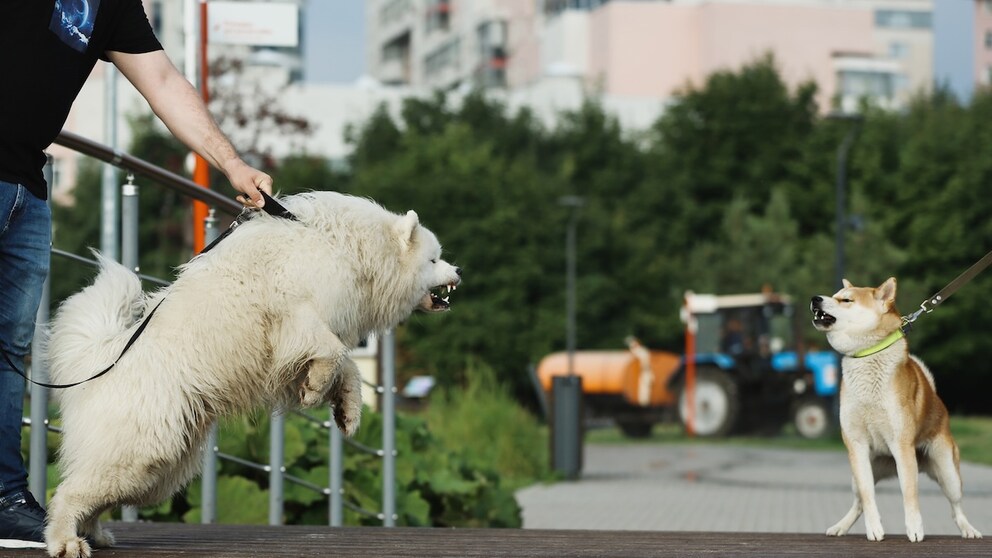
“Only 19 percent of owners actually reported that their dog regularly acts out on the leash. There were no differences between males and females or between neutered and unneutered animals. Another 30 percent experience this occasionally, such as when the ‘archenemy’ crosses their path.”
Dog owners most frequently mentioned these behavioral problems:
- Territoriality (41 percent)
- New Year’s Eve fear (40 percent)
- Hunting instinct (30 percent)
- Leash aggression (19 percent)
Also interesting: Does Your Dog Act Out on the Leash? Here’s What You Should Do

Anxious Cats May Suffer More Frequently from Bladder Infections

Dog Owner: “How We Were Misled by a ‘Firework-Free’ Vacation Park”
Neutered Dogs Show More Frequent Noise Anxiety
Territoriality is equally pronounced in females and males in this study. The researcher was particularly surprised by the high percentage of dogs for whom New Year’s Eve fireworks are a significant problem. Again, males and females are equally affected. Notably, neutered dogs show more frequent noise anxiety than their unneutered counterparts.
Dr. Jessica Schwamborn knows the problem of New Year’s Eve fireworks from personal experience. “For my thirteen-year-old poodle mix, I now use a soft box. It’s a soft fabric box that serves as a den for him. I positively associated the box in the weeks before New Year’s Eve by giving him treats inside it.
When I place a chew bone in the box shortly before the fireworks, he gnaws on it and is calmed. I leave the box open so he doesn’t feel trapped.” She notes that this is an individual solution that may not be suitable for every dog.
Neutering: Not a Miracle Cure for Leash Aggression and Hunting Instincts
A central point of the survey was the topic of neutering and its connection to dog behavior. The results debunk common myths:
- Fear and New Year’s Eve: According to the owners, neutered dogs are more often fearful, which is also reflected in New Year’s Eve anxiety. In males, the lack of testosterone, known as the “courage hormone,” could play a role.
- Hunting instinct: Neutered dogs have a significantly higher hunting instinct. Dr. Schwamborn explains that the absence of sexual drive can free up capacity for other instincts.
- No difference in leash aggression and agreeableness: Contrary to some owners’ hopes, neutered dogs act out on the leash just as often and are not more agreeable than their unneutered counterparts. However, the reasons for acting out in neutered dogs may stem from different motivations, such as fear.
From these results, Dr. Jessica Schwamborn concludes that neutering is not a solution for behavioral problems like hunting behavior or leash aggression. Owners should give their dogs time to mature, as large breeds often don’t reach adulthood until between two and four years of age. “It’s also important to remember that neutering, unless medically necessary, is prohibited by animal welfare law. I advise anyone considering neutering their dog due to behavioral problems to first seek the advice of a veterinary behaviorist.”
The representative survey, called “Rudelreport,” was conducted in collaboration with the trade magazine for the pet industry, “pet.”