

November 13, 2026, 2:29 pm | Read time: 2 minutes
Wolf or dog? This mix-up ended in late March 2026 in Hamburg-Altona with a bite to the face. According to reports, a woman tried to free an animal from a shopping arcade, thinking it was a dog. The wolf reacted out of fear and stress. Would you recognize the difference? Find out in our quiz!
Quiz – Can You Tell Dogs and Wolves Apart?
Find out if you could also mistake a wolf for a dog. We’ve selected 11 images for you–including real dog breeds and wolves. Some are easy to identify, but others are tricky. How many can you get right?
Not enough guessing yet? Try our other quizzes:
- How well do you know the native wildlife? 90 percent fail!
- Can these animals swim? Take the quiz now!
- 12 challenging questions about dogs–how many can you answer?
- Third-grade knowledge! 14 questions about forest animals in the quiz

Jackal, Coyote, or Wolf – Do You Know the Difference?

Gold Jackal, Wolf or Fox: How to Tell the Differences
How Can You Tell a Wolf from a Dog?
Distinguishing between dogs and wolves isn’t always easy. The reason is simple: Dogs are descended from wolves and share many physical traits. With some breeds, like Chihuahuas or Maltese, the difference is more than obvious. Huskies and German Shepherds, on the other hand, have more similarities.
Especially with so-called “wolfdogs,” the differences can be minimal. For example, Czechoslovakian Wolfdogs or Saarloos Wolfdogs were once bred to closely resemble wolves. Wolves were paired with dogs for this purpose. This practice is now banned. However, the dogs continue to be bred among themselves, keeping the breeds alive.1
Also interesting: An expert is certain: “Many adopt wolf hybrids from animal shelters without knowing it!”
Wolf or Dog? Characteristics at a Glance
To distinguish a wolf from a dog, there are a few characteristics2:
- The tail: A wolf’s tail often has a dark to black tip and hangs straight down. However, this can change depending on behavior and mood.
- The build: Wolves are often longer-legged than dogs.
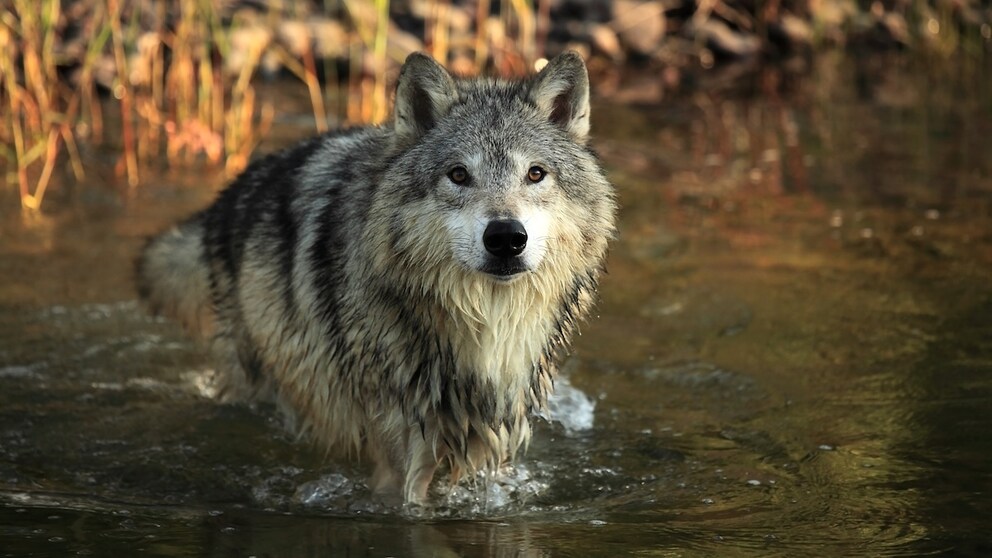
- The face: Wolves usually have amber eyes. The muzzle appears longer in proportion to the head, while the ears are proportionally smaller and triangular.
- The gait: Wolves often move more evenly and purposefully.
However, only a DNA test can provide conclusive proof. With saliva or fur samples, a lab can definitively determine whether the animal is a dog or a wolf.