


May 15, 2026, 9:43 am | Read time: 4 minutes
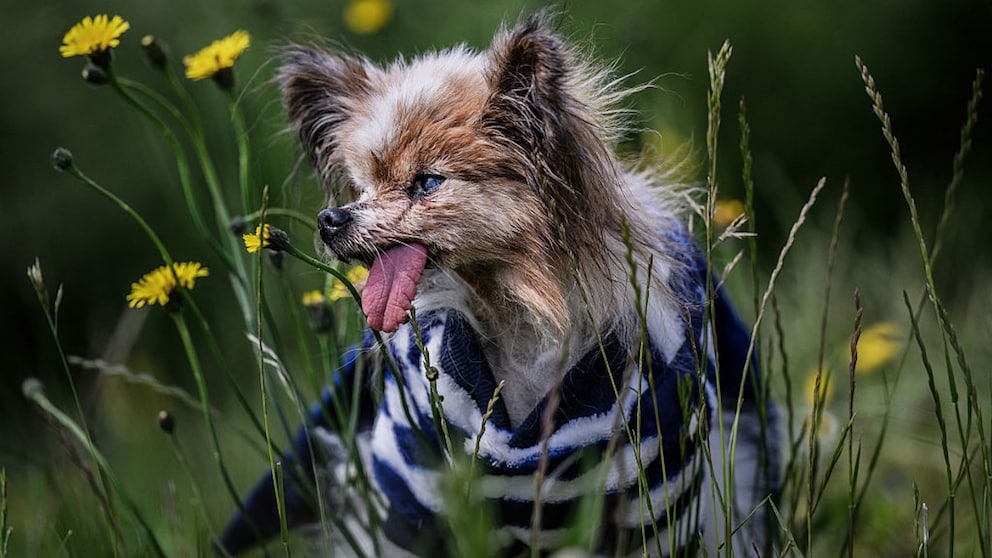
Disheveled fur, huge ears, and a tongue hanging loosely from his mouth—at first glance, Lazare looks like a lovable little character. But this Papillon from France is currently astonishing animal lovers worldwide: At an alleged 30 years old, the Continental Toy Spaniel could be the oldest dog in the world. His story is extraordinary and emotional.
Papillon Lazare Is Said to Have Been Born in 1995
According to his birth certificate, Lazare was born on December 4, 1995, in eastern France, as reported by “BILD” (also part of Axel Springer). For a Papillon, this is an almost unbelievable age. The small dog breed typically has a life expectancy of about 13 to 16 years. Lazare would have nearly doubled that by now.
After his original owner passed away, the elderly dog ended up at the Villy-le-Pelloux animal shelter. French media reported on how the staff did everything they could to find the senior dog a loving home once more.
Through the animal protection organization Société Protectrice des Animaux (SPA), an ad was eventually published—with success. The little dog quickly won many hearts.
New Owner is Younger Than Her Dog
Ophelie Boudol, who eventually adopted Lazare, was particularly moved. Remarkably, the Frenchwoman will only turn 30 in October, making her even younger than her new dog.
She told the newspaper “Le Parisien” that she is less interested in a potential record. What matters more to her is providing the old dog with comfort and peace.
Despite Arthritis and Cataracts, Still Surprisingly Fit
The advanced age has not left Lazare completely unscathed. The little dog suffers from arthritis, can barely see due to cataracts, and has no teeth left. As a result, his tongue hangs out of his mouth permanently.
Veterinarians, however, have attested to the senior’s surprisingly good overall condition after examinations. In his new home, Lazare receives special food, particularly slow walks, and plenty of rest.
His owner also reports that despite his age, the dog has remained curious and attentively follows the family around the apartment.
Guinness Record for Lazare?
According to the SPA, there is “no doubt” about Lazare’s birth date. His age has been verified through both the microchip and the French breeding register “Livre des Origines Français” (LOF).
The organization has already contacted Guinness World Records to have Lazare officially recognized as the oldest dog in the world.
Until now, the Portuguese Rafeiro do Alentejo dog Bobi was considered the oldest dog in the world. However, his record later sparked discussions because his age could not be fully documented. Bobi allegedly died in October 2023 at the age of 31 years and 165 days.
Why Small Dogs Often Live Much Longer
The fact that small dogs like Papillons, Chihuahuas, or Dachshunds live particularly long has long intrigued scientists. In the animal kingdom, the opposite is often true: Larger animals usually live longer than smaller ones. But with dogs, it’s different.
While a Chihuahua often lives 15 to 18 years, very large dog breeds like Great Danes often only reach an age of seven to ten years. The reason likely lies in the extremely rapid growth of large dogs.
Also interesting: The Oldest Dogs in the World—Why They Live So Long

The Oldest Dogs in the World–Why They Live So Long

Oldest Dog Ever Dies
Rapid Growth Puts the Body Under Stress
Puppies of large dog breeds grow enormously in a short time. A Great Dane can later weigh up to 90 kilograms, while a Chihuahua often weighs only two to three kilograms. This rapid growth demands a lot from the metabolism.
This process generates so-called free radicals—aggressive molecules that can cause cell damage. Scientists suspect that large dogs suffer from so-called “oxidative stress” early on, which in turn accelerates cell aging.
A study presented in 2017 in the scientific journal “Science” showed that particularly young, large dogs have significantly more free radicals in their cells than small dog breeds. Researchers believe that these cell damages contribute to large dogs aging faster and dying earlier.
Small dogs like Lazare grow much more slowly and apparently produce fewer of these harmful molecules. As a result, their cells likely age more slowly—and the animals have better chances of living particularly long lives.
Loving Care Remains Crucial
Despite genetic advantages, care naturally plays an important role. Healthy nutrition, regular exercise, veterinary care, and a stress-free home are considered important factors for a long dog’s life.
For Lazare, it seems that all these factors are coming together: plenty of rest, loving care—and perhaps exceptionally good genes.