

July 6, 2025, 6:11 am | Read time: 6 minutes
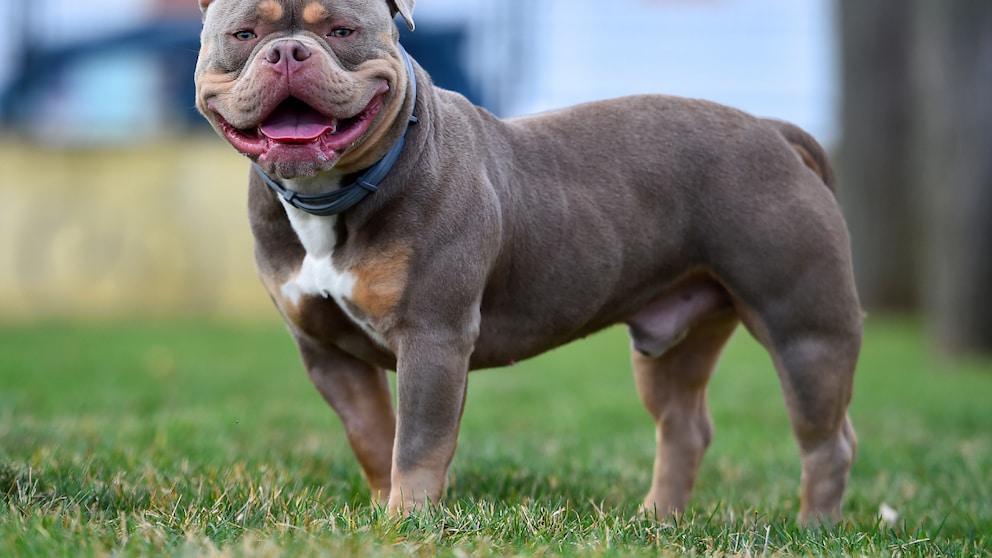
With its massive stature, muscular build, and impressive head, the American Bully initially appears intimidating. However, appearances can be deceiving: Beneath its strong exterior lies a calm, friendly family dog known for its affection toward people and loyalty. Originally developed from a deliberate crossbreeding of several bulldog breeds, the American Bully is a modern dog breed with a clearly defined breeding goal—yet it remains legally controversial.
The American Bully is a modern dog breed not recognized by the FCI, originating in the U.S. in the 1990s. Initially developed from crosses of the American Staffordshire Terrier, American Pit Bull Terrier, and various bulldog breeds, the American Bully aims to create a particularly gentle and social dog type.
The breed has been managed by the American Bully Kennel Club (ABKC) since 2004 and officially recognized by the United Kennel Club (UKC) since 2013. In Germany, the American Bully is still considered a hybrid dog, which can lead to legal and breeding uncertainties. Importantly, in some federal states, it is classified as potentially dangerous, with extensive requirements for owners. Many representatives of this breed also face health issues due to over-typification. Therefore, thorough knowledge of origin, care, and breeding quality is essential for potential buyers.
Origin
The development of the American Bully is closely linked to the targeted crossbreeding of several dog breeds. In the late 1980s and early 1990s, American Staffordshire Terriers and American Pit Bull Terriers were crossed in the U.S. to combine their positive traits—especially social compatibility and family-friendliness. Later, various bulldog breeds such as the English Bulldog, French Bulldog, American Bulldog, and Olde English Bulldogge were introduced to achieve a more massive build and calmer temperament.
In 2004, the American Bully Kennel Club (ABKC) officially recognized the American Bully as a breed. Since 2013, it has also been listed with the United Kennel Club (UKC). However, in Europe, particularly in Germany, the American Bully remains legally a hybrid dog, as neither the FCI nor the VDH recognize the breed. This presents significant challenges for breeding, keeping, and importing—especially when authorities classify it as a listed dog based on phenotypic characteristics.
Appearance & Coat
The American Bully presents as a powerful, muscular dog with a broad chest, short back, and pronounced bone structure. Its square build is complemented by a broad head with a well-defined jawline. The breed is divided into four categories:
- Pocket: less than 17 inches at the shoulder
- Standard: 17 to 20 inches at the shoulder
- Classic: dogs as tall as the Standard variant but lighter
- XL: 20 to 22 inches tall
The short, dense coat is easy to care for and shiny. It comes in nearly all color variations—including black, brown, gray, red, white, or tricolor. Particularly sought after, though controversial in breeding, are trendy colors like “Blue” or “Merle.” The latter can be associated with health issues such as blindness or deafness and are disqualifying according to the UKC standard. Despite its robust appearance, the American Bully exudes a certain elegance and balance.
Character & Temperament
Despite its bullish appearance, the American Bully is considered friendly, balanced, and affectionate. It is often described as highly people-oriented and shows great loyalty to its owner. Generally, it is open to strangers and shows neither shyness nor aggression. It is well-suited as a family dog, provided it has been consistently socialized and trained.
Most representatives of the breed possess great calmness and a high level of resilience. With proper socialization, it can also be patient and sociable with children and other pets. However, individual differences can occur, so a thorough assessment by owners and trainers remains important. In the XL variant, the dog is particularly imposing but usually remains gentle and peaceful when properly kept.
Training
The American Bully has a pronounced “will-to-please,” which generally makes training easier. However, it occasionally shows the typical bulldog stubbornness. Therefore, a loving yet consistent approach with clear rules is recommended. Early socialization—especially during puppyhood—is essential to control its strength and energy.
Puppy school, dog training, and structured interactions with other dogs and people help develop stable social behavior. Beginners should be aware that the impression of an “easily trainable dog” can be misleading if clear leadership and consistency are not provided. A well-trained American Bully is a reliable companion—insufficient training, however, can lead to problems, especially in urban environments.
Proper Care & Maintenance
The American Bully is a people-oriented dog that wants to be closely integrated into family life. It is suitable for apartments as well as houses with gardens—what’s important is that it gets enough exercise and mental stimulation. Intense sports sessions or long forest runs are unsuitable. Instead, joint-friendly activities such as walks, fetch games, or mental challenges are recommended. Especially the XL type quickly tends to health problems when overburdened.
Coat care is simple: regular brushing is sufficient to remove loose hair and dirt. Additionally, nails, ears, and teeth should be checked regularly.
Important: In some federal states, the American Bully is classified as a listed dog. Therefore, special regulations and requirements apply in some regions, which owners must comply with to keep dogs of this breed. Prior clarification with the responsible veterinary office is therefore essential.
Nutrition
An American Bully weighs between 44 and 110 pounds, depending on the variant, and quickly tends to gain weight with insufficient exercise. A protein-rich, balanced diet with high-quality ingredients is essential to maintain its muscle mass and minimize health risks. Especially for massive representatives, the amount of food and calorie intake should be strictly controlled.
Ideally, feeding occurs in two portions per day, combined with sufficient exercise. Treats should be used sparingly to avoid obesity. Individual feeding plans can help prevent health problems early—especially in puppies during the growth phase.

Correct Keeping and Care of the American Pit Bull Terrier

Why the Boykin Spaniel Excels as an Eager-to-Learn Family Dog
Susceptibility to Certain Diseases
The massive, compact structure of the American Bully brings an increased susceptibility to various health issues. Orthopedic diseases such as hip dysplasia, elbow dysplasia, or hemivertebrae are particularly common. Patellar luxations and heart problems also occur regularly. Dogs with extremely short snouts often suffer from respiratory diseases—keyword: brachycephalic obstructive airway syndrome. In representatives with Merle coloring, the risk of genetically induced deafness or blindness increases.
A responsible breeder therefore emphasizes comprehensive health examinations of the parent animals—such as HD/ED X-rays or DNA tests. Prospective buyers should request proof. Highly over-typified breeding—especially in the XL area—is sometimes considered torture breeding with significant limitations in quality of life and mobility.
The American Bully at a Glance
- Character: friendly, people-oriented, loyal, balanced
- Size: depending on type, 13–22 inches at the shoulder
- Weight: 44–110 pounds
- Coat: short, shiny
- Exercise Needs: moderate; no high-performance sports
- Life Expectancy: 8–13 years
- Special Features: risk of overbreeding (especially in XL); listed dog issues depending on the federal state