

July 2, 2026, 7:22 pm | Read time: 5 minutes
If you don’t like cats, you might reveal more about yourself than it seems at first glance—at least according to a viral TikTok video. A health blogger suggests a surprising link between cat haters and narcissists. But what does psychology really say about this? PETBOOK investigated.
TikTok Theory: Cat Haters Could Be Narcissists
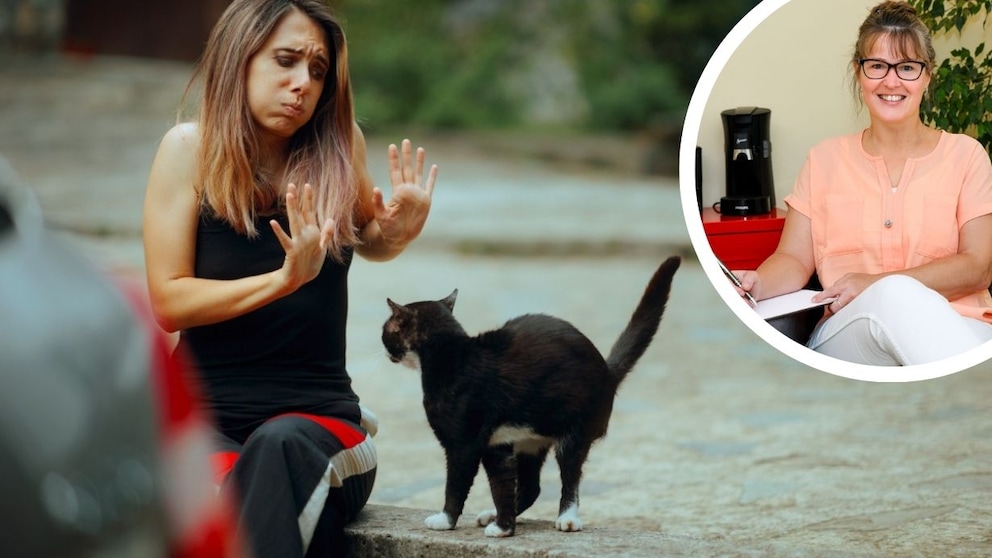
“Do you know what a huge red flag is? When someone says to you, ‘I hate cats,'” says TikToker and health blogger Vreni Frost in a video. The term “red flag” stands for a warning sign—behavior or a statement indicating something might be wrong with a person or situation. In interpersonal relationships, a “red flag” often describes a potentially problematic or toxic pattern.
According to Frost, hating cats is often a sign of narcissistic personality traits. The reason: “Because cats set boundaries, because cats can’t be controlled.” That’s exactly what triggers people with a strong need for control, especially narcissists. “Cats reflect whether you respect boundaries or only allow closeness on your terms,” Frost says.
Psychologist Weighs In
In the end, Frost also limits her theory. Not everyone who dislikes cats is automatically a narcissist. “That would be way too simple.” But if someone says they find cats “awful” or even “hate” them, at least one alarm bell should go off.
PETBOOK asked Sandra Jankowski, a psychologist and psychotherapist, what she thinks of such attributions. “These statements are generalizations. The paradox is: Narcissistic personalities often use generalizations to manipulate others,” Jankowski says.
According to the psychologist, psychological attributions work very well on social media. “These media are designed to stage, create, and circulate emotions and affects. Social judgments significantly shape our self-image and influence our actions, whether they are generalized or not.”
However, the truthfulness is often not questioned. “Moreover, this statement is a negative attribution. When we read such statements, we are glad we don’t hate cats. Precisely because we emotionally want to believe we are not narcissists. That’s how the game with our feelings works on social media.”
The post thus triggered fear and relief in the reader, and if they “like” the statement, they can show everyone they are not a narcissist, Jankowski continues.
Can Pet Preferences Really Reveal Something About Our Psyche?
Since the video’s release, many have also spoken out in the comments. It was often said that narcissists are indeed cat haters and therefore prefer to keep dogs, as these animals are easier to control. Additionally, people with these tendencies often deliberately create dependencies. The strong bond between a dog and its owner and the fact that they often “miss” the person when they leave the house fit well into this picture.
Sandra Jankowski told PETBOOK when asked if pet tendencies can really reveal something about our personality patterns or even personality disorders: “Not really. One could just as easily claim: ‘Narcissists would only love cats because they are so graceful,’ which is also not true.”
According to Jankowski, large-scale studies would need to be conducted to achieve truly definitive results. That’s hardly feasible. “Older studies from 2010 are supposed to prove such tendencies, but the question is whether these studies measure what they are supposed to measure or if there are design errors in the studies.”

Dog or Cat Person? What Science Reveals About Your Personality

Are There Really Differences in Character Between Female and Male Dogs?
Study Even Partially Proves the Opposite
In fact, a study published in 2023 in the journal “Frontiers in Psychology” showed the opposite. Certain forms of narcissism may be associated with low human empathy but still with great love for animals. Previously, the question of whether people with narcissistic personality traits can form emotional bonds with animals despite low empathy for fellow humans was a scarcely researched field, the study states.
The study examined 259 students who own both a dog and a cat. This was ensured through screening, as previous research shows that people with multiple pets often have higher empathy scores. Participants completed comprehensive psychological questionnaires that captured three facets of narcissism: agentic extraversion (seeking admiration), antagonism (hostility, superiority), and narcissistic neuroticism (emotional vulnerability). Additionally, animal and human empathy, attitudes toward animals, and emotional attachment to the pet were measured.
The results show a nuanced picture:
- Seeking admiration was not related to empathy for humans or animals, nor to animal attachment or attitudes toward animals.
- Antagonism was clearly negatively associated with empathy for humans and animals. People with high scores in this category also showed a more negative attitude toward animals. They more frequently reported stressful impacts of pet ownership.
- Narcissistic neuroticism was not associated with human empathy but was positively related to animal empathy, a positive attitude toward animals, and greater emotional support from the pet.
These differences can be explained by the needs of the respective personality traits. While only antagonistic narcissists tend to be hostile and distant, vulnerable narcissists apparently use their pets for emotional self-regulation and as a source of comfort and security. The statement that cat haters are narcissists is thus not only a generalization but also fails to address the different manifestations of the disorder. 1
Don’t Be Unsettled by “Generalized Attributions”
Sandra Jankowski, who is also a systemic couple and family therapist, sees the possibility that a bond can form between humans and animals similar to human-to-human relationships. “Certainly, topics like closeness, boundaries, and control will play a role. But even if a person has an insecure attachment to other people, they can form a very secure bond with their pet,” says the psychologist. Again, one cannot generalize.
And for people who now wonder, “I love dogs but not cats! Does that make me difficult?” the psychologist would reassure them. While it’s easy to be unsettled by such generalized attributions, one cannot fundamentally deduce a person’s personality from their preference for a pet.