


August 14, 2025, 8:42 am | Read time: 6 minutes
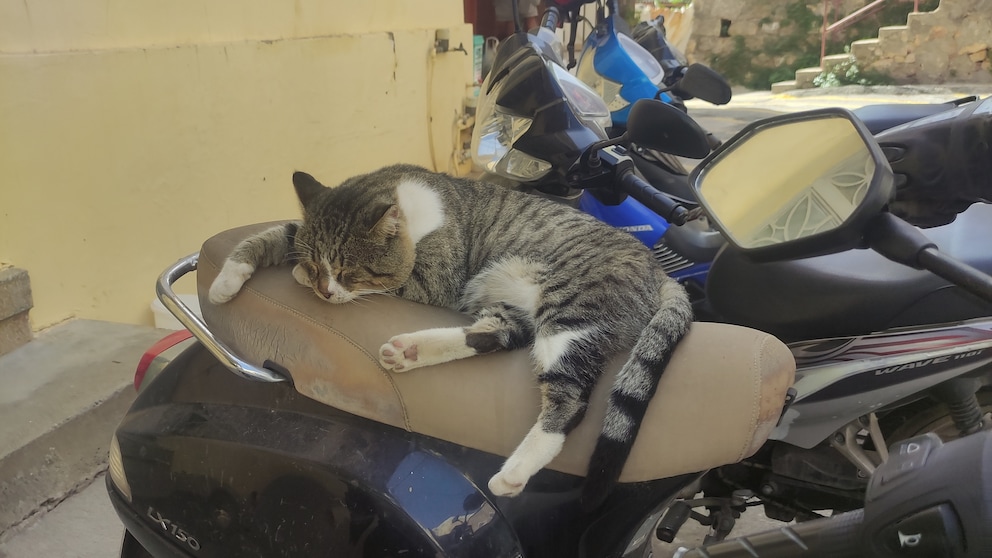
In vacation destinations like Spain, Italy, or Greece, there are many street cats. Tourists often feel sympathy for the animals. But should you feed or pet them? Our editor and cat behavior expert Saskia Schneider regularly visits Crete and Ischia—both islands where many street cats live and suffer.
In Germany, cats have long been more than just pets. For many, they are like family members. They have their own beds, furniture, and nowadays even health insurance. When you tell people in Crete or Ischia about this, you often get only headshakes. Here, cats—like most dogs—are primarily considered working animals. They are supposed to eliminate rodents. Many strays mainly feed on leftovers and garbage. As a tourist, you quickly feel sorry for the skinny animals. Still, you should not feed street cats—or only if you know exactly what you’re doing.
Why Are There So Many Strays in Vacation Spots Like Crete?
In many European countries, cats are primarily working animals—especially in rural areas. Here, cats lead relatively independent lives and reproduce uncontrollably. Although there are now neutering programs by protection organizations—you can recognize the neutered animals by a mark on their ear—this is usually just a drop in the bucket. Especially on islands like Crete or Ischia, an Italian island in the Gulf of Naples, uncontrolled reproduction can quickly lead to large populations and misery, as the cats cannot easily migrate to other areas like on the mainland.
Especially during the season, when many tourists come and many hotels and restaurants are open, the animals reproduce rapidly. In winter, the population thins out again. Many street cats also die from diseases or in traffic. Therefore, you often see many young animals.
Also interesting: Friend or Pest? How Cats Are Viewed in Different Cultures
Should You Feed Street Cats?
Generally, the animals find enough food during the season. While cats in rural areas hunt for prey, you often find feeding stations in cities. These are usually filled by residents. Additionally, many restaurant and hotel operators tolerate the presence of the animals and even occasionally give them leftovers.
Cats rarely starve during the season—when tourists are also present. But of course, the cats always appreciate a snack, and I always have treats with me during my vacations, which are gladly accepted. Pregnant and nursing cats, in particular, are grateful for the extra calories. However, everyone must decide for themselves whether to feed street cats or not. There are several reasons, in my experience, against it.
Reasons Against Feeding Street Cats
Maintaining Large Populations
Feeding contributes to maintaining large populations, as even sick and weak animals can survive the season. Many strays find enough food during the tourist season. While cats in rural areas hunt for prey, in cities, you often find feeding stations filled by residents. By feeding them, you contribute to maintaining large populations, as even sick and weak animals can survive the season.
Cats Become a Nuisance
Cats can become a nuisance when they run through restaurant rows, sit next to diners, and even snatch food from plates. Residents and many other tourists find this annoying, which can ultimately lead to the cats being chased away or even harmed.
Especially if you rent a vacation apartment and feed strays, the owners often have a problem afterward when the cats keep coming back. You don’t make yourself popular by feeding street cats with table scraps, as this usually attracts more animals looking for a handout. Angry looks from neighboring tables are the least of your problems, as some people feel so disturbed that they chase the cats away with kicks and blows.
When feeding, especially by hand, you have close contact with the animals, which can increase the risk of being bitten or infected with parasites. Some animals are quite eager to snatch food, and I have actually been bitten on the finger by a young kitten while feeding it.
Feeding street cats human food is often harmful to them. It should be obvious that you should only feed street cats appropriate food. However, on vacation, you rarely have it with you, and the temptation is great to give the animals other treats.
Should You Pet Street Cats?
Petting street cats is even more delicate than feeding them. Not because you could harm the cats, but because many people misjudge the behavior of cats.
I have had various experiences with this. In areas with little traffic, where strays live closely with people, almost all cats were very friendly. The animals were either very open and enjoyed being petted, or they avoided people. Often, these are semi-wild cats that have either grown up without human care or have had bad experiences with people. Such animals often stay in parks and green spaces. Many are trusting but not always friendly.
The Risk of Being Scratched or Bitten Is High
I had a situation where a cat initially enjoyed being petted and then suddenly swatted at me because I reacted a second too late. You have to read the animals’ body language very well to know when to approach them, where you can touch them, and when it’s best to stop petting.
The risk of being scratched or bitten is simply too high. This is also true when feeding them.

Author Shares Tips and Experiences on How to Help Strays While on Vacation

Live for Free on a Greek Island and Help Cats–Here’s How!
How Can You Help Street Cats?
The only sustainable way to help street cats is through spaying and neutering programs. If you really want to do something for street cats, you should contact local animal welfare organizations and ask how best to support them. It doesn’t always have to be financial; some are also happy to receive food donations.
Should You Feed Street Cats? My Take
You’re not doing anything wrong by giving a kitten a treat or a pet. However, you should always be aware that most strays are not abandoned pets but semi-wild cats that are not all used to or want contact with humans.
Street cats are often not abandoned pets but semi-wild cats that are not all used to or want contact with humans. They lead relatively independent lives and reproduce uncontrollably. Although there are now spaying programs by protection organizations—you can recognize the already neutered animals by a mark on their ear—this is usually just a drop in the bucket. Especially on islands like Crete or Ischia, an Italian island in the Gulf of Naples, uncontrolled reproduction can quickly lead to large populations and misery, as the cats cannot easily migrate to other areas like on the mainland.
About the Author
Saskia Schneider is a Ph.D. biologist. During her studies at the Free University of Berlin, she focused primarily on zoology and animal behavior.