


August 25, 2025, 11:44 am | Read time: 4 minutes
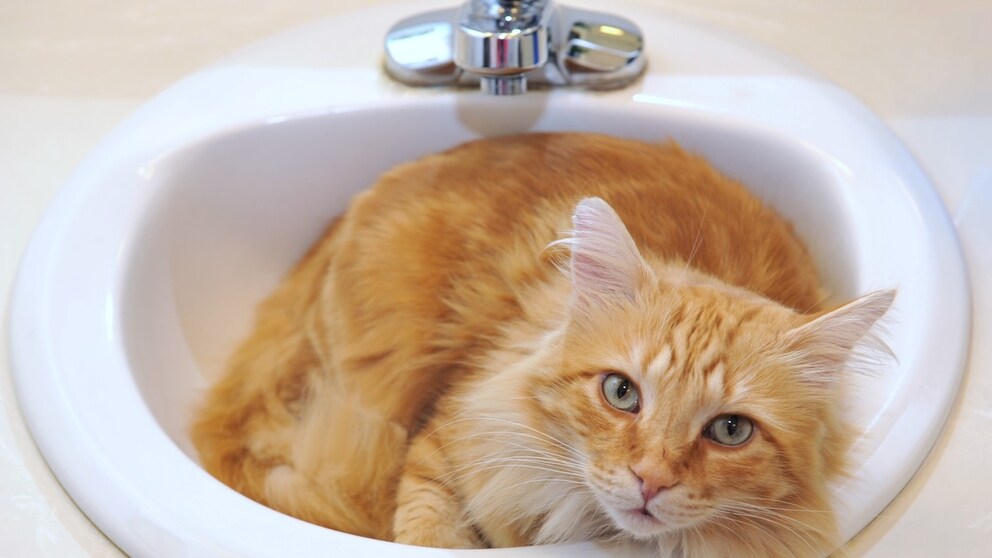
Cats are known for choosing the quirkiest places for a nap. The sink, however, surprises many, as these animals are generally considered to be averse to water. But from a cat’s perspective, a sink has several advantages as a resting place, as PETBOOK editor and cat behavior expert Saskia Schneider explains.
Sink as a Cool Resting Place
Typically, cats choose cozy resting spots. These are not only pleasantly warm but also retain scents well. For cats, this is crucial to feel comfortable and secure in their environment. A sink doesn’t meet these requirements at all, but it has another advantage: The smooth ceramic surface is nice and cool–similar to bathroom tiles. Therefore, cats often discover this unusual resting place, especially in the summer.
I Have Everything in View Here
Cats love to keep an eye on their surroundings, and the sink is ideal for this because it is often elevated. From here, they can observe the activities of humans, keep an eye on other cats, and often see the hallway or other rooms from the bathroom or kitchen.
Almost Like a Box
Cats love to lie in boxes. After all, cats love tight hiding spots. Scientists also suspect that the close body contact with the box’s inner walls leads to the release of endorphins. Lying in the sink might have a similar effect on cats.
Play, Fun, and Comfort
Cats usually discover the sink as a resting place later on. Initially, curiosity leads them there. Kittens especially find dripping faucets interesting and discover the sink as a play area. Items nudged into the sink with a paw roll around amusingly, especially if it’s a round basin. Cats quickly associate all this and learn: The sink offers exciting and fun activities. After playtime, they groom themselves and then rest. Many animals simply settle down right there.
Humans Reinforce the Behavior
Many find it amusing when they suddenly find their cat in the sink. Often, we start petting the animal, speaking kindly to it, or initiating a game. This attention acts as reinforcement for the cat, so the behavior solidifies over time and can become a ritual. It’s not uncommon for cats to seek out the sink when their human enters the bathroom or kitchen, as this often means playtime. Either because the person turns on the faucet or interacts with the cat before continuing with their day.

Why Some Cats Love Water–and Others Hate It

Why Some Cats Prefer Drinking From the Toilet
Caution with This Behavior
As long as the cat is lying, playing, or even drinking in the sink, there’s no need to worry. However, some animals start urinating there. This can be a warning sign. Especially cats that are fed only dry food or are over ten years old should be closely monitored—it could indicate kidney or bladder crystals. These cause pain during urination. Some cats associate this discomfort with their litter box and seek other places where they feel safe to relieve themselves.
If you notice your cat urinating in the sink more often, or if the behavior suddenly appears overnight, a visit to the vet is necessary. However, if everything is fine health-wise, from a behavioral analysis perspective, there’s nothing wrong with urinating in the sink. However, not all household members are usually thrilled when cat urine ends up in the bathroom sink or kitchen sink.
Conclusion
Cats appreciate the sink not only as a cool resting spot. From here, they have a good view of everything, and there are exciting things like dripping faucets to discover. Cats associate all this positively with the sink. This leads them to frequently return to the spot and choose it as a resting place. We humans—often unconsciously—reinforce this behavior by giving our pets a lot of attention. Whether because we find the behavior cute or encourage the cat to play.
About the Author
Dr. Saskia Schneider is a biologist with a Ph.D. During her studies at the Free University of Berlin, she focused primarily on zoology and animal behavior. In addition to training as an editor, she completed training as a behavior consultant with a focus on cats.