

July 16, 2026, 3:46 pm | Read time: 4 minutes
Why is my cat suddenly coughing? When cats cough or gag, many owners become very concerned. Often, the cause seems obvious—but first impressions can be misleading. PETBOOK explains what triggers might be behind the symptoms and what you should pay attention to now.
Why Do Cats Cough?
When a cat coughs, many owners quickly become alert. Many initially think of a hairball—after all, these are often part of a cat’s daily life. However, swallowed fur is not always the cause of the symptoms. Asthma, infections, parasites, or other illnesses can also trigger coughing. Since the symptoms can look very similar, it’s worth taking a closer look and taking changes seriously at an early stage.
When Hairballs Are Behind Coughing in Cats
Cats spend a lot of time grooming themselves daily. During this grooming, they inevitably swallow loose hairs. Normally, most of these hairs are excreted undigested in the feces. Problems arise only when a particularly large number of hairs enter the stomach or the movements of the gastrointestinal tract change. Then the hairs can clump together into what is known as a hairball.1
If a hairball remains in the stomach, it can irritate the stomach lining. The cat then often tries to expel it by gagging or vomiting. To owners, this may initially look like the cat is trying to cough.
If a hairball moves further into the intestine and is not excreted, it can, in the worst case, lead to constipation or even an intestinal blockage.
Coughing or Hairball–How to Tell the Difference?
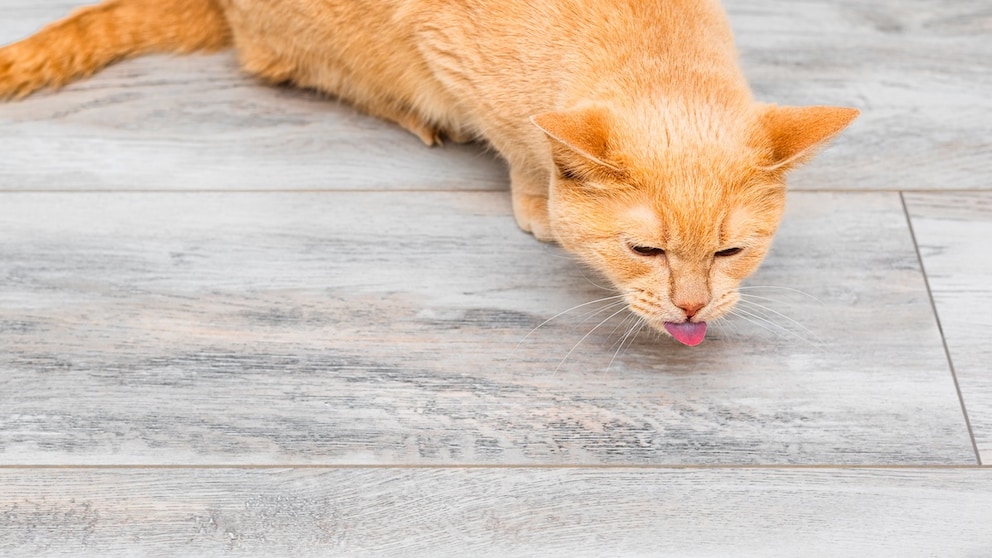
For owners, the difference is often not easy to recognize. When expelling a hairball, the cat usually gags several times with an extended neck until hair or foamy liquid finally comes out. In true coughing, however, the cat expels air from the airways—often without subsequently vomiting anything.
Since both situations can look very similar, the cause cannot always be reliably distinguished at home. If the symptoms occur more frequently or the cat does not bring up a hairball, it should be examined by a veterinarian.
Feline Asthma as a Frequently Overlooked Cause
A hairball is not always behind coughing or gagging. Another possible cause is so-called feline asthma—a chronic inflammatory disease of the bronchi. In this condition, the airways narrow due to inflammation of the mucous membrane, increased mucus production, and a spasm of the bronchial muscles. The result can be recurring coughing, wheezing or whistling breathing sounds, and labored exhalation.
Many owners initially mistake these signs for an attempt to expel a hairball. The condition is particularly common in cats between two and eight years old.
In severe cases, acute respiratory distress with open-mouth breathing can occur—a veterinary emergency. Although feline asthma is not curable, if the condition is detected early and consistently treated, many affected cats can still lead a nearly normal and active life.

Often Underestimated: The Dangers of Asthma in Cats

Can Cats Actually Get Hiccups?
Other Possible Causes of Coughing in Cats
In addition to hairballs and asthma, other causes are possible. Respiratory infections are particularly common triggers of coughing. Especially very young, older, or immunocompromised cats can become ill as part of the so-called feline upper respiratory infection complex. Various bacteria and viruses play a role, including the feline herpesvirus and the feline calicivirus. Often, bacteria settle on an already existing viral infection.
Foreign bodies can also cause coughing. While playing or exploring, cats can inhale grass blades or other small particles that irritate the airways.
Especially outdoor cats that hunt mice or other prey can also become infected with lungworms. The parasites settle in the bronchi and trachea and can trigger coughing. However, not every affected cat immediately shows symptoms.
When Should a Coughing Cat See a Veterinarian?
If a cat repeatedly shows coughing or gagging, it should be examined by a veterinarian. It is especially important to quickly clarify if additional symptoms such as respiratory distress or open-mouth breathing occur, blood is coughed up or vomited, the cat appears unusually lethargic, or the cough persists for several days or keeps recurring.
Not every cough or gagging in cats is harmless. While hairballs are often behind the symptoms, asthma, infections, parasites, or other illnesses can also cause similar symptoms. If the symptoms recur or additional warning signs appear, the cause should be clarified by a veterinarian. The earlier a condition is detected, the better it can be treated.