

January 24, 2026, 4:45 pm | Read time: 6 minutes
We know that a wet and cold nose is a good thing, especially for dogs. But is it the same for cats? And can you tell if an animal has a disease from its nose? PETBOOK provides an overview.
In contrast to dogs, where the nose plays a dominant role, cats are mainly guided by acoustic and visual stimuli. However, their sense of smell is also highly developed and is crucial for many everyday tasks. So if something is wrong with the animal’s olfactory organ, this can have consequences for them, but it can also say a lot about their state of health.
Overview
What Cats Use Their Nose for
Compared to humans, cats have a much more developed sense of smell. While humans have around five to twenty million olfactory cells, cats’ noses have around 65 million. In addition, there are countless receptors that enable cats to recognize even the subtlest differences in smell. They are able to distinguish up to 25 different substances in an odour mixture—a human usually only recognizes four to five. 1
Cats use their nose to analyze the smells of other cats and to locate food sources—from the mother cat’s teats to an open can in the kitchen. This sense helps them to orient themselves in their own territory, recognize enemies in good time, and track down prey. Marking the territory with urine or saliva is also part of this olfactory communication, which signals to other cats that the territory has already been claimed.
What Does a Healthy Cat’s Nose Look Like?
A cat’s nose needs to be in good working order so that it can make the best use of it. If the nose is blocked, too dry, or injured, the animal may stop eating because its ability to smell is impaired.
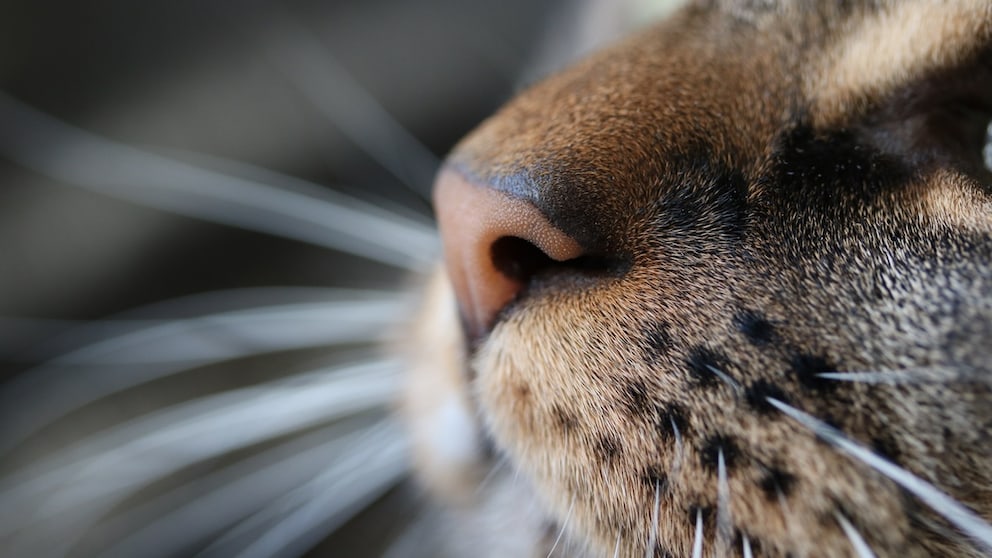
This is why a healthy cat’s nose is usually slightly moist, as they occasionally lick it or secrete special secretions. This moisture supports their sense of smell because it allows them to pick up and classify fine odor particles more quickly. So if the cat’s nose is moderately moist, cool, and soft, this indicates good hygiene and health of the animal.
Dry Nose – Always a Sign of Illness?
However, this is only one side of the coin, as even healthy cats can often have a dry nose. This is normal in many cases, but can also be a sign of incipient illnesses. There are numerous harmless triggers:
Environmental Influences and Natural Causes
External conditions, in particular, can cause temporary dryness. Cats, for example, love to snooze in the sun—be it on the balcony or by a sunny window. At high temperatures, however, the skin on the nose dries out quickly.
Dry heating air can also lead to a dry cat nose, especially in winter. Especially if the animals also like to lie down on the heating to sleep. This is where dry air and heat come together and can lead to the animal’s nose being too dry.
However, this is not a permanent condition, but something that inevitably happens when the animal sleeps. This is because the cat’s nose does not actually moisten itself; the animal must actively do this when grooming. Cats can also be observed regularly after snoozing. If the animal also consumes sufficient water, occasional dryness of the nose is not a cause for concern.
When Illness Is the Cause
In some cases, however, a dry nose can also be a symptom of a serious illness. A permanently dry nose could indicate problems with water intake, but also organic problems with the kidneys or bladder.
A visit to the vet is also recommended if there are noticeable changes in the condition of the nasal skin, such as cracks or flaking. This could be a sign of a general skin problem. However, other infections, such as fungal infections, ulcers, or eczema, can also manifest themselves in this way. In these cases, the cat would also scratch its nose. 2

The 7 Most Common Diseases in Guinea Pigs

Cat Sniffs Food but Doesn’t Eat? Here’s Why
A Runny, Wet Nose is a Warning Sign
However, health problems in cats do not always have to be accompanied by a dry nose. A wet, runny nose is also a sign of illness. If the cat sneezes and also has discharge—even if it is clear and transparent—owners should be alarmed. This may indicate an upper respiratory tract infection, cat flu, colds, or allergies.
All changes in nasal secretions are a cause for concern. A healthy cat’s nose is only moist, not wet or runny. If the secretion turns yellowish or whitish, this also indicates an infection with viruses or bacteria. The odor can also be a decisive factor here. However, the discharge can also be bloody, slimy, or sticky—all of which are absolute warning signs.
Sudden changes to the nose and additional symptoms, in particular, should be clarified by a vet. These include loss of appetite, fever, or listlessness. Fever can also be detected in a cat by a warm, red nose in combination with an elevated temperature on the head and lower back. 3
Treatment and Care
The veterinary treatment depends on whether the cat’s nose is too dry or too wet. If the mucous membrane is cracked or dry, the first priority is to treat the wound. However, in consultation with the vet, chapped skin can be treated at home after diagnosis, for example, with vegan Vaseline, perfume-free lip balm, or coconut and olive oil.
However, the cat may also require antibiotics for a bacterial infection or antihistamines for an allergy. If the animal also shows other signs of upper respiratory tract disease, mucolytic medication may also be indicated.
Caution: Only use inhalation or mucolytic products prescribed by your vet. This is because many products intended for humans contain essential oils that are dangerous for cats. To assist the cat with respiratory illness, you can gently clean its nostrils with a damp cloth if it permits. This involves using a clean, lint-free, damp cloth to carefully clean the cat’s blocked nostrils.