

November 12, 2026, 9:32 am | Read time: 4 minutes
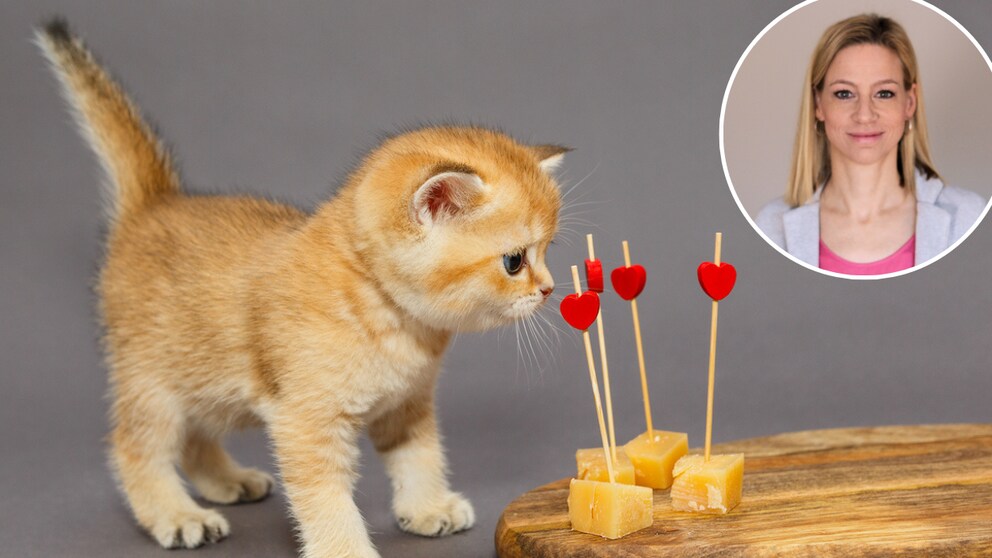
Anyone who occasionally enjoys a piece of cheese at home has likely noticed that cats are also very interested in it. But is feeding cheese to cats healthy? And are there differences among the seemingly countless varieties? We asked pet nutrition expert Julia Fritz from Napfcheck.
Is Cheese Healthy for Cats?
“Cheese is very interesting for cats,” says Julia Fritz, a veterinarian specializing in animal nutrition and dietetics and owner of the veterinary nutrition consultancy Napfcheck. As an expert in small animal nutrition and a cat owner, she knows exactly what is healthy for the animals and what is not. In general, yes, cats can eat cheese.
However, when thinking about dairy products and cats, some might recall that in the past, people would leave bowls of milk outside for cats on farms, not realizing it wasn’t doing them any favors. It is now well established that milk can upset a cat’s digestion.
Is Lactose a Problem in Cheese?
This is mainly due to lactose. Even though cats love milk, they don’t tolerate the sugar it contains very well. Julia Fritz explains why. “Lactose is a milk sugar found in a cat’s mother’s milk. That’s why kittens have an enzyme to break down this lactose. Since cats only need this in their early life when they are nursing, there’s no need to maintain it into adulthood. So, the body stops producing it, and it doesn’t come back.” Because they can’t process it anymore, too much lactose often leads to diarrhea and bloating in adult cats.
Milk and condensed milk have a very high lactose content—other products, like quark, have much less. And cheese has the least of all.
Also interesting: These 12 Foods Can Be Toxic for Cats

Can Cats Eat Cheese? Veterinarian Explains

Can Dogs Eat Yogurt?
How Much Cheese Can My Cat Eat?
To understand how much cheese is actually okay for a cat in terms of lactose, we need numbers. “A cat can consume up to two grams of lactose per kilogram of body weight. So, a cat weighing four kilograms can consume eight grams of lactose,” explains Julia Fritz. “Hard cheese contains only 0.1 to 0.5 grams of lactose per 100 grams. It would take a massive amount of cheese to actually harm the cat.” The lactose content in cream cheese is slightly higher, but still only 3 to 3.5 grams per 100 grams.
“The everyday amounts you would give a cat don’t reach levels that would be concerning in any way.” However, cheese is high in calories, so one should also be cautious about weight gain, she notes.

My Cat Loves Cheese
My cat Remo is obsessed with cheese. When we bake a casserole with mozzarella, he demands a thorough finger-licking session after shredding it. But he would also love to pull cheddar and other aged cheeses right off the bread. He doesn’t care whether the cheese is made from sheep’s, goat’s, or cow’s milk—even vegan cheese excites him.
Since I don’t want him to constantly get human “food” as a reward for persistent behavior, he has treats that also taste very cheesy. But he has to perform a few tricks for these delicacies.
Cream Cheese, Camembert, or Parmesan, Melted or Plain: What Kind of Cheese Can Be Fed?
So, what about the different types of cheese? In fact, there’s nothing specific to consider. The type of cheese you give your cat depends entirely on what they like. Whether it’s Camembert, Parmesan, or Cheddar doesn’t make a difference.
Only cream or processed cheese products make a difference due to their aforementioned higher lactose content—but only beyond a certain amount. Whether the cheese is fed plain or melted is also irrelevant, according to the expert.