

May 16, 2026, 10:18 am | Read time: 4 minutes
Uncleanliness in cats is a real nuisance. If a cat urinates on the floor in front of the litter box or on the carpet, a visit to the veterinarian is essential. Often, a health issue is behind this behavior. One possible cause in cats is urinary crystals. Learn about the symptoms, how the disease is diagnosed, and what can be done about it at PETBOOK.
Overview
How do urinary crystals manifest in cats?
Urinary crystals are poorly soluble salts that accumulate in a cat’s urine. They can irritate the animal’s bladder wall, leading to a painful bladder infection. When the tiny crystals clump together, they initially form fine urinary grit, which can later develop into larger urinary stones.1
Cats with urinary crystals or stones often avoid their litter box. Therefore, urinary crystals should always be considered as a potential cause of uncleanliness. Urinary crystals in cats often manifest as problems with urination. The animals may strain repeatedly without passing urine and sometimes make sounds of pain. If a cat cannot urinate at all, it is an absolute emergency–there is a risk of poisoning.
Also interesting: What a first aid kit for cats should contain
Possible causes of urinary crystals in cats
There are different types of urinary crystals in cats, which vary in their chemical composition, including struvite crystals and calcium oxalates. Struvites are somewhat more common and consist of ammonium, magnesium, and phosphate. They form when a cat’s urine is too alkaline, meaning not acidic enough. The cause of the altered pH level in the urine can be a diet too rich in phosphate or magnesium, for example. Older, neutered male cats are particularly affected. Additionally, lack of exercise and obesity can promote the formation of struvites in cats.2
Calcium oxalate crystals can also form due to an unfavorable diet composition. If a cat drinks too little, its urine becomes highly concentrated, which can also promote crystal formation. Moreover, some breeds, such as Burmese and Persians, seem to have an increased risk of developing calcium oxalates.
Diagnosis of urinary crystals in cats
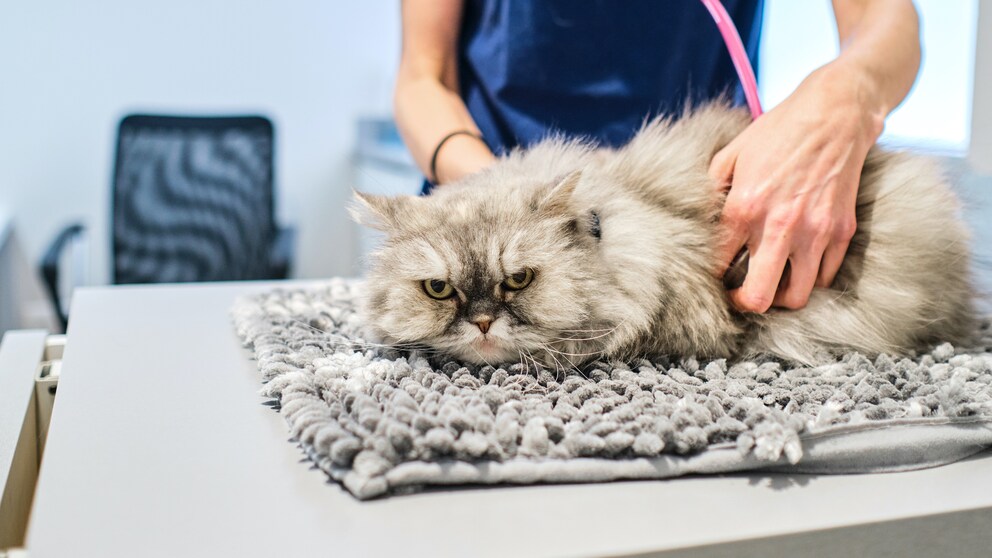
If urinary crystals are suspected, the cat’s urine is examined. A test strip can be used by the veterinarian to determine the pH level. Additionally, an X-ray or ultrasound examination of the bladder is performed, and a needle is used to extract some urine directly from the cat’s body. The fluid can then be examined under a microscope for urinary crystals. Based on their specific shape, the veterinarian can determine whether they are struvites or calcium oxalates.
Furthermore, a urine sample can be sent to a lab to rule out other causes of the symptoms, such as a bacterial infection. To check kidney function, a blood test may also be ordered.
Also interesting: 12 foods cats should avoid

Urinary Crystals in Cats: Symptoms, Causes, Treatment
Why Struvite Stones Are Dangerous for Cats and How to Treat Them
Treatment: what to do about urinary crystals in cats?
The treatment of urinary crystals depends on their type and size. There are medications to dissolve fine struvites by making the urine more acidic. Some affected cats may need special urine-acidifying food or tablets afterward to prevent a recurrence. For calcium oxalates, veterinarians often recommend a change in diet.
If the crystals have already clumped into larger urinary stones, they usually need to be surgically removed. If a bladder infection is present, antibiotics can be administered to combat the bacteria involved.
How can urinary crystals in cats be prevented?
Urinary crystals in cats are relatively common–especially in older, overweight male cats. To prevent crystal formation, cat owners should reduce their pet’s weight in consultation with a veterinarian. However, urine-acidifying diet food should only be given after consulting with the veterinarian.3
Additionally, cat owners can check the pH level of the urine themselves using a test strip. To collect the urine, special non-absorbent cat litter and a pipette are used. A drinking fountain can encourage the cat to drink more. Less concentrated urine and a well-flushed bladder reduce the risk of urinary crystal formation in cats.