



October 7, 2025, 8:52 am | Read time: 6 minutes
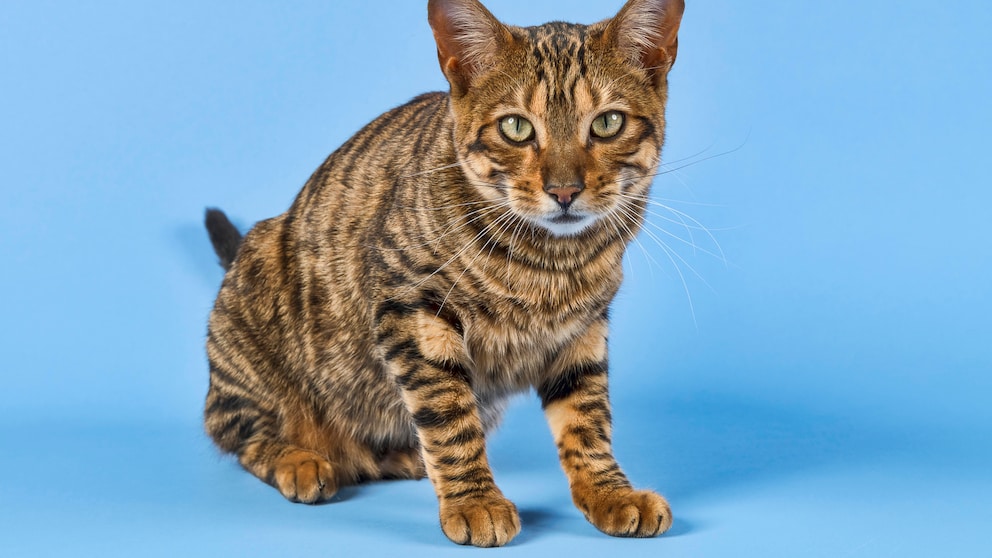
A mini tiger for the living room? That’s exactly the exotic goal pursued by the breeding of the Toyger cat. With its distinctive stripes and robust build, it strongly resembles majestic big cats—yet it is a gentle, approachable pet with a surprisingly affectionate character.
Origin
The Toyger is a relatively young cat breed from the U.S., with its breeding history beginning in the 1980s. It was developed by Judy Sugden, daughter of Jean Mill, the founder of the Bengal cat. Sugden pursued an ambitious goal: to create a house cat that visually resembles a tiger but possesses the friendly nature of a domestic cat.
However, this was not easy, as the genes responsible for the orange color in cats also affect the color of the stripes. Orange house cats with black stripes are biologically impossible. Therefore, Sugden chose a different path. The foundation for the breeding was a Bengal cat with striking rosettes and a tabby house cat named “Scrapmetal.” Later, a street cat from Kashmir, “Jammu Blu,” was added to the gene pool. Crucial to the breeding was the targeted development of tiger-like coat patterns—especially the ring-shaped facial markings, which occur naturally only in tigers.
The breed was approved for registration by TICA in 1993 and received full recognition as a Championship Breed in 2007. Toygers are still rare: In 2020, fewer than 500 specimens were registered worldwide. In Germany, they are mainly found with specialized breeders at prices between 1,200 and 3,500 euros. It is important to ensure a reputable, TICA-certified breeding.
Appearance & Coat
The most striking feature of the Toyger is its distinctive coat pattern, which strongly resembles a tiger. The black-brown stripes are deep and clearly defined, often branching or appearing rosette-like. These patterns run not only over the back but also over the legs, face, and even the belly. The base tone ranges from vibrant orange to reddish-brown, often interspersed with a golden shimmer (“glitter”) that makes the coat appear particularly lively.
Toyger cats are medium to large in size, with a muscular, long body and a deep chest. They reach a shoulder height of about 20–25 cm and weigh between 3.6 and 6.8 kg—males usually slightly more than females. The head is broad and deep, with a strong chin, prominent muzzle, and long nose. The eyes are small to medium-sized and slightly slanted, and the ears are rounded and set to the side. The paws are large, with long toes and pronounced knuckles—another detail reminiscent of wild cats. The long, rope-like tail further enhances the tiger-like overall appearance.
Character & Temperament
Despite their wild appearance, Toygers are exceptionally approachable and balanced cats. This was as important to Judy Sugden in her breeding as the coloration—and for a specific reason. When developing new breeds, many kittens do not show the desired coat colors and patterns. To ensure these quickly find a loving family, it was essential that the kittens were human-oriented and gentle. Therefore, Toygers are considered particularly people-oriented, friendly, and eager to learn. Their nature is often described as playful, affectionate, and intelligent—qualities that make them popular family cats. In interactions with children, other cats, or even cat-friendly dogs, they usually show good social behavior, provided they are accustomed to them early on.
Toygers seek closeness to their humans without being intrusive. They adapt well to their owners’ daily routines but do not like being alone for long periods. With sufficient attention, they are balanced, loyal companions. Their calm yet interested nature makes them pleasant housemates—ideal for busy households.
Training & Activity
Toygers are very trainable and respond well to training. Due to their intelligence and playfulness, they are excellent candidates for clicker training, fetch games, or cat agility. Many even learn to walk on a leash or perform small tricks on command. Activity is important for this breed: They need daily mental and physical stimulation. Puzzle and intelligence toys, climbing-friendly setups, and regular interaction with their caregivers are ideal to prevent boredom and unwanted behavior.
Proper Care & Maintenance
Bred as an indoor cat, the Toyger feels comfortable without outdoor access—as long as it is sufficiently occupied. A secured balcony or cat-safe garden is highly appreciated. The breed is best suited to households where it is not left alone for too long. Those who work should consider keeping a second, compatible domestic cat.
In terms of care, the Toyger is uncomplicated. Its short, dense coat requires only occasional brushing–especially during shedding periods. Weekly checks of ears, teeth, and claws, as well as providing suitable scratching options, complete the care routine. Due to their cleanliness and quick learning ability, Toygers are house-trained early.
Nutrition
As descendants of the Bengal cat, Toygers have a high protein requirement. High-quality, meat-based food is therefore particularly important. Many owners opt for the BARF concept to tailor nutrient supply individually. This feeding method is, however, labor-intensive and requires expertise. Alternatively, high-quality wet or dry food is available—ideally free from sugar, fillers, and artificial additives. Mixed feeding is also possible. Fresh water should always be accessible—ideally a bit away from the feeding area to increase the drinking incentive.

What makes the Highlander cat so special
Why the American Shorthair Is Considered the Original Cat Breed of the U.S.
Susceptibility to Certain Diseases
Toygers are generally considered robust cats. However, there are some genetic diseases that responsible breeders should test for. These include:
- Hypertrophic Cardiomyopathy (HCM): A common heart disease in cats, where the heart muscle is thickened. Symptoms often appear late. Regular cardiological examinations are recommended.
- Progressive Retinal Atrophy (PRA): A degenerative eye disease that can lead to blindness. Early genetic tests help identify affected animals.
- Pyruvate Kinase Deficiency (PKDef): A form of hereditary anemia. Here, too, a genetic test for prevention is advisable.
Some lines also report agalactia (milk deficiency in mother cats) or “cow-hocking” (misalignment of the hind legs), so careful breeding selection is important. Overall, Toygers are significantly less predisposed than some other hybrid breeds—mainly thanks to the targeted crossbreeding with healthy domestic cats.
The Toyger at a Glance
- Character: playful, intelligent, affectionate, socially compatible
- Size: medium to large (20–25 cm shoulder height)
- Weight: 3.6–6.8 kg (males heavier than females)
- Coat: short, plush coat with strong, branching tiger stripes on an orange to reddish-brown base, often with a golden sheen
- Care: easy to care for, occasional brushing is sufficient
- Special Features: tiger-like appearance without wild cat crossbreeding, high intelligence and eagerness to learn, ideal for indoor living with plenty of activity