

October 31, 2026, 5:02 am | Read time: 7 minutes
Costumes, doorbell ringing, and lots of commotion: Halloween can quickly become a stress test for pets. Even things we humans find funny or harmless can mean significant stress for dogs and cats. PETBOOK editor and Halloween fan Louisa Stoeffler has gathered tips on how pet owners can help their four-legged friends get through the spooky evening as calmly as possible.
Halloween is Stressful for Many Animals
The tradition of the spooky festival also caught on in the UK and Ireland. There, people dressed up for Samhain, which later became Halloween, and performed small plays at the doors of the wealthy. In return, they received food and drinks. Today, children and teenagers mainly go from house to house in costumes collecting candy. Colorful decorations are also part of the tradition for many, including myself, weeks in advance.
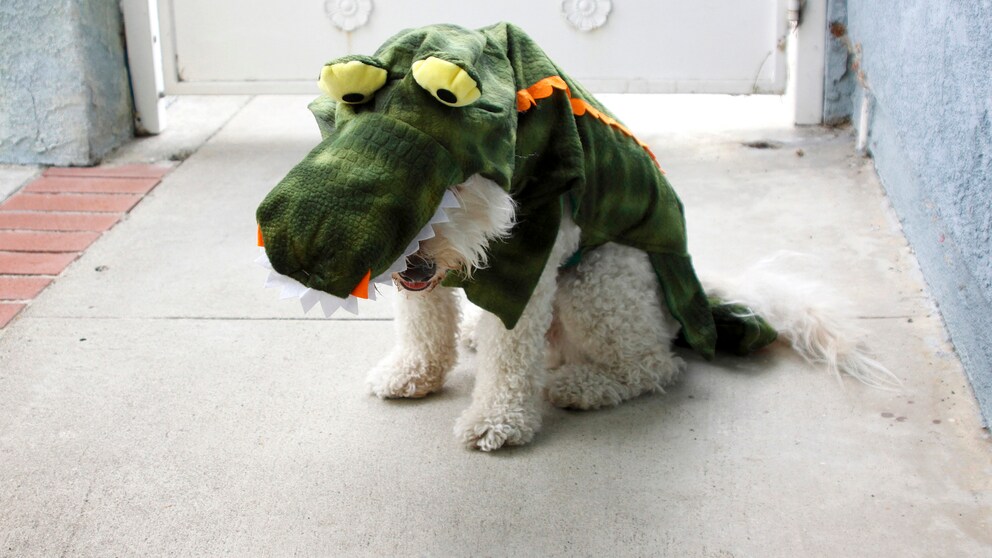
However, while enjoying Halloween, one should be mindful of their pets—and also wild animals. “The very candies, costumes, or decorations that make Halloween so special for humans can be harmful or even deadly for dogs, cats, and wildlife,” says Jana Hoger, an expert on animal companions at Peta. Costumes are not fun for animals but rather stressful, warns the animal welfare organization Four Paws.
If you want to treat your pets in a pet-friendly way on Halloween, you can try the PETBOOK recipe for a Pumpkin Spice Latte for Dogs or let your cat taste some autumn pumpkin.
Avoid Costumes for Pets on Halloween
Costumes may be part of Halloween for us, but they not only restrict animals’ freedom of movement but also rob them of their means of communication. Dogs and cats primarily communicate through body language. If their tails and ears are covered by a cloak or costume, they can no longer communicate naturally, explains Sarah Ross, a pet expert at Four Paws. Costume parts like a fake ax or wings can be disturbing for four-legged friends because they cannot shake them off.
People should also be considerate of animals when it comes to their own costumes. If you have a particularly sensitive pet, you should avoid wearing a costume that covers your face near them. Dogs and cats recognize us by our scent, but they also read our facial expressions. Masks and full-body costumes can unsettle animals, according to the Four Paws expert.
Jana Hoger from Peta also believes that tight Halloween costumes should not be worn by animals. Costumes can cause them to trip, confuse them, restrict their movement and vision, and in the worst case, even suffocate them. “A festive, loosely fitting bandana is a safer option for less anxious dogs, but ideally, animals should not wear any clothing at all.”
For a Quiet Halloween, Simply Turn Off the Doorbell
I always have a bowl of candy ready for kids on “trick-or-treat” tours. However, constant ringing and knocking, as well as changing visitors at the door, can put many animals on high alert. Especially dogs that tend to bark at every doorbell. But also fearful cats are likely to spend the entire evening under the bed if the doorbell keeps ringing. Sensitive small animals like my rabbits and guinea pigs are always moved to the quietest room. Additionally, I darken their cage.
To protect sensitive animals from constant noise, you can also play music to distract them from door sounds, advises Ross. If possible, you should lower the volume of the doorbell or turn it off completely. How best to do this, and when tenants in particular are allowed to turn off their doorbells, can be read at myHOMEBOOK.
In the worst case, dogs and cats could become stressed by the nighttime ringing and even run out the door while people are busy handing out candy, says Jana Hoger from Peta. To prevent this, a safe retreat should be created for the animals: This can be a familiar place with a favorite blanket or a quiet room where the animals can relax. It is also important that dogs and cats are microchipped and registered in a pet registry so they can be returned to their owners if necessary.
Postpone Walks and Outdoor Time
According to Jana Hoger, costumed people and loud children can overwhelm, frighten, and lead even the friendliest and most secure dogs to unpredictable behavior. Cats can also be startled and, for example, run away. “On Halloween, the safest place for dogs and cats is at home.”
Caution is also advised when walking or letting pets outside on Halloween night. Scattered wrappers or lost candies could be hidden in piles of leaves or on the street. People celebrating exuberantly in scary costumes could also frighten sensitive animals. Therefore, it is advisable to walk the dog while it is still light or when no children are out trick-or-treating. Cats with outdoor access should stay inside on Halloween and go out at another time.
Also interesting: Chickens “carve” Halloween pumpkins
Watch the Candy
Especially chocolate can be very dangerous for dogs and cats. But other candies should also be kept out of reach of pets. If you have a large bowl of treats ready for the neighborhood kids at the door, it could become a disaster for pets in an unguarded moment. If a dog or cat helps themselves to the chocolate or a child gives them a candy, a trip to the vet should happen quickly, as cocoa and xylitol (found in candies) are toxic to animals. It’s best to keep the bowl of candy in the cupboard until the next group of kids arrives.
Jana Hoger also advises: “People should keep these items—and their indigestible packaging, which can lead to dangerous intestinal blockages—out of reach of dogs and cats. This means, for example, no decorative bowls of candy on the coffee table.”
Are Black Cats Really in Danger on Halloween?

How sustainable is it to bring in animals from abroad?
Natural Decoration
But even the beloved Halloween decorations, which I bring out from the basement every year at the beginning of September, should be placed out of reach of pets. Artificial strings or plastic pumpkins can quickly become a danger to animals. Especially for cats, strings can be very dangerous.
Jana Hoger from Peta therefore recommends natural decorations. Pumpkins, gourds, corn stalks, hay, and leaves are non-toxic and environmentally friendly. “Corn cobs, however, can cause intestinal blockages in dogs,” the expert notes. Some materials and paints used for colorful decorations are also toxic to animals. If they chew on them and some paint comes off with saliva, it can lead to poisoning in the worst case.
The Peta expert also advises minimizing potential hazards. “Animals (and children) can burn themselves on pumpkin lanterns and candles; if they are knocked over, there is also a fire risk. Additionally, pets can swallow small parts—this can lead to digestive tract blockages and be life-threatening.”
Be Mindful of Wildlife
But not only our pets, also the wildlife in our immediate surroundings can be endangered by Halloween customs. In the fall, they are more active, gathering last supplies and looking for winter quarters in our gardens. Slowly rotting Halloween pumpkins or small pieces of plastic decorations can also cause digestive issues for wildlife.
Jana Hoger also advises against using fake spider webs as decorations. “Not only can wildlife get caught in the thin threads, but cats also find them enticing—and if the material is swallowed, it can cause vomiting and intestinal blockages.”
With material from dpa