

June 30, 2026, 4:12 am | Read time: 6 minutes
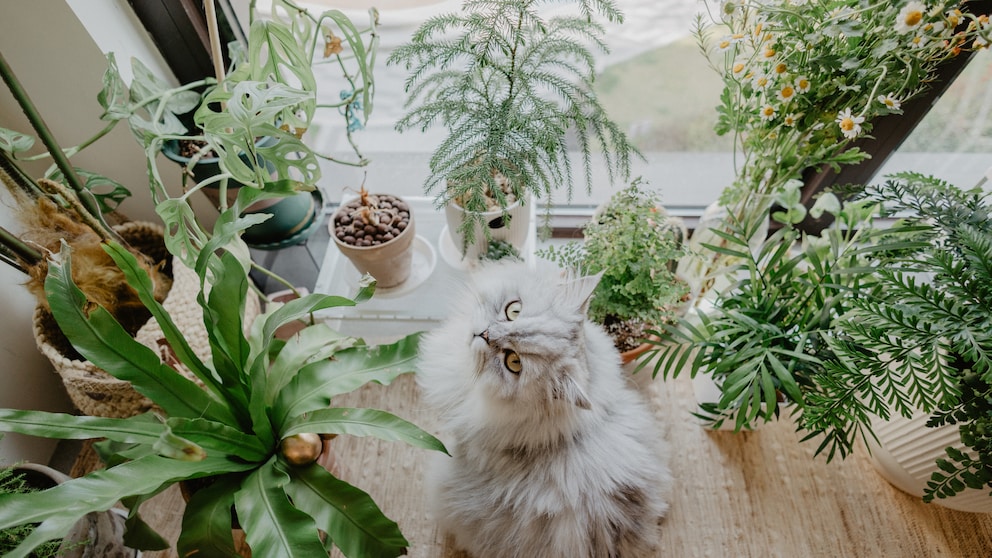
Cats love to nibble on houseplants, but many popular types are toxic to them. Fortunately, there are numerous beautiful alternatives that cats can safely enjoy. PETBOOK reveals which plants are suitable for cat households.
Overview
Non-Toxic Plants Cats Love
In addition to the popular cat grass (Cyperus zumula), you can also place other plants in your home or on the balcony that cats particularly enjoy nibbling on. Here is a selection of non-toxic houseplants that are especially popular with cats:
Catnip
Catnip is also known as catmint or catwort. Typically, this plant grows in the garden, but it can also be kept indoors. The small purple or blue flowers bloom from May to September. Its intensely aromatic scent is reminiscent of a mix of mint and lemon. About two-thirds of cats react to it with a kind of trance or euphoria, with effects ranging from intense relaxation to excitement. This is due to the active ingredient nepetalactone, which can trigger an opioid-like effect—though not in all cats.1
Cat Thyme
Cat thyme is a perennial plant that resembles thyme in appearance. It can be kept indoors and blooms pink to red. Its scent has a stimulating effect on cats. This is due to the active ingredients dolichodial and teumarin, which can induce a trance-like state in cats that lasts several minutes.
Valerian
This plant is known to help humans with sleep problems. However, the dried root does not induce sleepiness in cats. Instead, they become playful and hyperactive.
But be careful: While valerian is not toxic, large amounts can cause stomach upset and vomiting.
Creeping Zinnia
Creeping zinnia is a popular food plant for pets and can also be kept as a houseplant. Its small leaves are very soft and have a high water content, making it a popular alternative to cat grass.
Cyperus Grass (Cyperus involucratus)
This cat grass is also a favorite in cat households. When purchasing, ensure the variety does not have overly sharp edges, as the cat could injure itself while nibbling. Sometimes the edges have tiny barbs. The grass is easy to care for and needs a sunny location.
Ferns
Ferns from the class of true ferns are very decorative with their fresh green and are safe for cats. Most are easy to moderately difficult to care for and prefer a bright or semi-shaded location. They also appreciate high humidity.
- Sword Fern (Nephrolepis exaltata)
- Striped Fern (Asplenium)
- Staghorn Fern (Platycerium)
- Maidenhair Fern (Adiantum)
- Shield Fern (Polystichum falcatum)
- Hemionitis Fern (Pteridaceae)
Flowering Houseplants
They bring good cheer with their magnificent, colorful blooms. Unfortunately, many are toxic to cats, such as cyclamen, amaryllis, begonia, glory lily, and poinsettia. However, there are also non-toxic eye-catchers that are suitable as houseplants for cats:
Gloxinia (Sinningia speciosa)
Its flowers shine in shades of pink, purple, red, and blue. It dislikes direct sunlight and loves moisture. Since its large, green leaves are quite sensitive (they quickly develop brown spots when touched), it should be placed out of the cat’s reach.
Room Hibiscus (Hibiscus rosa-sinensis)
With its beautiful flowers in pink, red, orange, and yellow, it is also suitable for plant beginners. It likes bright locations but not direct midday sun. It appreciates morning and evening sun. If placed on a windowsill by a heater, it needs to be kept well-moisturized.
African Violets (Streptocarpus)
The attractive twisted fruit in white, red, pink, blue, and violet includes 135 species and originates from Africa. The hybrid forms of the velvet flower can also be used as houseplants. They are not easy to care for, especially the leaves: They must not touch the soil, or they will rot. A sunny location is important, but it should not be too hot.

Safe Plants for Rabbits

How to cat-proof your balcony and keep it varied
Hanging Houseplants
With their long, hanging stems and leaves, they naturally invite cats to fish and play. Therefore, they should be placed high or hung in a basket. However, if you can tolerate a few damaged plants, these non-toxic houseplants can enrich your cat’s daily life:
String of Hearts (Ceropegia woodii)
This subtropical vine and climbing plant is forgiving of many mistakes! Due to its distinctive leaf shape, it is also called “String of Hearts.” The long shoots are adorned with small, white flowers alongside the leaves. The string of hearts loves bright light but not too much sun. In winter, it prefers cooler temperatures, but not below 59 degrees Fahrenheit. As a succulent, it needs to be watered infrequently.
Spider Plant (Chlorophytum comosum)
This herbaceous plant from South Africa is very popular because it is both attractive and robust. Its small, star-shaped flowers appear year-round. The spider plant likes bright spots but can also tolerate shady places. It needs to be watered adequately, especially in spring and summer. Avoid waterlogging, or it will start to rot. Spider plants can be easily propagated through their numerous offshoots.
Lipstick Plant (Aeschynanthus)
This hanging plant delights with its exotic flowers in bright colors. It originates from the rainforests of Asia and Oceania. There are about 185 species, and new hybrids for indoor plant culture are constantly being developed. The shoots can grow up to 24 inches long. As a rainforest plant, it likes semi-shaded, moist, and warm conditions at 68 – 77 degrees Fahrenheit.
What Cat Owners Should Know About Houseplants
Before purchasing a new houseplant, always check if it can be toxic to cats. It’s important to know the exact name of the plant. Also, inform friends and family who like to give houseplants as gifts. If a toxic plant is present, choose a location that the cat cannot reach.2
Even if a houseplant is considered non-toxic to cats, it doesn’t always mean it’s safe. Some grasses can be sharp-edged and cause stomach irritation in sensitive animals. If symptoms like frequent or bloody vomiting occur, it’s best to dispose of the plant or make it inaccessible to the cat.
Be particularly careful with fertilizers in households with cats, as many substances in fertilizers can be toxic to them. Some cats like to drink water from plant saucers. It’s best to remove excess water from saucers immediately. Fertilizer sticks inserted into the soil can also tempt cats to nibble.