

December 2, 2022, 10:06 am | Read time: 5 minutes
The breeding of cats has produced various breeds in a wide range of colors, sizes, and character types. Unfortunately, breeding often focuses on traits that harm the well-being and health of the cat. PETBOOK provides an overview of the harmful breeding traits in cats and what future owners should consider when purchasing a purebred cat.
While the breeding of dogs can be traced back centuries for some breeds, most cat breeds are still relatively “young.” It wasn’t until the 20th century that the targeted breeding of cats significantly increased. But why is that? Until a few decades ago, most house cats were kept as outdoor cats, largely fending for themselves by hunting mice, rats, and birds. This allowed free-roaming cats to mate wildly, constantly mixing the gene pool. Additionally, the increased indoor keeping of house cats over the past century allowed less resilient cats to survive. These could be selectively bred to emphasize certain traits. However, this also included some peculiar optical features that can cause health issues for the cats. PETBOOK presents the worst harmful breeding traits in cats.
Overview
Short-headedness
This trait is still very common in Persian cats. In short-headedness, also known as brachycephaly, the cat’s muzzle area appears almost flattened, and in extreme cases, a snub nose may be present. The head is also very large and round. Many of these cats have breathing problems and often suffer from respiratory infections or tear duct inflammations.
Polydactylism
A cat typically has five toes on the front paws and four on the back paws. However, a genetic mutation can lead to the development of more toes. A cat with an astonishing 28 toes made it into the Guinness World Records. Polydactylism, as this condition is also known, occurs randomly but is particularly common in the Maine Coon breed.
In Germany, breeding cats with extra toes is prohibited. These animals are considered carriers of a genetic defect and are not supposed to reproduce. In the U.S., however, breeding polydactyl cats is allowed, and the perspective on house cats with this trait is different: They might move better in the snow with their broader paws and have a larger paw surface that could facilitate hunting. Opponents often cite more frequent claw bed infections and a disfigurement of the cat as counterarguments.
Taillessness or Short-tailedness
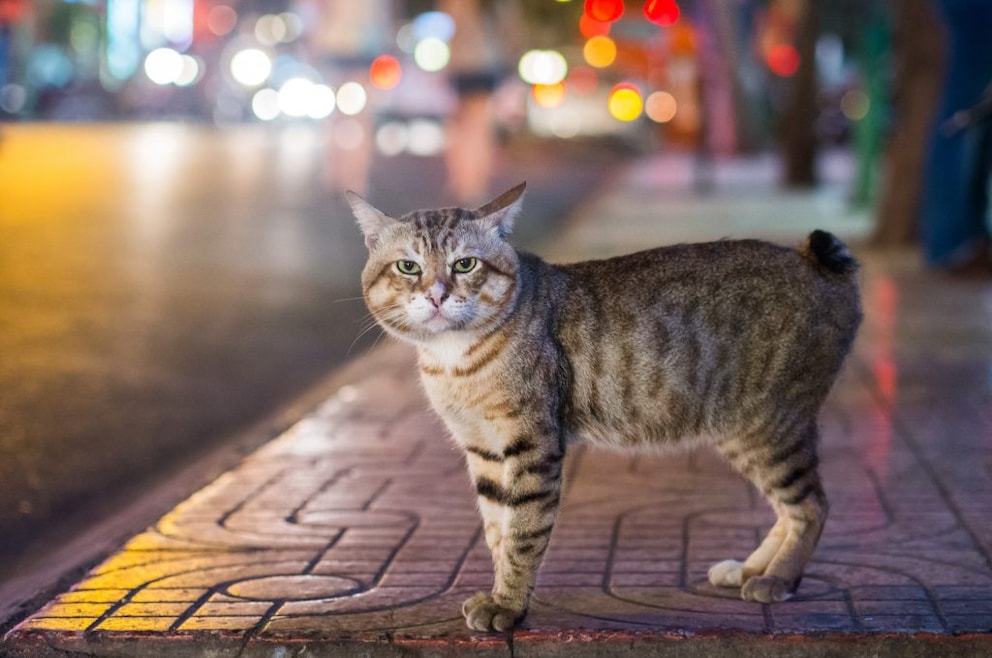
In breeds like the Manx, Japanese Bobtail, or Kurilian Bobtail, stub tails or even taillessness are desired outcomes of breeding. However, this often comes with spinal deformities or even neurological damage. Moreover, the tail is an extremely important balance organ for the cat, enabling it to balance and climb. Cats also communicate a lot through tail movements, which is not possible for tailless cats.
Lack of Coat
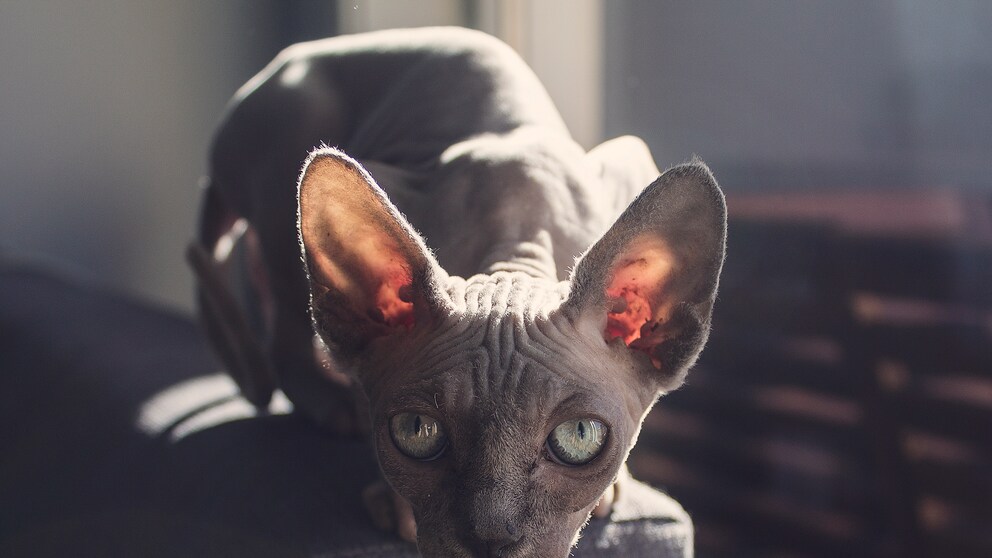
So-called “hairless cats” like the Sphinx have little to no fur. This makes the cats very susceptible to getting cold quickly or even sunburns. These cats also lack the whiskers on their heads. Without these, the animal has difficulty orienting itself, especially in the dark, as it needs the whiskers for support. Besides hairless cats, there are also those with curly fur. In these cases, the whiskers on the head are also curled and thus non-functional. Breeds affected include Devon Rex, Cornish Rex, and other Rex breeds.
Short-leggedness
This trait, also known as chondrodysplasia, is mainly found in the Munchkin cat, also called the Dachshund cat. This breed exhibits dwarfism with extremely shortened front and hind legs. Cats of this breed have restricted movement and may suffer from disc problems.

9 cat breeds that are considered to be bred in a cruel manner
How to correctly keep and care for the Pixiebob cat
Folded Ear or Floppy Ear
There are several breeds with the “Fold” moniker that have ears folded forward or backward. In these folded-ear cats, joint or bone deformities can occur, and the folded ears no longer fully function as signal receivers. Additionally, the natural cleaning of the inner ear is very limited in breeds like the Scottish Fold, and without additional care, this can lead to regular ear infections.
Avoid Harmful Breeding Traits in Cats When Making a Purchase Decision
The harmful breeding of purebred cats often arose for aesthetic reasons. Many cat lovers appreciate a particularly unique or strikingly beautiful cat. And beauty is, as proven, in the eye of the beholder. However, targeted breeding efforts have led to unnatural and sometimes cruel traits in some cat breeds. By purchasing a cat from a breeder that carries these traits, harmful breeding is indirectly supported.
Therefore, when choosing a breeder, it is important to look for certifications and the exclusion of extreme breeding traits. House cats without extreme features are often much more robust. Many of them are waiting in animal shelters, and choosing such a cat not only gives it a chance for a new home but also indirectly contributes to the fight against harmful breeding in cats.