

August 13, 2026, 6:55 am | Read time: 8 minutes
Sleepless nights, loud meowing, and a cat that desperately wants to go outside: Being in heat can be extremely stressful for both pets and humans. PETBOOK editor Louisa Stoeffler provides an overview of symptoms, duration, and helpful advice.
Overview
- What Is Being in Heat in Cats?
- How Does the Cycle in a Cat Work?
- How Do I Know if My Cat is in Heat?
- When Do Cats Become Sexually Mature?
- What to Do When the Cat is in Heat
- How Long and How Often Does a Cat Go Into Heat?
- What Is “Persistent Heat”?
- Are There Home Remedies That Help With Being in Heat?
- The “Cotton Swab Trick”–Do Not Try This!
- Can Cats Go Into Heat Even After Being Spayed?
- Do Male Cats Go into Heat?
- Sources
What Is Being in Heat in Cats?
Until they reach sexual maturity, male and female cats do not differ in behavior. After a few months, male cats start marking their territory with urine, while female cats go into heat.
This is the time “when female cats are just before ovulation and are ready to conceive,” says Petra Sindern, vice president of the Federal Association of Practicing Veterinarians. Being in heat can last from a few days to up to three weeks.
Cats do not have a continuous cycle like humans. This means they primarily go into heat in the spring and fall. Triggers include the length of daylight, food, and the “presence or absence of unneutered male cats in the vicinity,” according to Sindern. Other cats in heat in the household can also be a trigger.
How Does the Cycle in a Cat Work?
The heat cycle of a female cat represents a complete cycle phase in cats. It is divided into five individual phases:
- Proestrus, also called pre-heat: usually lasts 1 to 2 days and is symptom-free
- Estrus, also called heat: typically lasts 5 to 10 days
- Interestrus: If no fertilization occurs, the estrogen level in the cat decreases over several days, sometimes up to two weeks
- Diestrus, also called post-heat: In this phase, the cat’s progesterone level rises, which can last up to 12 weeks and sometimes accompanies pregnancy
- Anestrus, also called resting phase: the last phase of a cat’s cycle
The resting phase in a cat’s cycle is mainly influenced by light conditions. Generally, cats go through several heat phases per year, with the exact number varying based on the animal’s living conditions.
How Do I Know if My Cat is in Heat?
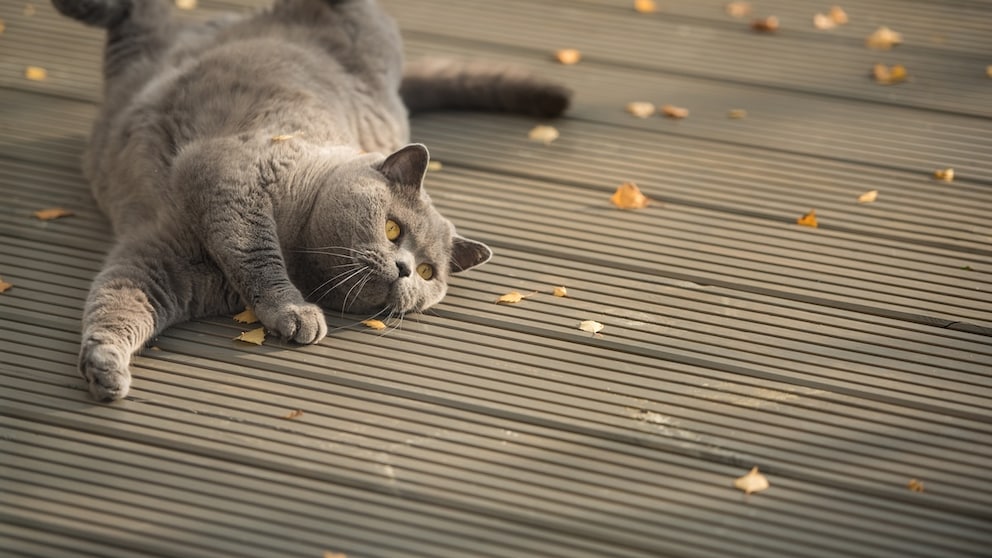
Cats typically go into heat for the first time at six to eight months old. Owners should be particularly vigilant then. Cats in heat can be identified by their loud meowing and rolling on the ground. They also present their hindquarters to signal readiness to mate, says veterinarian Thomas Steidl.
Cats in heat are often very affectionate. They may also refuse to eat during this time and lose weight. This condition can be equally stressful for both the pet and the owner. Does my cat suffer when in heat? “At the very least, the animals feel anything but comfortable,” says small animal expert Steidl.
When Do Cats Become Sexually Mature?
The timing of a female cat’s first heat varies. My cat Minka was still growing at seven months but had already had kittens. The vet assumed she must have experienced her first heat at three or four months.
This is not unusual if kittens are born in winter and spend a lot of time outside and in the light during their first spring. However, it also affects their development and often prevents them from reaching their normal size. Growth hormones take a break when the cat’s estrous cycle begins.
Generally, cats become sexually mature at five to seven months and can go into heat until the end of their lives if not spayed. I once encountered a 19-year-old cat on a farm that, despite having no teeth and a back bent by arthritis, still produced at least two litters a year.
What to Do When the Cat is in Heat
Inexperienced cat owners often mistake the behavior of a cat in heat for an emergency. While there is usually no need to panic, quick action is required. If signs of heat are noticed, a spay appointment with the vet should be scheduled as soon as possible, recommends veterinarian Steidl.
For the time leading up to the spay, veterinarian Petra Sindern has a few tips: The cat should not be allowed on the terrace or balcony during this time. The chance of unwanted kittens is higher than one might think. You can also try to distract her with plenty of play. To ensure the cat continues to eat, it’s advisable to offer her favorite food.
It also happens that female cats mark. In this case, ammonia-based cleaning products should not be used, as they smell “like a strange cat that must be met with even more urine.” Odorless neutral cleaners are better suited.1
How Long and How Often Does a Cat Go Into Heat?
The duration and frequency of a cat’s heat vary. Some estrous cycles end after a few days, while others last up to three weeks, depending on whether the cat became pregnant.
Cats are usually less frequently in heat during winter, especially those with outdoor access exposed to darkness and low temperatures. The changing light conditions of the seasons also affect hormonal production. However, cats living with humans may experience heat phases year-round due to artificial lighting.
Typically, cats are in a very active cycle phase from April to August, but this cannot be generalized. Theoretically, once sexually mature, cats can go into heat year-round. Unspayed cats have about two to three litters a year and go through corresponding heat phases.
What Is “Persistent Heat”?
If a female cat remains unspayed and unmated, she goes through many heat phases at increasingly shorter intervals. She may even become stuck in a persistent heat and unable to complete her cycle. This is because ovulation in cats is triggered only by mating—and thus penetration.
If this does not occur, the animals continue to produce hormones and repeatedly go through the initial phases of the cycle and heat. If this condition persists for a long time, the cat becomes persistently in heat. This is not only stressful but also torturous for the animal. The symptoms of heat intensify further.
In the worst case, the cat loses its appetite completely and becomes emaciated. The fur often becomes dull due to the hormone cocktail and lack of nutrients. However, the most severe issue is the constant stress on the cat’s reproductive organs. Persistent heat can lead to uterine cancer and inflammation, as well as ovarian cysts.
Are There Home Remedies That Help With Being in Heat?
Once a cat goes into heat, you must endure it with the animal. My cat’s early pregnancy and abdominal injury meant she had to endure two heat cycles with me before she could be spayed.
Unfortunately, there are not many home remedies to ease a cat’s heat. A warm cherry pit pillow can have a calming effect on the animal, but it must be relaxed and accept the foreign object. It is also not advisable to offer a cat in heat valerian or catnip, as these plants can further excite the already stressed animals.
You can try to distract the cat from the mating urge with play, but cats in heat often show a reduced interest in play. Minka was not playful at all during this time and only wanted to cuddle when she wasn’t running around the apartment screaming.
Nowadays, calming pheromone sprays or dispensers are available on the market, promising at least temporary relief of symptoms. My vet prescribed Minka tablets to suppress her heat until she could be spayed. However, it depends on how the cat reacts to these products and how intense the heat is for her. This can only be a temporary solution.
The “Cotton Swab Trick”–Do Not Try This!
On social media, a “home remedy” has been circulating for some time, suggesting inserting a cotton swab into a cat in heat to make her feel mated, so she calms down and completes the cycle. However, this can cause severe injuries to the animal! Veterinarians and animal rights activists warn against this practice, which is considered animal cruelty.

Do female dogs go through menopause?

Why Isn’t My Female Dog Going Into Heat?
Can Cats Go Into Heat Even After Being Spayed?
Generally, spaying should effectively prevent a cat from going into heat. When the germ cells, meaning the ovaries and fallopian tubes, are removed in cats, there is no longer a reproductive drive. Therefore, animal rights activists and veterinarians recommend spaying over sterilization to avoid the stress of heat.
If the animal still shows symptoms of heat after the procedure, a visit to the vet is necessary. As a cat sitter, I have encountered animals where the procedure was not fully completed, and hormonal tissue or parts of the ovaries continued to produce hormones. This is also known as ovarian remnant syndrome and can be corrected with another procedure.
Do Male Cats Go into Heat?
Being in heat is reserved for female cats; male cats do not go into heat. However, they become sexually mature at about the same time, around five to seven months, and respond to the mating calls of female cats.2