


March 20, 2026, 10:58 am | Read time: 4 minutes
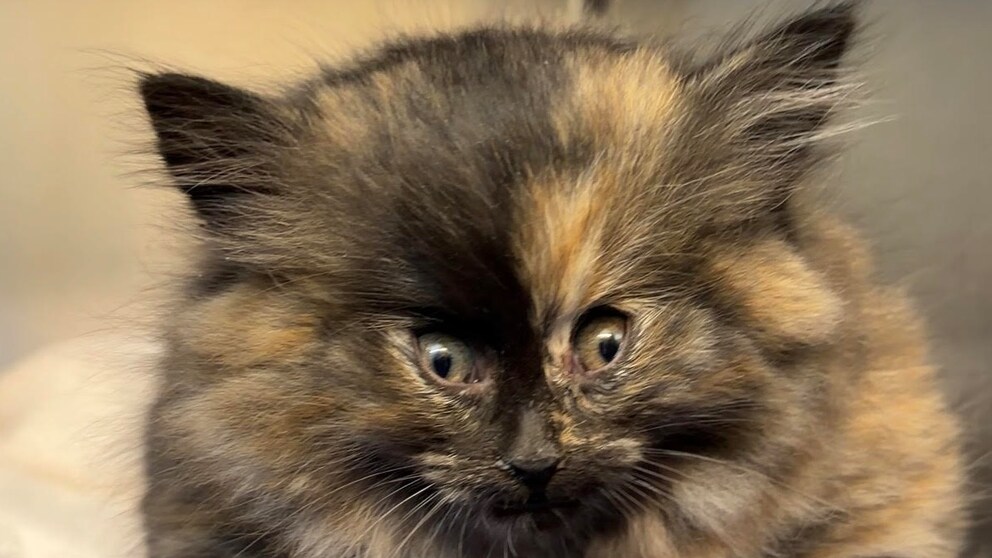
A kitten that looks like a bloated pufferfish—the case of cat Zoe is currently going viral worldwide. Even experienced veterinarians were surprised. PETBOOK spoke with the attending veterinarian, Dr. Phil Caldwell, to find out what really lies behind the unusual condition—and how “pufferfish cat” Zoe is doing today.
“This Is One of the Craziest Cases I’ve Seen in a Long Time”
It’s a bizarre sight: a kitten whose head looks like an inflated balloon—so huge that the face appears tiny within it. Many immediately think of hydrocephalus, also known as water on the brain, but in Zoe’s case, it was another element that led to the poor kitten’s deformity: air!
She looked “like a big puffball,” says Dr. Caldwell, medical director of the Palm Springs Animal Shelter, in an interview with PETBOOK. He presented Zoe on March 5 on his Instagram channel “drphil_thevet.” “This is one of the craziest cases I’ve seen in a long time.”
When Zoe arrived at the shelter, her entire body was filled with air. The diagnosis: subcutaneous emphysema. According to Dr. Caldwell, this is a condition where “air is trapped directly under the skin.” It can then spread throughout the body—as it did with Zoe.
Air Under the Skin—What Is Subcutaneous Emphysema?

In his over 30-year career, he has only seen something like this once before, reports the veterinarian. Back then, a cat’s trachea was accidentally injured during anesthesia. “The air escaped from the trachea and spread under the skin,” he explains.
In Zoe’s case, he also assumes that the cause was an injury to the trachea. It likely occurred when she was still a very small kitten. A possible scenario could be an unfortunate incident with another animal—”possibly another cat or even the mother when she was carrying the kitten.” Dr. Caldwell is certain: “I don’t think it was anything malicious, but rather an accident.”
Extremely Rare–Even for Experienced Veterinarians
How often does something like this occur? The clear answer: almost never. “I think it’s pretty rare,” says Caldwell. Besides the case from his own practice, he found only one other similar case on the internet—also involving a kitten.
He also considers it unlikely to be a congenital problem. Because: “If it were an anatomical peculiarity, the problem would keep recurring.” In Zoe’s case, however, the air does not refill—an indication that the original injury has already healed.
Did Zoe Experience Pain?
For many animal lovers, probably the most important question: Did Zoe suffer from her condition? Dr. Caldwell assumes that she initially felt quite uncomfortable. “I think she was quite impaired when she came to the shelter.” Nevertheless, she showed remarkable behavior: “She still wanted to eat and sought affection—even in this condition.”
Even after the treatment, she seemed to have little pain. Even the release of the air—where the veterinarian used a needle to remove air from various parts of the body—she calmly endured. “She was very cooperative,” he reports.
Veterinarian Had to Extract Air with a Syringe
The therapy itself sounds more spectacular than it is: The trapped air was simply removed with a syringe. “I extracted air from three different areas—from the neck to the lower back,” says Caldwell.
The biggest challenge was not the treatment itself, but Zoe’s fragile condition. “I couldn’t perform further diagnostics like a CT scan because she was far too small and delicate for anesthesia.” At the time of her admission, she weighed just about 700 grams.
Found in the Manure Pit: Cat Gülli Fights His Way Back to Life

“A Pet Psychic Connected with My Dog, and This Is What He ‘Said'”
How Is Zoe Doing Today?
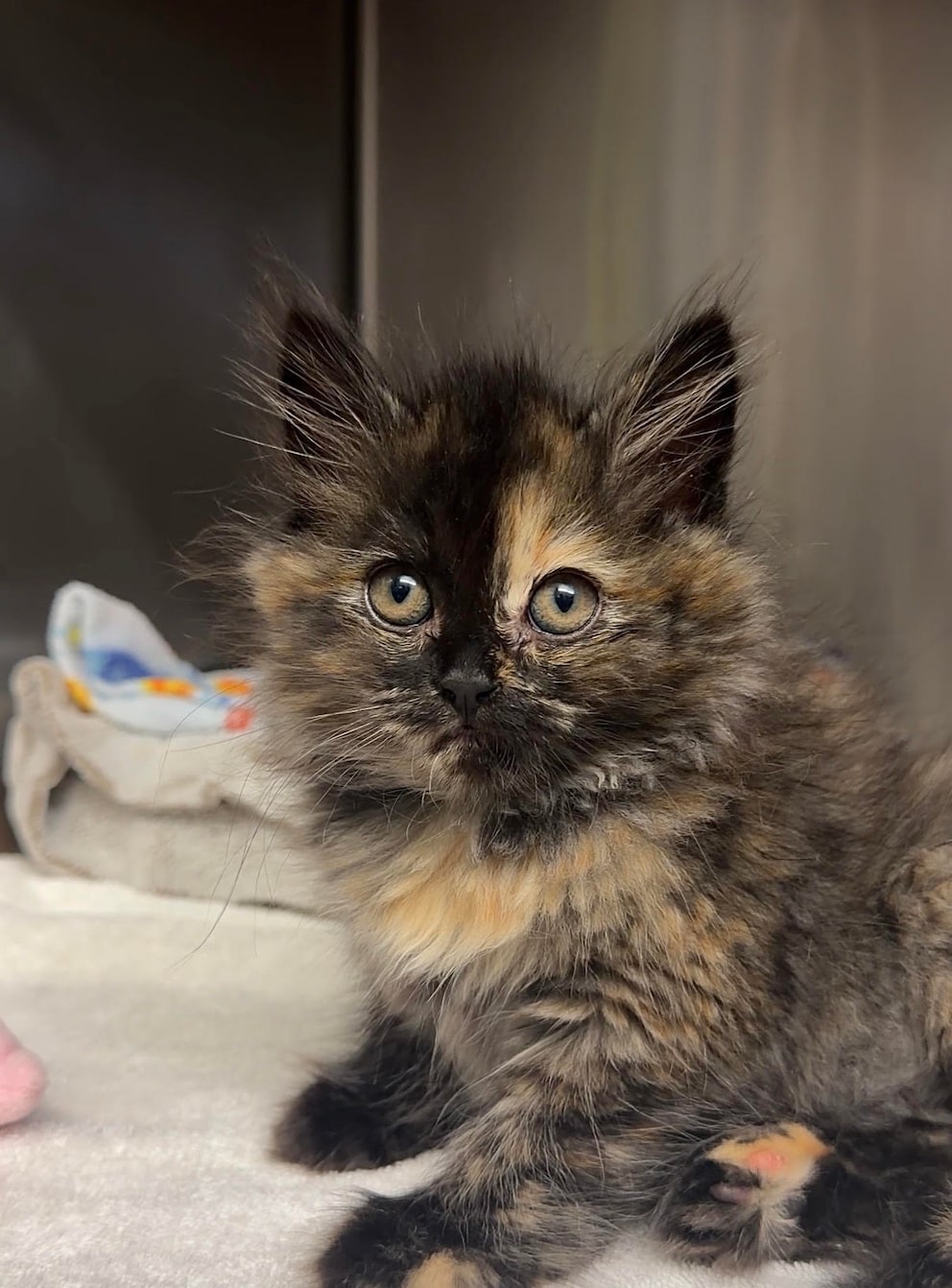
The good news: Zoe is on the road to recovery.
“She behaves like a completely normal kitten,” says Dr. Caldwell. In her foster home, she now lives with a dog and another cat, has plenty of space to play—and is “really thriving.”
The illness is not completely over, however. “There is still a small amount of air under the skin, in the area of the lower back,” he explains. But this is expected to “completely disappear within the next few weeks.”
The veterinarian does not expect any long-term consequences: “I don’t anticipate that she will have any lasting damage.”
“The Charisma of a Lioness”
What impressed Dr. Caldwell the most, however, was something else: Zoe’s character.
“She is truly an extraordinary cat,” he says. Despite her condition, she “showed no signs of giving up.” Whether it was treatment, taking her temperature, or vaccinations—”nothing seems to bother her.”
His conclusion: “She has the confidence and charisma of a lioness.” And that is likely what fascinates millions of people about Zoe right now. Not just her unusual medical case—but above all, her strength.