

June 18, 2026, 2:43 pm | Read time: 7 minutes
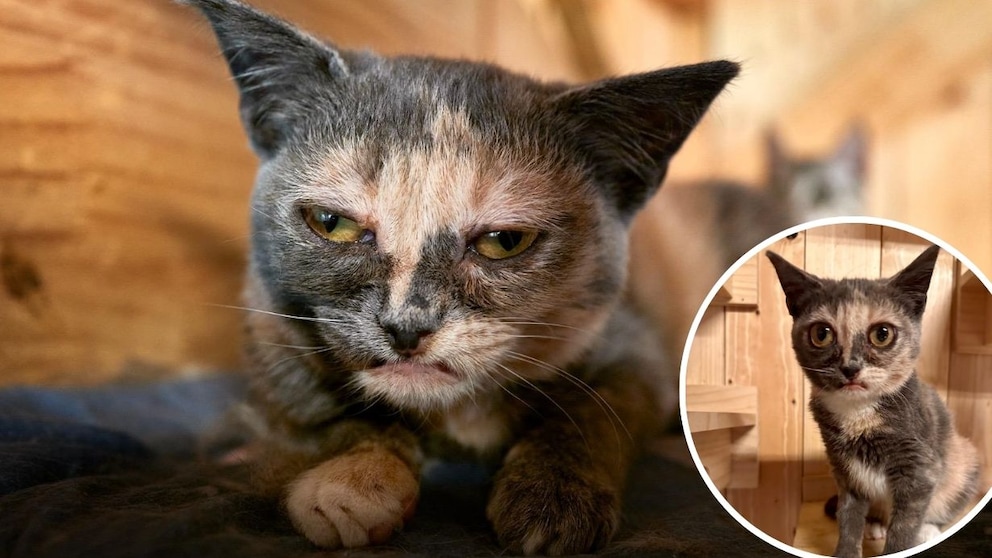
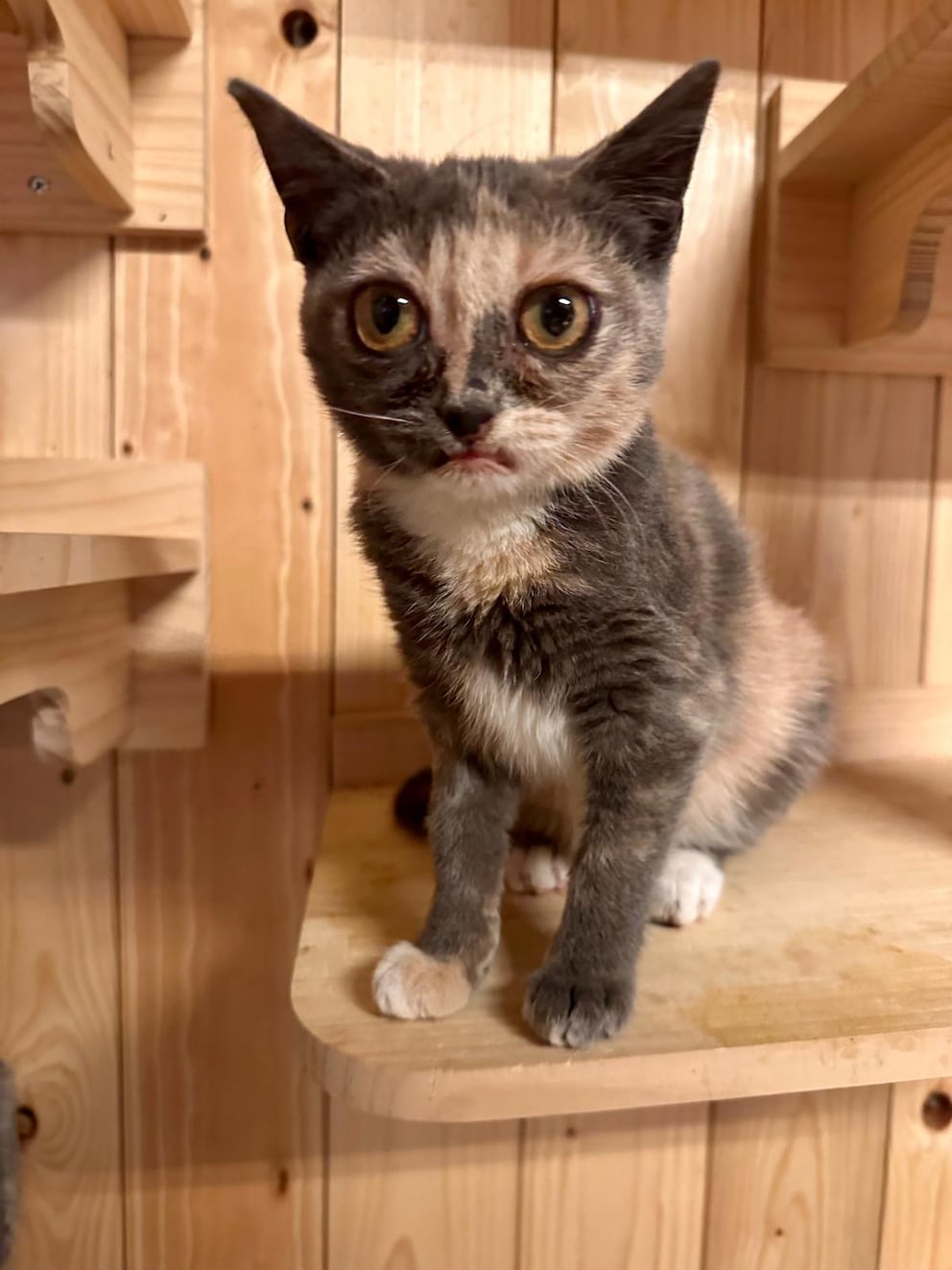
She is small, crooked, a bit peculiar—and that’s exactly why thousands of people have fallen in love with her. Labubu’s story begins with a last-minute rescue and leads to a viral moment that tells far more than just the story of a cat.
From Mockery to Internet Fame
An insulting comment, a humorous response, and suddenly thousands of new followers: The cat Labubu and the animal welfare organization Kitten Safe House have been drawing attention on social media in recent weeks. The trigger was a user who called the cat an “ugly beast.” Instead of reacting with outrage, the organization’s team responded with wit—and struck a chord.
PETBOOK spoke with Nadine Bartel, the first chairwoman of Kitten Safe House e.V., about Labubu’s story, online hate comments, and the daily life in animal welfare. And because the organization’s team regularly writes from Labubu’s perspective on social media with a wink, the little cat frequently gets to speak for herself in this interview.

“Zero Stars on Booking.cat”
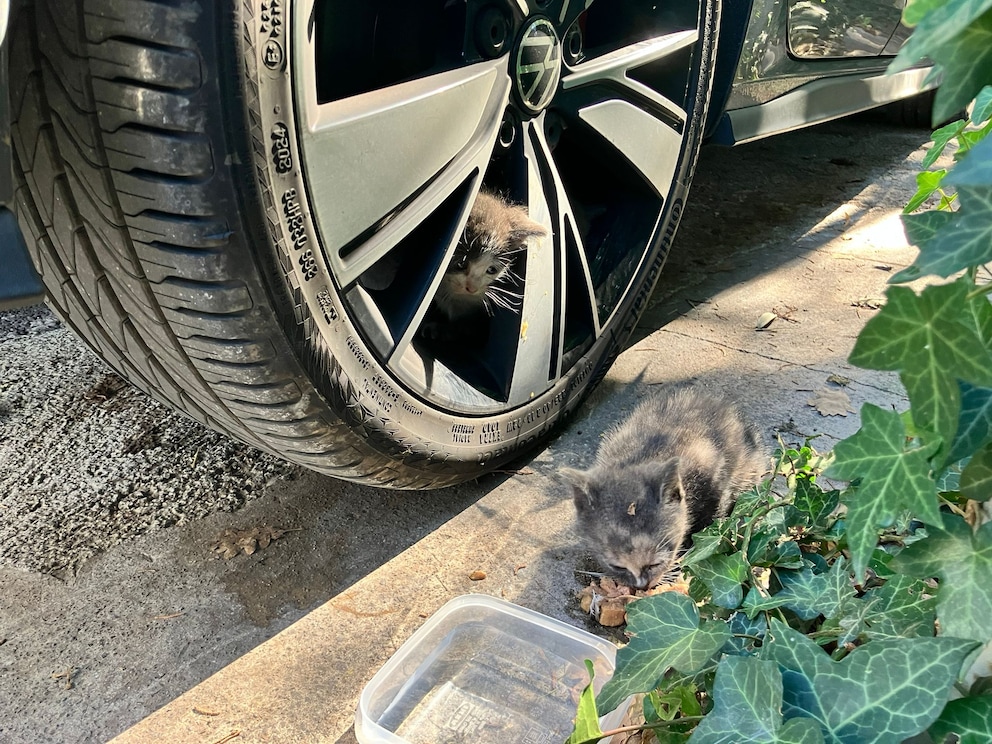
As Bartel reports, Kitten Safe House received a call for help in September 2025. Kittens were said to be hiding in a car parked by the roadside. On-site, the team discovered five kittens just a few weeks old: Two were in the tire, and three more had made themselves comfortable in the warm engine compartment. Nearby, a large dog was roaming, likely seeing the animals as potential prey.
LABUBU: “I would like to point out that this is a very poor place to live. Zero stars on Booking.cat.”
If the car had been started, the kittens would have had little chance of survival, according to Bartel. That’s why the organization uses every opportunity to emphasize the importance of tapping on the hood before starting the car.
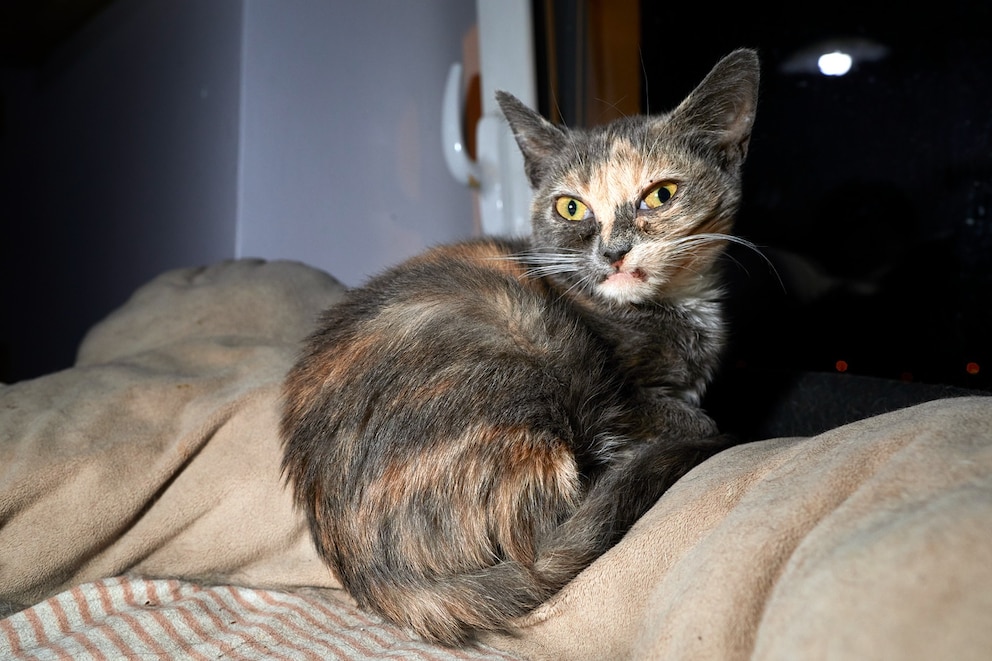
While her siblings developed normally, Labubu always remained a bit different. The cat grew significantly slower, has an overbite, and noticeably large eyes. At the organization, they like to joke that she looks like someone ordered a kitten from “Temu” at four in the morning while half-asleep and received something that vaguely resembled the blueprint of a cat.
LABUBU: “Slander. I am premium quality.”
This is how her nickname “Labubu from Temu” came about. Today, the cat is ten months old, but still no bigger than a kitten about four months old. Her unusual appearance has made her a favorite in the community, Bartel says.
When asked if Kitten Safe House expected so much attention for Labubu from the start, Bartel answers succinctly: “Not at all.” Originally, the cat was just one of many animal personalities allowed to occasionally report from the daily life of the animal welfare organization. No one expected her to become an internet celebrity.
“Unfortunately, We Experience Such Comments Regularly”
The comment “ugly beast” did not surprise the Kitten Safe House team. “Unfortunately, we experience such comments regularly,” says Bartel.
LABUBU: “I see people every day too. Some things are better kept to oneself.”
Animals that do not conform to the classic ideal of beauty are particularly affected. Blind cats, amputated animals, or cats with injuries, scars, and deformities often receive comments evaluating their appearance. Sometimes, there are even calls to euthanize such animals because they allegedly have a poor quality of life.
Bartel cites the example of Frankie the cat. He was found severely injured on Christmas Eve, his jaw shattered in an accident. Although he was saved in an emergency operation, the consequences are still visible today.
Because Frankie looks and walks a bit unusually, the organization has repeatedly been accused of creating the cat using artificial intelligence to solicit donations. The team’s response was accordingly humorous: Since then, Frankie has been internally called “Fran-KI-e” (KI is the German abbreviation for artificial intelligence) and allegedly leads a secret double life as a vacuum cleaner with a flokati cover. “What else can you say to such absurd accusations other than with humor?” says Bartel.
Why Humor Is Sometimes the Best Response
The decision to respond to the comment with humor instead of outrage has a simple reason for Bartel. Those who work in animal welfare regularly experience things they will never forget.
The daily routine includes severely injured animals, cats that can no longer be helped, spaying campaigns, and cases of animal cruelty and neglect. Currently, Kitten Safe House is also involved in rescuing cats from a severe hoarding situation.
Many of these experiences are taken home, Bartel says. The risk of burnout is particularly high in animal welfare. Humor is therefore not a way of looking away but rather a valve to cope with the burdens.
While the organization finds insulting comments unnecessary, they do not believe that outrage improves every situation. In Labubu’s case, it was much more charming to respond with a wink.
“Many People Have Fallen in Love with Labubu”
The reactions to the post have been mostly positive, Bartel says. Many people have fallen in love with Labubu.
LABUBU: “I don’t want to brag. But I also don’t want to lie.”
Numerous users have sent loving messages to the cat and shared their own experiences with special or handicapped animals with the organization. At the same time, the viral attention also had a less pleasant side. There were some very aggressive reactions toward the author of the original comment. Some users even wanted to find out the real name to handle the matter themselves. The organization deleted such comments.
Bartel also clarifies that “Uwe” is, of course, not really named Uwe. Regardless of the original comment, the team adheres to a clear principle: Violence is not a solution, neither against animals nor humans. Threatening someone over an unfriendly remark is no better than the original comment itself.
Thousands of New Followers
The impact of the viral post on animal welfare work has been mostly positive, Bartel reports. Within a short time, Kitten Safe House gained several thousand new followers. For an animal welfare organization, this means more reach for emergencies, more attention for adoptions, more shared posts, and ultimately better chances for the animals.
LABUBU: “And more people sending snacks to me and my friends.”
While attention alone does not replace sustainable support, Bartel explains, it helps to make people aware of the organization’s work in the first place. Many of the new followers have stayed and now follow the daily animal welfare work and current emergencies.
As a volunteer organization that relies solely on donations, Kitten Safe House depends on this support. Bartel explicitly thanks the followers and the “Kitten Safe House family.”
Only after 1.5 years did the cat Raven regain trust.

Lukas Hintersteiner Became an Award-Winning Petfluencer Through a Bet with Pupils
More Focus on Animal Welfare
For social networks, the team primarily wishes for a stronger focus on animal welfare, Bartel says. Animals are often viewed as content there. At the same time, there are influencers who deliberately produce litters because kittens bring clicks. There are also numerous breeders on sales platforms and social networks whose posts receive mostly positive reactions.
Often, the consequences of uncontrolled breeding for animal welfare are not questioned. Bartel wishes people would not only write “How cute!” but also consider whether a shown behavior is truly responsible.
LABUBU: “Personally, I think not every being with functioning reproductive organs should automatically start a family blog.”
“You Don’t Have to Look Perfect to Be Loved”
Many people automatically associate an unusual appearance with a poor life, Bartel says. Yet cats surprisingly don’t worry much about whether they meet a beauty ideal.
LABUBU: “I mainly wonder where chickens come from and why they never appear right next to me.”
An animal is not automatically unhappy just because it looks different, Bartel emphasizes. Labubu is the best example of this. The cat is small, crooked, and a bit peculiar, yet she is cheerful, playful, curious, and enjoys her life to the fullest.
Perhaps that is the real message of the whole story, Bartel suggests: “You don’t have to look perfect to be loved.” And you don’t have to comment on every thought that crosses your mind. Otherwise, there’s a risk it might become a viral post in the end.