

July 30, 2026, 3:59 am | Read time: 3 minutes
Does your cat suddenly dash through the house, knock things off the table, or ignore its name? What many owners consider problematic is often completely normal, according to researchers. A new study has examined which behaviors are actually typical for cats.
What Is Actually Normal Cat Behavior?
Many people are convinced that cats sometimes do completely unpredictable things, meaning they are not quite “normal” or even a bit “crazy.” But what is really “normal” or unusual is explained by the Fe-BARQ behavior test. The “Feline Behavioral Assessment & Research Questionnaire” was developed in 2017 at the University of Pennsylvania in the U.S. A new study from Spain has now applied it and comes to groundbreaking results.1
90 Percent of All Cats Are Completely “Normal”
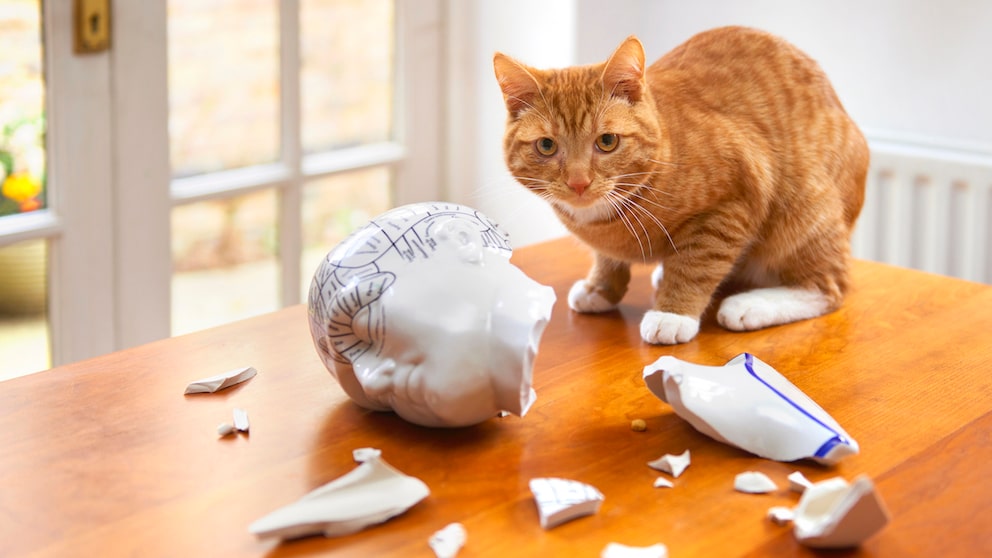
The word “normal” has a rather bitter connotation in this context when it comes to cat behavior. Animals are repeatedly surrendered to shelters because their behavior was criticized. Cats often end up in shelters because they don’t listen, jump on tables uninvited, knock over vases, or scratch when something displeases them.
However, potential cat owners should be aware of how a cat behaves before acquiring one, which was a major concern for the researchers at the University of Córdoba in Spain. David Menor-Campos, a veterinarian and doctor of ethology (animal behavior), and his colleagues asked themselves what constitutes normal feline behavior and what does not. They evaluated 816 Fe-BARQ sheets and published their findings in the journal “Journal of Veterinary Behavior.”2
It turned out that curiosity is a normal behavior displayed by 83 percent of all cats. Purring when being petted was also typical, as 81 percent did this. Additionally, 80 percent of the cats meowed to express their needs, whether for food or to go outside. A surprising 70 percent even responded when called, which might surprise some cat owners.
These Quirks Are Usually Completely Normal
Many cat owners wonder if their pet behaves “normally.” In fact, numerous behaviors are part of natural cat behavior, even if they sometimes seem strange to humans:
- Sudden running around the house, often without any apparent reason
- Scratching on scratching posts, furniture, or carpets
- Meowing to demand attention, food, or outdoor access
- Sniffing and exploring new objects
- Sleeping for many hours a day
- Retreating to quiet places
- Purring when being petted or in relaxed situations
- Occasionally ignoring calls or commands
These behaviors are generally no cause for concern. Problems usually arise only when a cat’s behavior suddenly changes or it consistently shows unusual behavior.

Why Do Some Cats Purr More Than Others? Study Finds the Reason

Why Do Cats Always Want Attention When You’re Busy?
People Should Learn to Better Understand Their Pets’ Behavior
Rare and noticeable behaviors included marking and urinating outside the litter box. Other forms of inappropriate elimination, frantic licking, biting, and grooming were also noted. These behaviors were absent in 88 to 90 percent of cases, meaning only 10–12 percent of the cats studied actually exhibited behavioral issues.
Also, very rarely did cats sneak around and hide, hiss, or howl. Additionally, there was only a small percentage of cats that attacked people with the intent to harm. Scratching furniture and wallpaper when alone was also very rare. This could indicate that cats exhibit certain behaviors only when they want attention—even if it’s negative.
Not Every “Crazy” Cat Has a Problem
Many behaviors that people find irritating in their cats are apparently part of the animals’ normal repertoire. Knowing what typical cat behavior is often leads to less worry in everyday life and helps better identify real warning signs. Therefore, the key is not whether a cat occasionally seems unusual, but whether it suddenly and permanently changes its behavior.