

May 7, 2025, 3:51 am | Read time: 5 minutes
The causes of fever in cats can be varied. While elevated temperature can be triggered by stress, fever is often a sign of a serious illness or infection.
Fever is a common but often overlooked sign that something is wrong with a cat’s health. As a responsible cat owner, it’s important to recognize the symptoms early and respond appropriately. PETBOOK reveals how to measure fever in cats, what causes it, and what to do about it.
Overview
When do cats have a fever?
Fever is an increase in body temperature above the normal value, triggered by an immune response to pathogens or inflammation. The normal body temperature of a cat is between 100.4 and 102.6 °F. Temperatures above 103.1 °F are generally considered a fever.
Symptoms: How to recognize fever in cats?
Fever is not always easy to detect, as cats can hide their symptoms well. The following signs may indicate fever in a cat:
- Lethargy or apathy
- Loss of appetite
- Increased body temperature (feels warm, especially on ears or paws)
- Rapid breathing or panting
- Hiding or withdrawal
- Shivering or muscle tremors
- Unkempt coat
If you notice these symptoms in your cat, you should measure its internal body temperature.
Also interesting: The 5 most common diseases in cats
How do I measure fever in a cat?
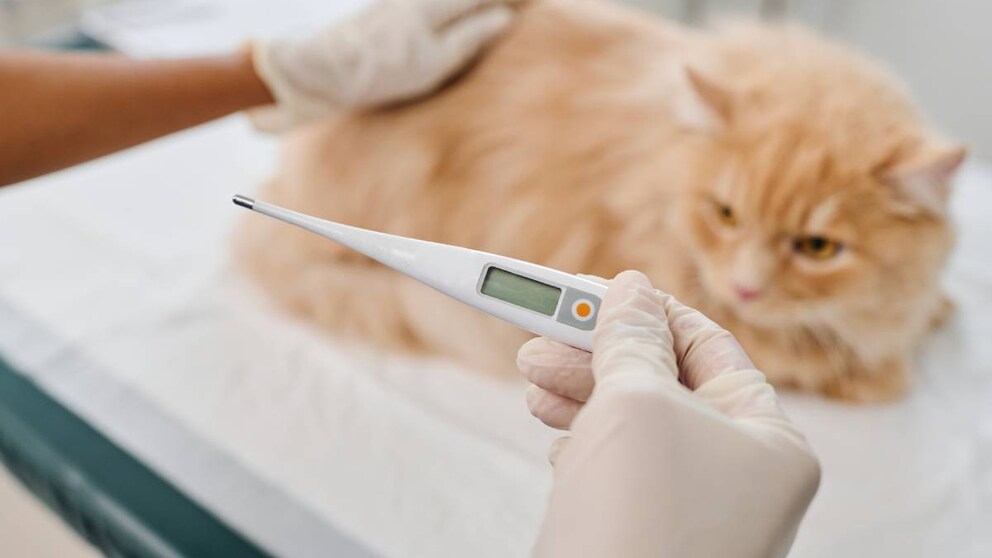
The most reliable measurement is with a rectal thermometer. This should be thoroughly cleaned and disinfected beforehand. To make the measurement as comfortable as possible for the cat, it is recommended to use some medical lubricant for insertion. Not every cat will easily allow the measurement. To protect yourself and avoid injuries, it is important to restrain the cat. Ideally, there are two people. One person can calmly restrain the cat while the second person inserts the thermometer.
Alternatively, an infrared device can be used. This measures the temperature at the cat’s ear. While the operation is simple, the measurement is significantly less accurate than with a conventional thermometer.
Possible causes
Fever is a defense reaction of the body and should be seen as a sign that the cat is fighting something. Infectious causes are often responsible. These include bacteria such as streptococci, anaplasmas, and chlamydia. Viral diseases can also cause fever in cats, such as Feline Immunodeficiency Virus (FIV), Feline Infectious Peritonitis (FIP), or Feline Leukemia Virus (FeLV). Other infectious causes can be fungal diseases or parasites like lungworms or toxoplasmosis.
In addition to infectious diseases, non-infectious causes can also trigger fever in cats. Internal or external tissue inflammations are particularly often responsible. Dental diseases (such as FORL) or autoimmune diseases can also be triggers for fever.

Highly Contagious Infectious Disease: Recognizing Strangles in Horses

The 7 Most Common Cat Diseases
When should I see a vet?
If the temperature rises above 103.1 °F and lasts longer than 24 hours, a visit to the vet is essential. Temperatures above 105.8 °F are considered an emergency. Depending on the cause, the vet may prescribe antipyretics, anti-inflammatories, or infusions.
What to do if the cat has a fever?
Until veterinary treatment is available, there are several things you can do at home to best support your cat in this condition. Provide a calm and stress-free environment where your cat can recover. Fresh water should always be available, as adequate fluid intake is particularly important now. Cooling measures can also be applied if necessary. You can place a damp cloth on the cat’s paws or belly. Make sure the cloth is not dripping wet. If the cat shows signs of discomfort, you should refrain from this measure. You don’t want to stress your pet further in an already weakened state.
Even if it is difficult for a pet owner to see their animal sick or even suffering, you should never administer medication yourself. Antipyretics like acetaminophen or ibuprofen are highly toxic to cats.
Conclusion: A temporarily elevated temperature in a cat is not always a sign of a serious illness. It can be due to stress or high temperatures in the summer. However, if the temperature continues to rise and persists, it should be taken as an important warning signal and not ignored.

My tips for measuring fever in cats
“Whether a cat has a fever can be an important indicator of whether you should go to the vet right away. Therefore, it is worth practicing taking the temperature with the animals. However, you can first check if the cat’s ears feel hot. If the armpits are also hotter than usual, you should measure more precisely. I use a regular thermometer, which I coat with some petroleum jelly beforehand. Some cats tolerate the procedure better if you distract them with a particularly tasty snack. Tuna is very popular with most animals. Especially younger cats are often so eagerly occupied with licking everything up that you can easily insert the thermometer. If you don’t have a separate thermometer for the cat at home, you can also use your own and cover it with a disposable latex glove.”