


September 17, 2025, 12:07 pm | Read time: 9 minutes
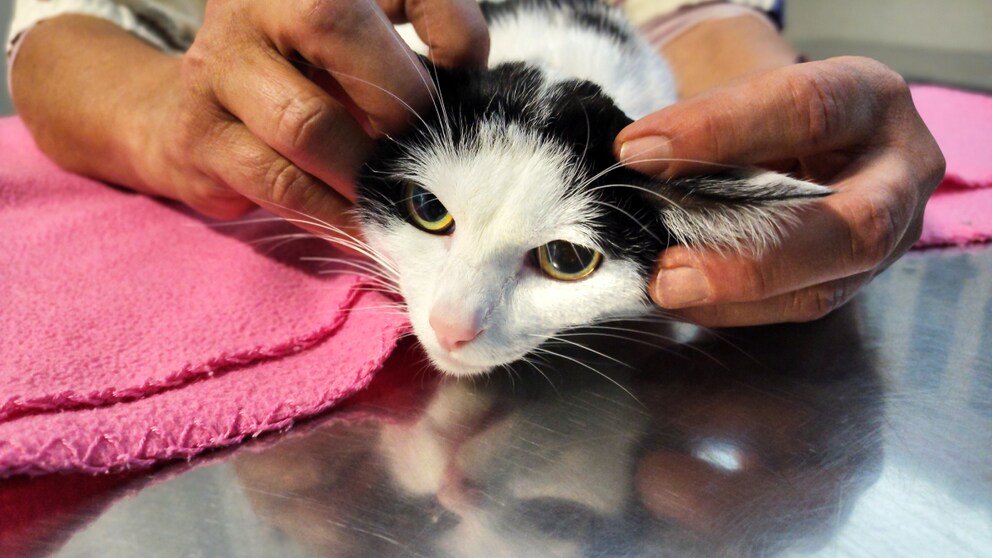
Videos of so-called “bone breakers” for animals are gaining significant attention on social media: Dogs and cats are moved abruptly, there’s a loud crack—and this is supposed to bring instant healing. Upon closer inspection, however, you see dogs with eyes wide open in fear and hissing cats. What’s behind this, and how dangerous can such treatments be? We discussed this with Johanna Grad, a canine physiotherapist with additional qualifications in chiropractic and acupuncture.
In-depth Knowledge Often Lacking
PETBOOK: Johanna, you’ve had a practice for canine physiotherapy for five years and additional qualifications in chiropractic and acupuncture. When did you first become aware of the so-called “bone breakers” for animals?
Johanna Grad: “Through social media. Around 2020, it was a big topic in the human sector. Two or three years ago, this trend spilled over into the veterinary field. On Instagram and TikTok, you suddenly saw many videos that quickly gained a lot of attention. For us therapists, it was alarming because often people without in-depth knowledge of anatomy or neurology work there and use risky high-velocity techniques—HVLA for short—on animals. These are risky if not applied correctly.”
How risky?
“With HVLA, a joint is manipulated with a quick impulse over a short distance to resolve restrictions and improve mobility. When applied to animals, the problem is that the angle is too large and the locking of the treated joint and surrounding joints is not present. This creates shear forces and increases the risk of injury.”
What the Cracking Really Means
In the videos, you always hear this cracking. What’s behind it?
“It’s important to clarify: This cracking does not mean a joint is being ‘realigned.’ Without a severe trauma, a joint can never be ‘dislocated.’ It’s just a gas bubble that forms when joint surfaces pull apart. The effect created by the cracking comes from the pressure in the joint capsule. This pressure can—simply put—temporarily override the pain signal. This is called neuromodulation.1
Simply pressing firmly or rubbing over the area with hands, or even using heat or cold, can trigger a similarly valuable neurological effect—without causing pain. When combined with active movement therapy, it can even achieve sustainable improvements.”
Effect of “Bone Breaking” Is Short-lived
The techniques of bone breakers come from chiropractic. What’s the principle behind it?
“Chiropractic has been around since the 19th century. It aims to influence the nervous system through short impulses in the spinal area. The goal is to achieve short-term pain relief and thereby a greater range of motion. However, it’s important to note: Chiropractic is only a manual technique and should be part of a holistic treatment—not a standalone therapy.
From patient reports who have had such therapy performed on their animals, I know: Usually, there’s 20 minutes of relaxation, such as with massage guns or heat, then the ‘bone breaker’ makes one adjustment—and that’s it. Homework or training concepts are almost always missing. From a professional standpoint, this is problematic because the effect is only short-lived.”
Does that mean the animals regularly return to the “bone breaker”?
“Exactly. Many come every 14 days to three weeks. Typically, the animal feels very good for three to four days, then worse—and often ends up worse than before. Some even develop injuries to capsules, ligaments, or vertebral joints. It becomes particularly dangerous when the natural range of motion of the joints is not respected.”
Also interesting: How to recognize if your dog is in pain

It’s Traumatic for the Animals
In a video, you see a cat screaming in pain and showing strong defensive reactions. Is this a normal reaction during therapeutic treatment?
“No. A treatment should always occur within the framework of ethical acceptability. In veterinary medicine, there are clear guidelines: If an animal suffers too much or is stressed, the treatment must be stopped. Many self-proclaimed therapists are not veterinarians and ignore this. It’s traumatic for the animals: They are held down, are afraid, and experience pain—especially animals from shelters with pre-existing conditions can quickly lose trust because of this. Additionally, the defensive posture creates tensions that massively increase the risk of injury: muscle fiber tears, bruises, nerve irritations, or even orthopedic damage are possible.”
Are there documented cases where such damage has been clearly proven?
“Proof is extremely difficult. You would have to examine the affected animals directly before and after treatment with MRI or similar methods—but this rarely happens. Therefore, much remains in the realm of speculation. The fact is: In the human sector, damage is provable, such as strokes after risky mobilizations of the cervical spine. In the veterinary field, there are no systematic studies yet, but cases where the treatment was likely the cause.”
Broken Ribs and Tendon Injuries
Have you personally had animal patients whose owners came to you after such treatments?
“Yes, multiple times. We’ve had cases with severe orthopedic consequences: two torn spondylosis, a broken rib, and even a fracture of a facet joint in the spine. We often see tendon injuries as well. The cause is usually that the range of motion is misapplied—forcing movements that are anatomically impossible.”
Can you give an example?
“A classic example is the manipulation of the so-called cervicothoracic junction—the connection between the cervical and thoracic spine. In humans, the upper body is stabilized by crossed arms. Typically, the patient sits in front of the therapist with arms crossed over the chest. The therapist fixes the arms and upper body and places their own hands on the contact point of the spine. The patient then exhales, and the therapist performs an extension mobilization.2
In dogs, this is anatomically impossible: They don’t have a collarbone, and the shoulder blades are only connected to the torso by muscles. Forcing animals into the same position exerts uncontrolled forces on the spine, muscles, and nerves. We’ve seen cases where this led to neurological deficits in the forelimbs.”
Animal Suffering Often Ignored
This sounds like significant damage that can occur during bone breaking…
“Absolutely. These methods originate from human medicine and are applied without adaptation to the differences in animal anatomy. In my opinion, this is the biggest mistake—and simultaneously the greatest danger. While you can give a human instructions like ‘inhale’ or ‘tense up,’ this is impossible with animals. As a result, the necessary stabilization before an impulse is set is missing. The risk of damage is correspondingly high.”
If such damage occurs and the animals visibly experience pain during treatment, one wonders if sometimes the offense of animal cruelty is not already fulfilled.
“Yes, that’s exactly the point. From an animal welfare perspective, there are clear rules: Coercive measures and painful techniques must be avoided. In veterinary practice, a treatment must be stopped or the animal sedated if it suffers too much. In physiotherapy or with self-proclaimed chiropractors, this is often ignored. I find the mindset particularly critical that pain equals treatment success. A serious therapy may be uncomfortable, but never so painful that an animal screams or visibly suffers.”3
“Miracle Therapies” Are Easier to Market
Why are such methods still so widespread?
“Mainly because of social media. Videos with cracking and spectacular reactions bring clicks, likes, and reach. Many people don’t know what the cracking really means and believe a joint has been ‘realigned.’ Additionally, quick ‘miracle therapies’ are easier to market than months-long, step-by-step rehab with training. Criticism in the comments is often deleted, critics are blocked—creating an artificially positive perception. Those who are unsure see only approval and think: ‘Then it must be good.'”
How is this actually regulated legally? Can anyone just open a practice and say they do canine chiropractic or canine physio?
“Unfortunately, yes. The professional titles are not protected. Healing treatments on animals are generally allowed; only surgery, medication administration, and specific diagnosis are reserved for veterinarians. This means anyone can register a business tomorrow, without certification or proof, and ‘treat’ animals. A good liability insurance is enough to be legally covered. This is a big problem.”

Herniated Disc in Cats–When Sudden Paralysis Occurs

How to Recognize Arthritis in Cats
A Poor Therapist Treats Only Symptoms
How can pet owners recognize a serious therapeutic approach?
“A good approach begins with a thorough anamnesis. This means: The therapist asks detailed questions about the history, observes the animal in motion—on different surfaces, in different gaits. Then follows a precise assessment: standing, sitting, and in a lateral position. Only when it’s clear where the cause lies is a therapy plan created—with short-, medium-, and long-term goals.
A poor therapist only asks: ‘Where does it hurt?’ and then treats purely symptomatically. Good therapists seek the cause, think preventively, and explain to the owner what they are doing—instead of promising quick miracles.”
What do you think needs to change?
“There urgently needs to be a state framework. Ideally, a state-recognized education or at least the opportunity to take an official exam to demonstrate expertise. This would clearly distinguish between qualified and unqualified therapists.
In Austria, the problem has been solved by allowing only veterinarians to provide therapy. However, I think this is wrong because it would mean there is no independent animal physiotherapy anymore. It would be like if only orthopedists were allowed to do physiotherapy in Germany.”
Some Graduates Can’t Even Mobilize a Shoulder Joint Correctly After Their Training
Does that mean the training itself needs to be adjusted?
“Absolutely. Theoretical knowledge without practice is useless. In my own training, only five out of 14 people passed, and that’s how it should be. But many institutes let everyone pass because they rely on course fees. Some graduates can’t even mobilize a shoulder joint correctly after their training. That shouldn’t be the case. Chiropractic, physiotherapy, or dog training requires mandatory practice hours. Without that, it shouldn’t be allowed to offer training.
But we therapists also bear responsibility. Many work too cheaply, often as small businesses without VAT, and sell themselves short. If we don’t value our work ourselves, we can’t expect others to do so. It takes more backbone—professionally and economically. Only then can we ensure quality in the long term.”
Have you visited one of the so-called “bone breakers” with your animal and had similar experiences? Write to us at redaktion@petbook.de.