

October 8, 2025, 1:14 pm | Read time: 6 minutes
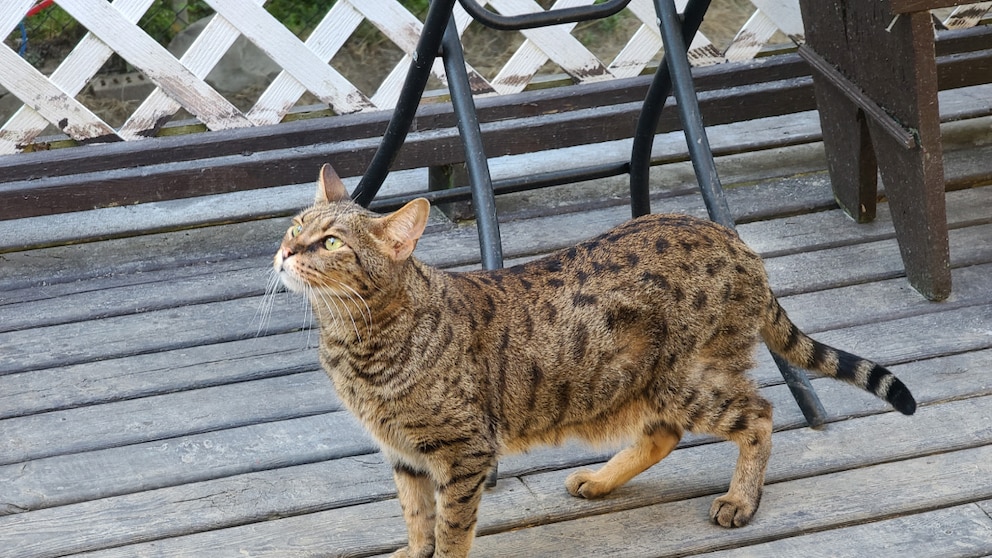
In Kleve, an exotic cat sparked legal debates–now it’s clear: Savannah cat “Muffin” cannot be kept in a residential area. The Higher Administrative Court (OVG) in Münster confirmed a corresponding ban by the city of Kleve. The keeping of the hybrid cat is not only unusual but also dangerous–a decision likely applicable to other cases.
Keeping Not Compatible With Residential Area
Administrative law is considered dry–but when dangerous animals, pop stars, and controversial breeding intersect, it suddenly becomes highly intriguing. This was the case with the Savannah cat Muffin from Kleve: The Higher Administrative Court (OVG) of North Rhine-Westphalia decided that the exotic animal cannot be kept in a general residential area. Thus, the owners’ attempt to overturn the ban ultimately failed.
Muffin’s owners kept the Savannah cat on a property in the center of the city with about 55,000 residents in North Rhine-Westphalia. After the veterinary office became aware of the keeping, the city administration prohibited the further housing of the animal in the residential area. They legally challenged this–initially without success before the Administrative Court (VG) in Düsseldorf (Case No. 11 L 2509/25), and now also before the OVG in Münster (Decision of 10/07/2025, Case No. 10 B 1000/25).
Savannah cat Muffin belongs to the so-called F1 generation–the direct cross between an African serval and a domestic cat. The judges therefore ruled that Savannah cats like Muffin do not fall under permissible small animal keeping according to § 4 of the Land Use Ordinance (BauNVO). The 10th Senate clarified: “Small animal keeping is only permissible as an annex to living if it is common and harmless in the respective building area and does not exceed the scope of typical leisure activities for residential use.”
What Justin Bieber Has to Do With the Case
The applicants’ arguments could not convince the court. They had argued, among other things, that celebrities like Justin Bieber with his Savannah cats “Sushi” and “Tuna” had made the keeping popular. However, this was not enough for the court: The popularity of the animals is not proof that their keeping is common or typical for residential use.
Nor did the reference to external opinions, stating that Savannah cats do not show “active aggressive behavior” towards humans, convince the Senate. What is decisive is that animals of the F1 generation have a pronounced defensive behavior, especially when they feel threatened. Other federal states have already placed Savannah cats of this generation on the list of dangerous animals–a significant indication of their danger for the court.
Dangerous and Unpredictable: F1 Cats Considered Wild Animals
Muffin is a so-called F1 Savannah cat–a direct descendant (filial generation) from the crossbreeding of an African wildcat (serval) with a domestic cat. These animals exhibit particularly many wild animal traits, including pronounced flight and aggression behavior. They are also significantly larger and heavier than a normal domestic cat. Accordingly, they could cause serious injuries if they behave like wild animals.
Savannah cats of generations F1 to F4 are also legally considered wild animals. Only from the fifth generation (F5) are they considered domesticated and may be kept as pets in Germany. Breeding occurs over several stages: When a serval is crossed with a domestic cat, the F1 generation of the Savannah cat is initially created. Since male animals of this generation are sterile, only the female animals are further bred with domestic cats–thus creating the F2 generation. This principle continues up to F5.
Ruling on Cruel Breeding: Breeding of F1–F4 Savannah Cats Prohibited
But the ban on keeping them in residential areas is not the end. A ruling by the Administrative Court in Gießen on September 24, 2024 (Case No.: 4 K 1164/24.GI) concluded that the breeding of Savannah cats of generations F1 to F4 in Germany is classified as cruel breeding.
Among animal rights activists, the breeding of these hybrids is highly controversial, which is why purchasing these animals is generally discouraged. For the first generations, domestic cats are usually used as mother animals. The size difference between serval and domestic cat regularly leads to severe problems. The physically inferior cats often suffer injuries from mating–not infrequently with fatal outcomes. The pairing is particularly risky due to the enormous strength and rough behavior of the wild males. The birth is also problematic, as the fetuses of the hybrid generations are often too large for the mother animal. Additionally, crossbreeding between domestic cat and serval often results in premature and stillbirths, as the gestation periods of the animals differ.
Similar risks exist with the Bengal cat–a hybrid of a domestic cat and an Asian leopard cat–though less severe. Nevertheless, the ratio of body size and weight is also disadvantageous for the mother animals here. The main reason for breeding remains a particularly striking coat pattern–at the expense of animal welfare.
Why you shouldn’t buy a Bengal or Savannah cat

Serval Seized in Berlin: Why Wild Cats Shouldn’t Be Kept as Pets
Legal Situation: Allowed From F5–Strictly Regulated for Hybrid Animals
The court relied on an official veterinary report dated February 28, 2024. It states that “mating of Savannah breeding cats or a domestic cat with a serval can lead to stress reactions, as the breeds are significantly different in size and weight and the serval communicates differently.”
The ruling also made it clear: Male animals of generations F2 to F4 are regularly infertile. This intervention in the reproductive system makes breeding an animal welfare-violating measure within the meaning of § 11b of the Animal Welfare Act.
Wildcat species like the serval or leopard cat and their descendants of generations F1 to F4 are also subject to the Washington Convention on International Trade in Endangered Species (CITES) and may only be kept, imported, or exported with the appropriate permit. Furthermore, § 2 of the German Animal Welfare Act prescribes specific requirements for the keeping of such animals–particularly regarding housing, care, and safety.
Muffin Must Go–Ruling Is Final
For Muffin, the legal path is exhausted. The decision of the Higher Administrative Court in Münster is final–the keeping of the wildcat in the residential area remains prohibited. Even though Justin Bieber has increased demand with his animals, for German administrative courts, only the legal situation is decisive.