

June 16, 2026, 2:58 pm | Read time: 4 minutes
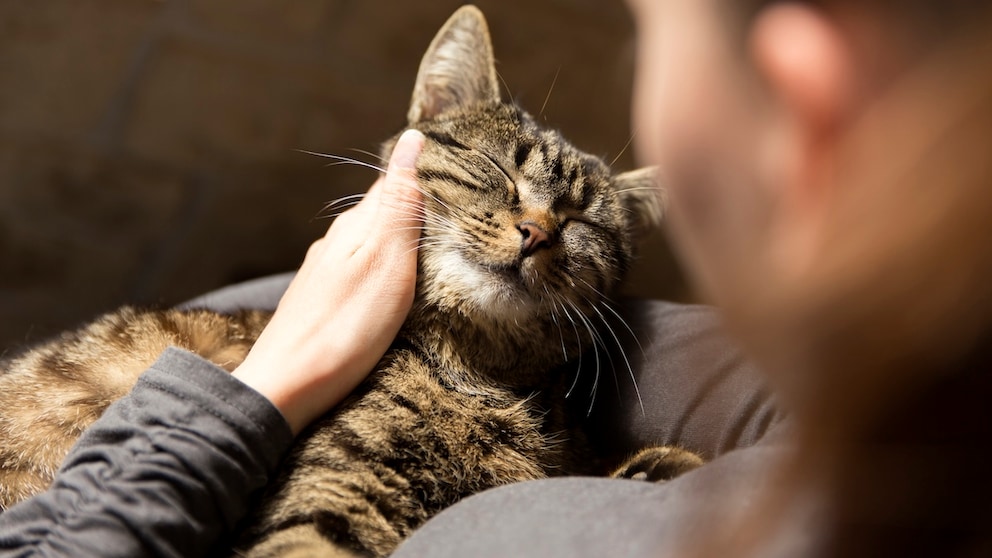
Many cat owners know the feeling: After a long day, petting the cat on the sofa, hearing it purr, and instantly relaxing. But a new study from the Netherlands at least partially questions this image. Researchers found that while cats generally contribute to more positive feelings, they apparently have a different effect in acute stress situations than previously assumed.
Cats Are Good for Us–But Not Necessarily as Stress Buffers
For the study, scientists followed 188 dog and cat owners in their daily lives. Participants received up to ten notifications a day on their smartphones over five days and answered questions about their mood, stress level, and whether they were interacting with their pet at the time. In total, nearly 8,000 data sets were collected.1
The initial results were positive: Both dog and cat owners felt better during moments of more intense interaction with their pets. They reported more positive and fewer negative feelings. The emotional impact was similarly strong for both types of pets.
However, the surprise came when researchers examined the influence of stress. Neither dogs nor cats could measurably cushion the negative effects of stress on the owners’ mood. The often-assumed function as a “stress buffer” could not be demonstrated in the study.
Cats Even Showed an Opposite Effect
Particularly surprising: Among cat owners, researchers found a correlation pointing in the opposite direction. The more intensely stressed participants interacted with their cats, the more their negative feelings were associated with stress. The interaction did not seem to alleviate negative emotions but sometimes even intensified them.
However, the scientists emphasize that this effect should be interpreted cautiously. The group of cat owners was smaller than that of dog owners, and the observed correlation was generally rather weak. Further studies are needed to confirm the results.
This Contradicts Previous Findings Only at First Glance
In fact, other studies have shown for years that cats can have a positive influence on their owners. Researchers from the Tokyo University of Agriculture, for example, studied 32 cat owners in their usual home environment. Participants either spent ten minutes as usual with their cat or simply sat nearby without actively interacting with it.2
These results also surprised the scientists. While owners subjectively perceived the time together as pleasant and calming, their bodies showed something different. Heart rates increased, while the activity of the parasympathetic nervous system—the part of the nervous system usually associated with relaxation—decreased.
Researchers also found correlations between heart rate, cortisol, and oxytocin. Interaction with the cat apparently did not lead to a classic relaxation response but rather to a form of positive activation.

How Well Do You Understand Your Cat? One in Four Fails

Cats Enjoy Cuddling Just Like Humans–and It’s Measurable
Cats May Induce “Positive Stress”
The Japanese scientists, therefore, suspect that cats do not primarily calm but can trigger a form of so-called “eustress.” Researchers define this as positive stress—a pleasant activation of the body that is not burdensome but can even be health-promoting. Similar reactions are known from physical activity, exciting experiences, or positive social encounters.
According to the researchers, this mechanism could explain why many cat owners feel better after contact with their pet, even though the body is physiologically activated at the same time.
Why Cats Might Affect Us Differently Than Dogs
The authors of the new Dutch study have a possible explanation for this. Cats often offer their owners a quiet, passive form of companionship. Especially in stressful situations, this type of closeness can have an emotionally intense effect. As a result, negative feelings may be perceived more strongly rather than receding into the background.
However, this does not mean that cats harm their owners. On the contrary, the study reaffirms that cats are generally associated with more positive and fewer negative feelings. The researchers merely suspect that the benefit does not come from reducing acute stress. Instead, they may primarily convey a sense of connection and reduce loneliness.
So, the cat may not necessarily make us calmer—but it can still make us feel better.