

May 5, 2026, 11:51 am | Read time: 6 minutes
Unlike human acne, feline acne, also known as chin acne, in cats does not have a hormonal cause, according to research. However, it can be bothersome for cats as it can cause itching and painful skin inflammations. But how do cats develop blackheads on their chins or pimples in the first place? PETBOOK reveals how to recognize cat acne and how to treat it properly.
Symptoms of Chin Acne in Cats
Cat acne often goes unnoticed in many animals for a long time. Mild forms of feline acne look more like small abrasions or are not noticeable at all, especially in dark fur. It is usually only discovered when it becomes more severe and causes discomfort.
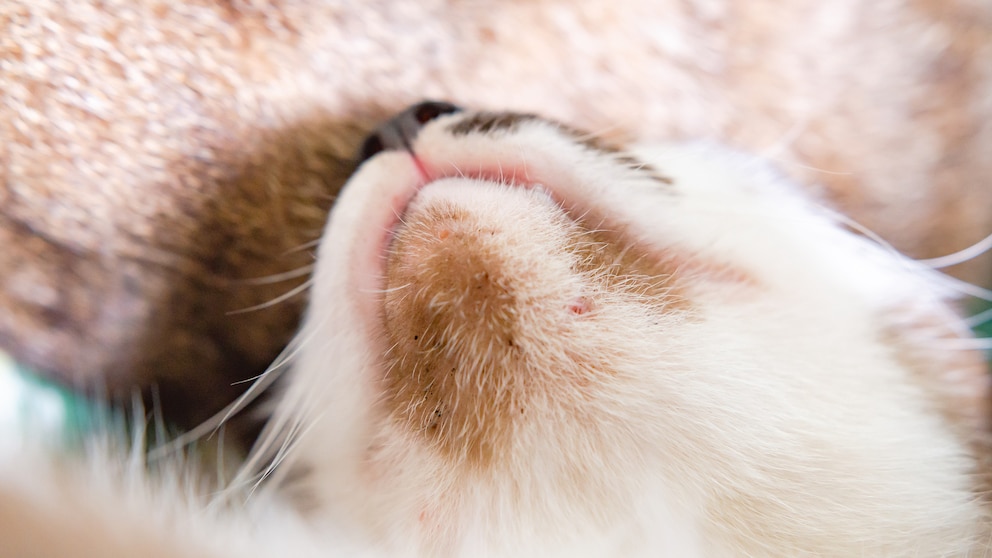
Typical signs of the condition include blackheads (black spots), small nodules (papules), or pus-filled pimples (pustules) that primarily appear on the chin. Chin acne manifests similarly to the human skin condition. Sebum production is often increased, which is noticeable in white or light-colored cats by yellowish-stained fur, as the sebum is yellowish. Additionally, a keratinization disorder of the skin leads to clogged pores, resulting in pimples and swelling.1
Often, it remains with harmless blackheads that do not cause the cat any discomfort. However, in more severe cases, inflammation occurs: The skin can become red, swollen, and painful. In many cats, this leads to bloody and subsequently crusted skin areas, which can also cause severe itching and associated restlessness.
Feline acne often first appears on the chin, which is why it is colloquially referred to as chin acne. In severe cases, the affected skin areas can also appear on other parts of the head and at the base of the tail, become hairless, and show bleeding. The areas are often scaly, as cats tend to scratch or rub them more.
For better classification, the course can be roughly divided into three severity levels:
- Mild: Blackheads without inflammation, usually no discomfort
- Moderate: Papules and pustules, initial inflammation
- Severe: Pronounced inflammation, abscesses, pain, and hair loss
Causes of Chin Acne
Human acne and cat acne have different causes. While human acne is usually caused by a hormonal imbalance, the exact cause of cat acne is not fully understood. Experts believe that several factors work together.
Generally, the condition is often based on a skin disorder: A keratinization disorder can clog the sebaceous gland ducts. Sebum accumulates, hair follicles become blocked, and blackheads form. If bacteria or yeast multiply in the accumulated secretion, the skin can become inflamed, and pustules form.
Possible triggers include:
- Stress
- Limited or poor grooming behavior
- Nutrient deficiency
- Weakened immune system (e.g., due to other illnesses)
- Disrupted sebum production
External factors also play a role. A so-called food bowl acne is particularly common: Especially with plastic bowls, bacteria can more easily settle on the porous surface, further irritating the skin.2
Why some cats are affected and others are not is still unclear. It is likely a multifactorial event where several triggers come together.
Also interesting: The 7 most common diseases in cats
Treating Chin Acne in Cats
Laypeople can hardly distinguish cat acne from other skin diseases and should therefore consult a veterinarian immediately if there are noticeable skin changes. Only a veterinarian can rule out other diseases such as parasite infestations or fungal infections and recommend appropriate treatment.
This may include the following measures:
- Cleansing: In cat acne, the affected skin areas often become inflamed due to bacteria. Therefore, it may be advisable to gently clean the chin area. Suitable options include veterinarian-recommended antiseptic solutions, such as those with chlorhexidine, or special shampoos with benzoyl peroxide. Aggressive home remedies like alcohol or tea tree oil are unsuitable for cats and can be harmful. The blackheads or pimples should also not be squeezed, as this can worsen inflammation.
- Appropriate food and water bowls: For cats with chin acne, bowls should be cleaned regularly. Materials like metal, glass, or ceramic are preferable to plastic, as fewer germs can settle there.
- Removing fur: In severe cases, affected areas can be shaved to facilitate treatment.
- Medications: For more severe inflammations, the veterinarian prescribes antibiotics or anti-inflammatory ointments. In severe cases, systemic therapy may also be necessary. If there is also a fungal infection, antifungal medications are used.
- Shampoo: Mild forms can often be treated with special medicated shampoos that remove excess sebum.
- Blood test: If there is a suspicion of a nutrient deficiency or an underlying disease, a blood test may be useful.
In many cases, cat acne improves with treatment. However, it can recur and become chronic.
How to Prevent Chin Acne
Targeted prevention is only possible to a limited extent, as the exact cause of cat acne is unknown. High-quality food provides animals with all essential nutrients and can support skin health. Regular feeding of fish-rich food can also be beneficial, as it contains higher amounts of omega-3 fatty acids. There is evidence that these fatty acids can positively influence the course of the condition.
Additionally, some measures can help reduce the risk of chin acne or relapses. Food and water bowls should be cleaned regularly and preferably made of ceramic, glass, or metal, as germs can more easily settle in plastic bowls. Flat bowls can also be useful so that the chin has less contact with the bowl edge while eating. For susceptible cats, gently cleaning the chin after eating can also help. Reducing stress and supporting grooming, especially in older or overweight cats, can also have a preventive effect.

Can You Express a Dog’s Sebaceous Cyst Yourself?

How Mauke Develops in Horses and What Owners Should Know
Is Chin Acne Contagious and Does It Recur?
Cat acne is not contagious to other animals or humans. Moreover, the prognosis is generally good, as it is usually a harmless skin condition. However, chin acne tends to recur. This varies from animal to animal. While many cats only experience symptoms once, others have regular relapses or a chronic course.3
When Should You See a Veterinarian?
Mild forms of chin acne with a few blackheads are often harmless and do not necessarily require treatment. However, it is advisable to have the skin changes checked by a veterinarian to rule out other causes.
A visit to the veterinarian is especially important if:
- The skin is severely red or swollen
- Pus, bleeding, or crusts appear
- The cat shows pain or frequently scratches
- The symptoms do not improve or worsen
In these cases, the cat should always be examined and treated if necessary.