

April 13, 2026, 4:16 am | Read time: 4 minutes
Lilies are considered decorative classics in homes and gardens–but they can be life-threatening for cats. Many owners underestimate this risk. PETBOOK consulted veterinarian Dr. Daniela Krause-Erl to find out just how dangerous lilies really are, how to recognize poisoning, and what to do in an emergency.
Why are lilies so dangerous for cats?
Lilies are among the most dangerous plants for cats. Particularly insidious: “Even the smallest amounts can trigger acute kidney failure,” explains veterinarian Dr. Daniela Krause-Erl to PETBOOK. The veterinarian had previously reported on a recent case in her practice in an Instagram post.
The danger posed by the entire plant is often underestimated in this context. “All parts of the plant are toxic–but the flowers and pollen are particularly dangerous,” says the expert.
Many cat owners underestimate how quickly poisoning can occur. It’s not just nibbling on the plant that’s risky.

Is contact with pollen enough to cause poisoning?
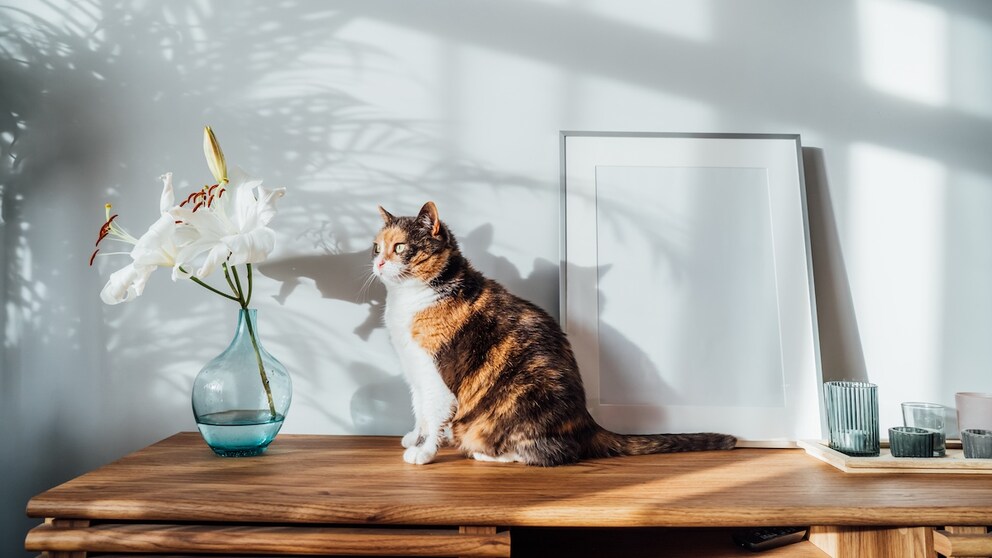
“Yes, contact with pollen can be enough. Cats often ingest the toxins while grooming their fur,” says Dr. Krause-Erl. Many cat owners underestimate how quickly poisoning can occur. It’s not just nibbling on the plant that’s risky. Even seemingly harmless situations–such as lilies in a vase–can become dangerous, as even the water can contain toxins.
The effects of the poison often set in quickly. Initial signs usually appear just a few hours after contact. “The first signs include loss of appetite, vomiting, and lethargy,” says the veterinarian.
If left untreated, the condition of the animals can rapidly deteriorate. As it progresses, neurological symptoms such as tremors or seizures may occur. However, the potential kidney damage, which can become life-threatening within a few days, is particularly dangerous.1
What to do in an emergency
In case of suspected contact with lilies, quick action is crucial. Cat owners should not wait but react immediately. Dr. Krause-Erl advises: “Any plant residues or pollen should be promptly removed from the fur or carefully brushed out.” Afterward, “immediately visit a veterinary practice,” advises Dr. Krause-Erl.
In the practice, efforts are made to prevent further absorption of the poison as quickly as possible. “Treatment is symptomatic. Intensive fluid therapy, such as infusions, is particularly important. Hospitalization is often necessary,” explains the expert. “With a quick response from the owners, the chances of recovery are cautiously good.”
However, if the poisoning has already progressed or the kidneys are already damaged, the prognosis can also worsen.2

Often Underestimated: These Dangers Lurk for Cats in the Garden

Which Early Bloomers Are Poisonous to Cats and Dogs?
Are certain types of lilies particularly dangerous?
Whether in the garden, on the balcony, or as a bouquet in the home, lilies are popular for their large, often fragrant flowers. There are over 100 species worldwide, including well-known varieties like the Turk’s cap lily or the Madonna lily. They differ in color, shape, and size–but for cats, that makes no difference.
Dr. Krause-Erl emphasizes: “Since the exact toxin has not yet been clearly identified, it cannot be said whether individual lily species are more dangerous than others. Therefore, all lilies should be considered highly risky.” Cat owners should therefore steer clear of lilies.
How to protect your cat in everyday life
“Inform yourself in advance about potential hazards. Watch for typical symptoms and do not hesitate to seek veterinary help immediately if you suspect anything,” advises Krause-Erl.
The best approach is to prevent the risk from arising in the first place. Cat owners should consistently avoid having lilies in the home–even in the form of bouquets or individual cut flowers.
Everyday life often harbors underestimated risks: lilies can unknowingly enter the home as a gift. If you receive a bouquet with lilies, it’s best to remove them immediately outside the home to prevent any contact with cats.