

October 29, 2025, 4:47 pm | Read time: 4 minutes
Pumpkins are as much a part of fall as chestnuts and colorful leaves. They look pretty, smell cozy—and often end up in the soup pot in many kitchens. But not every pumpkin is suitable for eating. The small, brightly patterned ornamental pumpkins that appear everywhere as decorations can be dangerous—not just for people, but also for pets. PETBOOK editor Louisa Stoeffler realized this when her cat Remo became overly interested in a carved pumpkin…
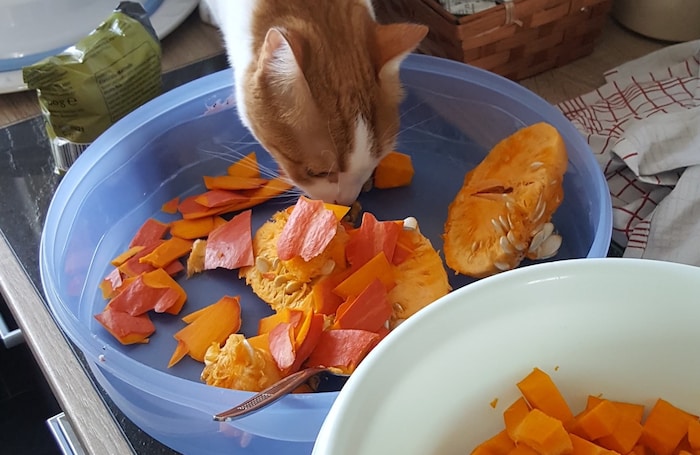
My cat Remo loves pumpkin just as much as I do. As soon as I cut open a Hokkaido, butternut, or spaghetti squash in the kitchen, he’s right there beside me, as curious as ever, trying to stick a paw or even his whole head into the pile of pumpkins.
He’s so enthusiastic about the fall vegetable that he jumps onto the counter (even though he knows it’s forbidden) and tries to steal the insides or skin of the Hokkaido. Once, he stole so much that he ended up vomiting.
Normally, he gets to try a small piece of cooked pumpkin later—after all, it’s healthy and completely safe for cats. But when fall decorations appear everywhere, I wondered what would happen if Remo nibbled on one of the pretty little ornamental pumpkins. They may look edible, but they are not at all.
The Difference Between Ornamental and Edible Pumpkins
Ornamental pumpkins are bred for appearance, not consumption. They are meant to be colorful, small, and long-lasting—and often contain cucurbitacins, bitter substances that are highly toxic.
These substances irritate the stomach and intestines and can lead to severe poisoning symptoms even in small amounts. While edible pumpkins like Hokkaido or butternut have been bred to contain almost no cucurbitacins, the content in ornamental pumpkins is often very high.
And the tricky part: You can’t always tell the difference at first glance. Some ornamental pumpkins look almost identical to edible varieties—a problem if children or animals are curious.
Why Cats Are Usually Safe–But Dogs and Rabbits Are Not
For cats like Remo, the risk is fortunately low. Most cats instinctively find the bitter taste of the toxic substances disgusting and would wrinkle their noses, gag, and lose interest after the first lick. That’s what happened with Remo. He sniffed the freshly carved ornamental pumpkin, licked it, and gagged. But it’s not always safe—especially young or particularly curious cats might nibble on something they should avoid.
It’s a different story with dogs. They are more adventurous, love to play with anything that can roll or be thrown—and a small ornamental pumpkin quickly looks like a ball. If the dog bites into it, it can unknowingly ingest toxic amounts.
Rabbits and rodents also need caution: They often nibble on anything plant-like and don’t initially distinguish between edible and toxic. With their low body weight, even a small bite can cause stomach problems or worse. If symptoms like vomiting, diarrhea, excessive drooling, or weakness occur, the animal should be taken to a veterinarian immediately.
Danger Can Also Lurk in the Garden
It is not only purchased ornamental pumpkins that are problematic. Those who grow pumpkins themselves and cultivate edible and ornamental pumpkins side by side risk unintended crossbreeding. This can cause the toxic bitter substances to reappear in otherwise edible pumpkins. A simple test can help: If a pumpkin tastes bitter, it should not be eaten or fed to animals. Bitterness is always a warning signal.

Safe Plants for Rabbits

Tulips Can Be Life-Threatening for Cats! What to do
Safe Decorating—Without Risk
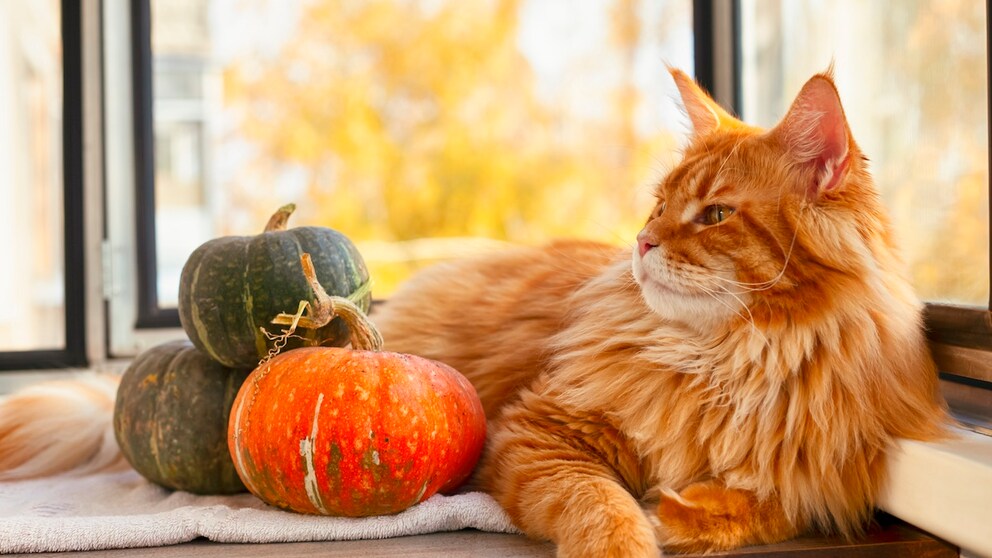
Those who love fall decor don’t have to give up pumpkins. Artificial pumpkins made of wood, ceramic, clay, or fabric look convincingly real and are completely harmless—unless the cat decides to knock the figures off the shelf. Therefore, it’s wise to choose a good spot for fall decor where animals can’t easily reach it and to keep an eye on the decorations.
Real edible pumpkins like Hokkaido or butternut also look great on windowsills or dining tables±as long as they’re out of reach of curious paws or snouts.
Conclusion
Ornamental pumpkins are pretty, but not for pets. Their toxic bitter substances can be dangerous, especially for dogs and rabbits that play with or nibble on them. Cats are usually more cautious and react to the bitter taste with disgust, but even here, caution is better than regret. Cat Remo now only gets his pumpkin cooked and officially served in his bowl. Safe, tasty—and completely free of toxic risk. With a little mindfulness, fall remains beautiful—and everyone stays healthy.