



March 23, 2026, 4:12 pm | Read time: 5 minutes
How would you describe your relationship with your cat? Probably like every cat owner: “The animals give so much back—at least emotionally.” But from an ecological perspective, it increasingly resembles a host-parasite relationship—at least according to the thesis of ecologist Rob Dunn, who examines the relationship between humans and animals in his book “The Call of the Honeyguide.” But is this claim biologically valid? PETBOOK editor and biologist Saskia Schneider took a closer look at Dunn’s arguments.
Living with Cats Has Changed Over Time
Many people live with animals—this was also the case ten thousand years ago. Usually, this coexistence resulted from a so-called “win-win situation”—both partners benefited. Dogs helped with hunting and guarded the surroundings, while cats caught mice and rats, indirectly protecting food supplies. This type of coexistence is found multiple times in the animal kingdom. When individuals of two different species work together for mutual benefit, biologists refer to it as mutualism.
Rob Dunn, a professor of applied ecology at North Carolina State University, has examined these exact relationships and analyzed them in his book “The Call of the Honeyguide: What Science Tells Us About How to Live Well With the Rest of Life,” because over time, our relationships with some animals have changed significantly. In his view, one species in particular no longer falls under classic mutualism: the cat.
Cats as “Parasites of Human Societies”?
When humans became sedentary and stored supplies, it attracted mice and rats—and thus wild cats. These hunted the pests, securing food for themselves, while humans benefited from protected supplies and a reduced risk of disease. In this early phase, the relationship was clearly mutually beneficial.
Over time, however, this relationship has changed significantly. Today, cats are no longer worshipped like gods, but they are also no longer our mutualists. Superficially, they seem, at least from a Darwinian perspective, to be parasites of human societies. They benefit from us at the expense of the food we provide them.
What Exactly Is a Parasite?
A provocative thesis. But what does biology say about it? Can cats really be described as “parasite-like” in this narrow, scientific sense? To do so, we need to take a closer look at the analytical classification of costs and benefits between our two species.
By definition, parasitism is a relationship between different species of organisms, where the parasite benefits and harms the host. A well-known example is tapeworms: As hosts, we provide food and habitat, but the worm can harm our intestines and deprive us of essential nutrients. 1
Symbiosis and Probiosis
In contrast, there is the so-called symbiosis, where both partners benefit, such as with the clownfish and the sea anemone: The fish receive protection and a home, and actively provide the anemone with food. 2
Then there is a third category called “probiosis.” In this case, only one partner benefits, but the other is neither advantaged nor harmed. This is the case, for example, when mites hitch a ride on beetles.
But let’s return to cats: Are they really “parasites of society”?
Decisive Factor Against the Thesis
On one hand, it’s clear: Cats benefit greatly from living with us. We provide them with food, territory, and even take care of their health. But what do we get in return? Cat owners would immediately answer: A whole lot! Love, attention, comfort, physical closeness, and social interaction. All factors that cannot really be quantified or measured in a cost-benefit analysis, but seem to have an even greater significance than ecological benefits. After all, cats are now among the most popular pets worldwide.
In my opinion, there is another decisive factor that clearly speaks against the thesis “Cats have become parasites of society”: the lack of harm to the host. Dunn argues here with the financial damages caused by the enormous costs of food and healthcare for pets. But cat owners voluntarily bear these costs. We make a conscious decision to acquire the animal. The cat doesn’t suddenly walk into the house, decide, “I live here now,” and order food, treats, and scratching posts online.
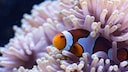
Clownfish Actively Supply Their Anemone with Food
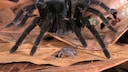
These Frogs Voluntarily Live With Spiders
The Relationship Between Humans and Cats Has Become More Complex
It’s not that Dunn hasn’t recognized this. The real point of his argument is less a devaluation of the cat and more a critique of our narrow understanding of “benefit.” Even though cats today hardly contribute to pest control, they fulfill other, hard-to-measure functions: They offer companionship, can enhance well-being, and shape the daily lives of many people.
The relationship between humans and cats can no longer be clearly categorized into classic biological categories—it has become more complex than a simple cost-benefit model. Most cat owners would probably describe their relationship with their pet as a symbiosis—and this is where it gets interesting, in my opinion.
Could You Still Live Without Your Cat?
When highlighting the special advantage of a symbiosis, biology often categorizes it not only by the type of benefit but also by the degree of dependency. Over the course of evolution, a loose association can become such a close relationship that the species need each other to survive. The question that arises here is: Where do we stand with our cats? Can we still live without them? This question is one that each cat owner must answer for themselves.