

October 30, 2026, 12:58 pm | Read time: 5 minutes
Bright, red-rimmed eyes, a black beard, and bones as a staple diet: The bearded vulture is quite extraordinary. Up to 85 percent of its diet consists of bones. Discover how its nests even tell stories from centuries past here at PETBOOK.
What Do Bearded Vultures Eat?
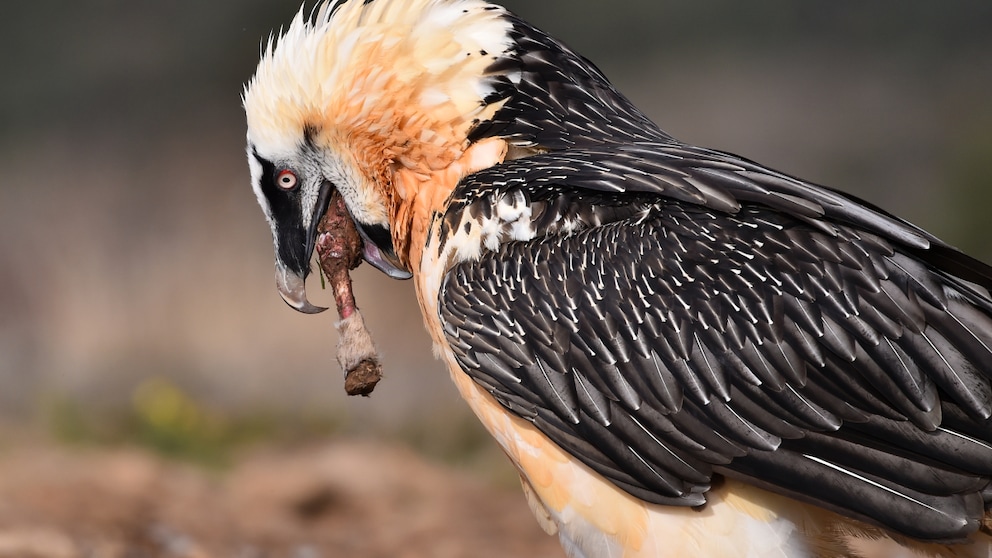
When it comes to eating, the bearded vulture (Gypaetus barbatus) lives up to its nickname “bone breaker.” It feeds exclusively on carrion, with about 85 percent of its diet made up of bones. These are surprisingly nutritious, providing protein, fat, and minerals. Another advantage of this unusual diet is that bearded vultures rarely have to compete with other birds of prey for food.1
They frequently utilize the remains of medium-sized hoofed animals such as chamois, ibex, or sheep. In spring, animals that did not survive hibernation often end up on the menu beneath the snow. The bearded vulture can easily swallow bones up to 10 inches long. Larger ones are carried into the air and dropped onto rocks until they break into bite-sized pieces.
The bearded vulture can digest this extraordinary diet thanks to its strong stomach acid with a pH of about 0.7. Its wide beak and robust, elastic esophagus are also perfectly suited for large bones. However, there is a downside to this bone-dry diet: It provides no liquid, so bearded vultures need to drink relatively often.
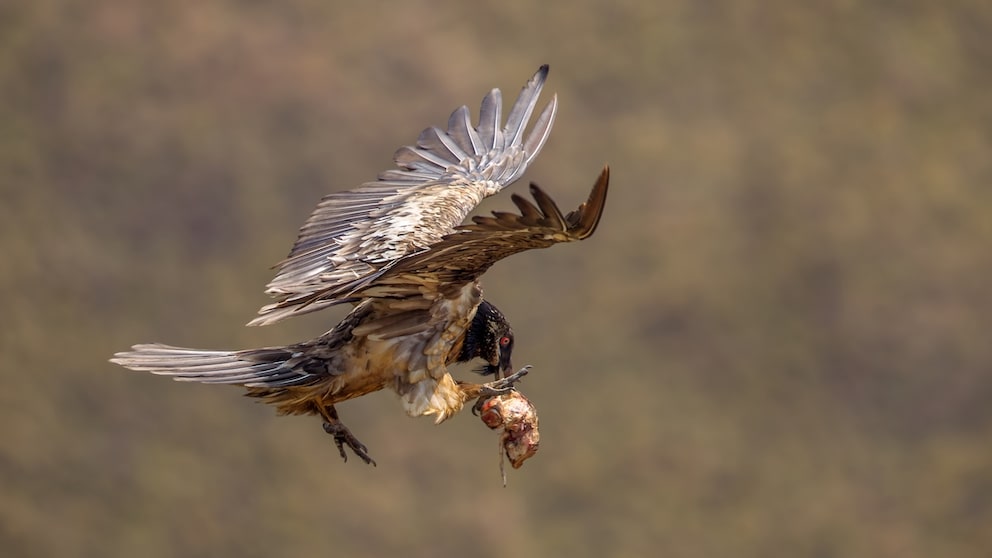
An unusual exception is known from the Mediterranean region: There, living tortoises have also been identified as prey. The bearded vultures cracked their hard shells in a similar manner to large bones by dropping them onto rocks. However, according to current information, this prey no longer plays a significant role.
Why Does the Bearded Vulture Look So Unusual?
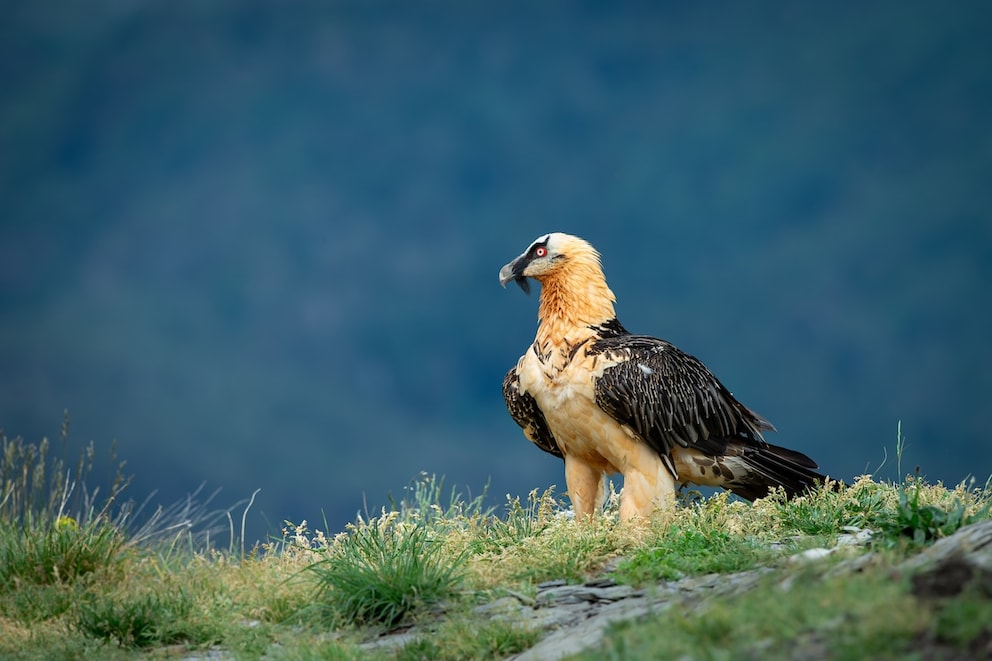
Seeing a bearded vulture circling above is quite impressive: With a wingspan of up to 9.5 feet, it is one of the largest flying birds in the world. Up close, there’s even more to discover. The bearded vulture gets its name from the black, bristle-like feathers above its beak that hang down like a small beard.
Particularly curious is the color of its plumage. Adult bearded vultures give themselves the rust-red color on their belly, chest, and neck. These feathers are actually white. By bathing in iron oxide-rich mud, they turn orange to reddish. Why the birds take this unusual “beauty bath” is still not fully understood.
Its densely feathered neck also suits its unusual lifestyle: Unlike many other vultures, the bearded vulture does not need to stick its neck deep into carcasses when feeding. After all, it mainly targets the bones.
Where Do Bearded Vultures Live?
Bearded vultures thrive in rocky, mountainous, and hard-to-reach areas. They build their nests high up on steep cliffs. In the Alps, breeding sites are usually located at altitudes between 4,600 and 7,900 feet. Sometimes, the birds also occupy abandoned nests of golden eagles.2
Originally, the bearded vulture was widespread in the mountain regions of Europe, Asia, and Africa. However, it was exterminated in the Alps at the beginning of the 20th century. It can now be regularly observed in the Bavarian Alps again. Young bearded vultures from the central Alps often pass through the region in search of food or on exploratory flights. They are currently most frequently sighted in the Allgäu and Berchtesgaden National Park.

7 Amazing Facts About the Jay
Raven or Crow? How to Recognize the Difference
Are Bearded Vultures Dangerous?
A wingspan of three meters and the nickname “bone breaker” sound quite intimidating at first. However, the bearded vulture’s own reputation was its biggest threat: It was once called “lamb vulture” because people believed it stole lambs. In reality, the bearded vulture specializes in carrion and bones. The name “bone breaker” is much more fitting: It drops large bones onto rocks to break them before eating.3
What Centuries-Old Bearded Vulture Nests Reveal
A bearded vulture nest can be much more than just a place for breeding. Some nests resemble true time capsules. This is shown by a study published in 2025, in which researchers examined twelve old bearded vulture nests in southern Spain. They discovered a total of 2,483 remains, including more than 2,100 bones, as well as fabrics, leather, and human-made objects.4
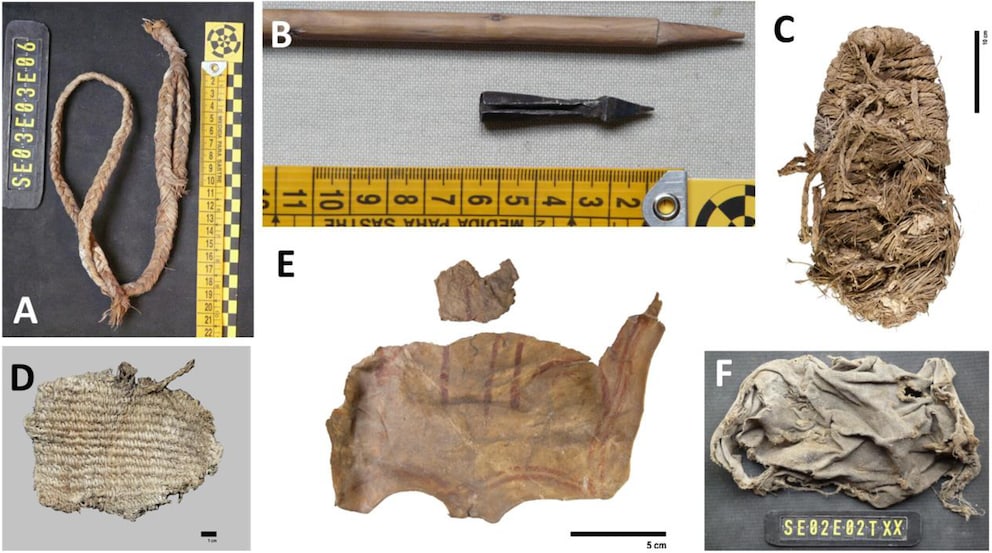
Particularly astonishing: In one nest, there was even an old shoe made of plant material. Dating showed it was from the late 13th century. Researchers also found parts of old basketry, painted sheepskin, and even a crossbow bolt.
The fact that such finds can be preserved for so long is also due to the well-protected nesting sites of bearded vultures. In rock caves and niches, conditions are relatively stable. For researchers, the old nests are like small natural museums: Bones and other remains can provide clues about which animals once lived in a region, what bearded vultures fed on, and how people lived there centuries ago.